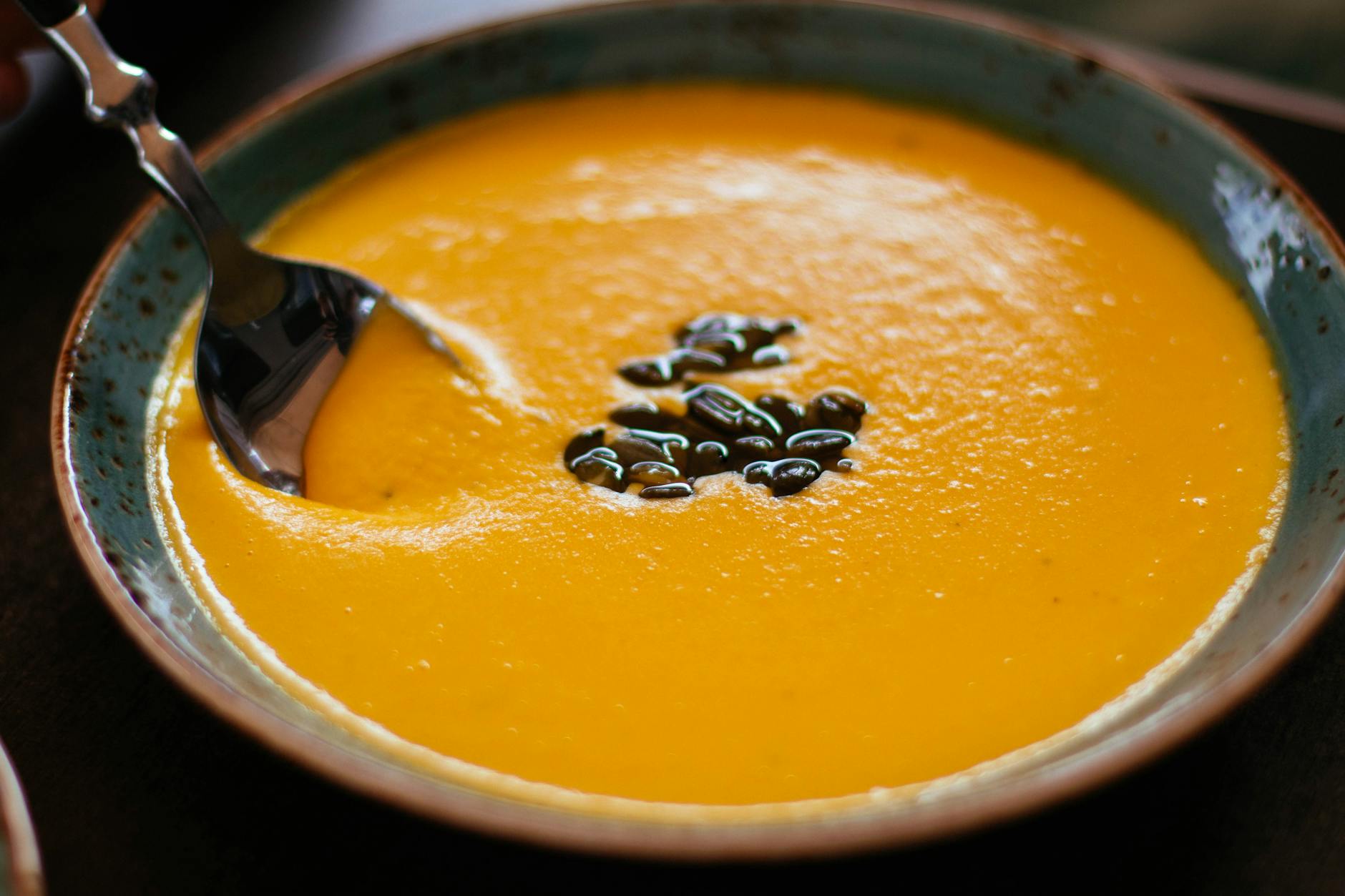
Pumpkin Soup
The autumn bowl. Roasted pumpkin blitzed smooth with caramelised onion, garlic and stock, finished with cream, nutmeg and a swirl of toasted pumpkin seeds. The soup of bonfire nights and Halloween suppers, when the kitchen smells of woodsmoke and the kids carve lanterns from the offcuts.
Overview
Pumpkin halves roasted cut-side down until the flesh collapses against the spoon. Onion and garlic sweated slow in butter, deglazed with stock. The roasted pumpkin scraped in, simmered together, and blitzed to a silken purée. Finished with a swirl of cream, a grate of nutmeg, and toasted pumpkin seeds for crunch. The roast deepens the flavour beyond what a stovetop simmer can manage; do not skip it.
Ingredients
- 1 medium pumpkin (about 1.5 kg; or 800 g of butternut squash plus 200 g of pumpkin for colour)
- 3 tablespoons olive oil
- 1 tablespoon honey
- 60 g unsalted butter
- 2 large onions (chopped)
- 4 garlic cloves (crushed)
- 1 carrot (peeled, diced)
- 1 celery stick (diced)
- 1 sprig of thyme
- 1 bay leaf
- 1.2 litres vegetable or chicken stock
- 100 ml double cream
- ½ teaspoon ground nutmeg
- Fine sea salt and black pepper
To finish
- 2 tablespoons pumpkin seeds (toasted)
- A drizzle of double cream
- A handful of chopped flat-leaf parsley
Method
Stage 1 - Roast the pumpkin
- Heat the oven to 200°C fan / 220°C / 425°F.
- Halve the pumpkin and scoop out the seeds. Reserve a tablespoon of seeds for toasting at the end if you want to make them yourself; rinse and dry them.
- Brush the cut faces with 2 tablespoons of the olive oil and the honey, and season generously with salt and pepper. Place cut-side down on a baking tray lined with foil.
- Roast for 40-45 minutes until a knife slides through the skin and into the flesh with no resistance. The bottoms should be slightly caramelised.
- Cool until you can handle them, then scoop the flesh away from the skin. You should have about 800 g of cooked pumpkin.
Stage 2 - Build the base
- While the pumpkin roasts, melt the butter with the remaining tablespoon of olive oil in a heavy pot over a medium-low heat.
- Add the onions, carrot and celery. Cook gently for 12-15 minutes, stirring often, until soft and faintly golden at the edges - the slow cook builds sweetness.
- Add the garlic, thyme and bay leaf. Stir for 2 minutes.
Stage 3 - Simmer
- Tip the roasted pumpkin into the pot. Pour over the stock. Bring to a gentle simmer.
- Cook on a low heat for 20 minutes to bring the flavours together. The carrot should be fully tender.
- Fish out the thyme stalk and bay leaf.
Stage 4 - Blitz
- Blend the soup with a stick blender until completely smooth and silky. If it looks thicker than you want, add a splash more stock; thinner, simmer for another 5 minutes uncovered.
- Stir in the cream and nutmeg. Taste and adjust salt - pumpkin needs more than you think. Grind in plenty of black pepper.
Stage 5 - Toast and serve
- If toasting your own seeds: warm a dry frying pan over a medium heat, add the cleaned seeds, and toast for 3-4 minutes, shaking the pan, until they pop and brown. Tip onto a plate; sprinkle with salt.
- Ladle the soup into wide bowls. Swirl a teaspoon of cream over the top, scatter with toasted seeds and chopped parsley.
Notes
- Butternut squash makes a smoother, sweeter soup but lacks the slightly earthy edge of true pumpkin. A blend of two-thirds butternut to one-third pumpkin is the most reliable supermarket option.
- A pinch of smoked paprika in the base gives the soup a faint bonfire warmth that suits the season.
- For a richer, autumnal version, swap 200 ml of the stock for apple juice.
Serving
In wide warm bowls with crusty bread, a hunk of mature cheddar, and good butter. At a Halloween supper, ladled from a hollowed-out pumpkin for theatre.
Storage
In a covered container in the fridge for up to 4 days, or freezer for 2 months. Freezes well; reheat gently with a splash of stock to loosen.
More like this
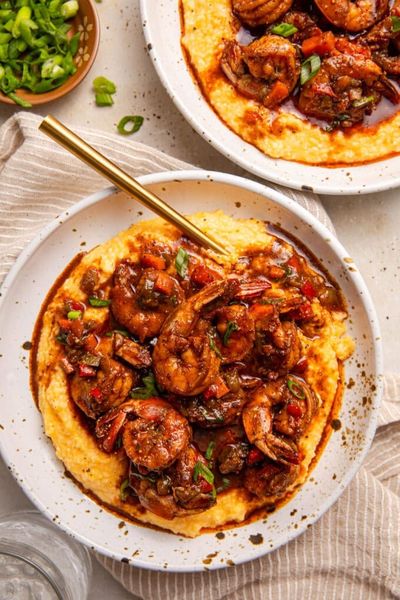
Brown Stew Shrimp and Sweet Potato Grits
A Caribbean-Southern crossover that works because both traditions cook in a similar register: butter, peppers, alliums, slow heat, savoury depth. The brown stew base on top of the dish is Jamaican, bell peppers, carrot, Scotch bonnet, ginger, browning sauce, that mahogany-coloured gravy with the unmistakable allspice-and-thyme signature, and the bed underneath is from Lowcountry Charleston, where sweet potato grits enriched with butter, half-and-half and gouda are a long-running modern Southern restaurant standard. The shrimp themselves are quick-cooked and sweet, picking up the brown stew sauce. Two textures stacked: silky-rich grits, brothy stew on top with bite from the diced peppers and carrot. Smell is sweet-onion-and-browning-sugar over the corn-sweet base of the grits. Not difficult but it's two pans running at once, so timing matters; the grits hold on a low warm setting while the shrimp cook quickly. A modern fusion rather than a traditional dish, popularised by Black American chefs in the 2010s exploring the points of overlap between Lowcountry and Caribbean cookery.
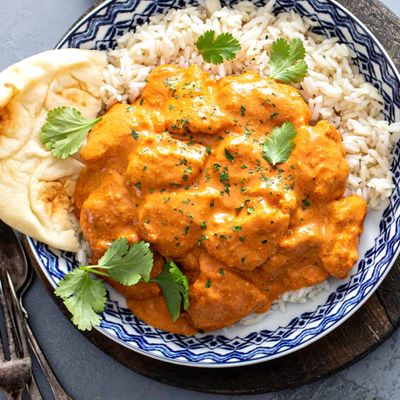
Butter Chicken
The BIR icon: tandoori-grilled chicken finished in a velvety tomato-onion sauce enriched with double cream, butter and a hit of garam masala at the end. Mildly spiced, lightly sweet, deeply savoury. The sauce is built on a paste of cooked onion, tomato and cashews / almonds, finished off-heat with cold butter for the signature gloss.
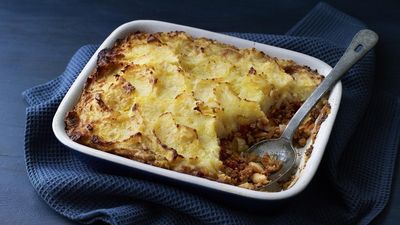
Cottage Pie
The textbook British family dinner, the dish that turns up on every primary-school menu and most weeknight tables. You brown beef mince with onion, carrot and celery, then simmer it down with stock, a spoon of tomato purée, a slosh of red wine and a generous splash of Worcestershire into a thick savoury gravy. Top with cheddar mash piled rough so the peaks catch and crisp in the oven, and bake until the surface is deep gold and the gravy bubbles around the edges. Forgiving, freezer-friendly, exactly as good on Wednesday from leftovers as on Sunday from the oven. A green vegetable and a spoon of brown sauce on the plate, a bowl of trifle waiting in the fridge for after.
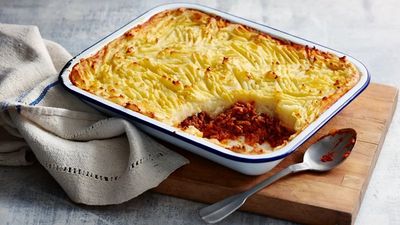
Shepherd's Pie
The lamb cousin of cottage pie, and the original of the two (cottage pie came later as a beef variant when lamb was harder to find). You brown lamb mince with onion, carrot and celery, then simmer with stock, tomato purée, Worcestershire and rosemary until the gravy is thick enough to hold a spoon upright. Top with garlic-butter mash piled in rough peaks that catch and crisp in the oven, and bake until the surface is deep gold. The lamb gives it a heavier, more savoury character than cottage pie's beef. That's what marks it as shepherd's rather than cottage. Eaten with peas, a spoonful of mint sauce on the side if you're being traditional, and a glass of bitter or a strong red.