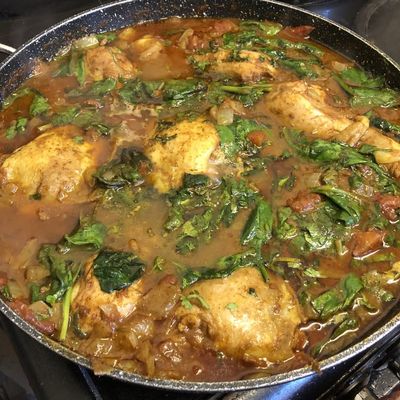
Agra Ginger Chicken
A light, cleansing chicken curry from Agra with fresh ginger, warm spices and bright tomato notes. This vibrant dish is designed to be accessible and fresh, with spinach and lime lifting the finished curry.
Indian
Tap a chip to add another filter, or use Clear all below.
A light, cleansing chicken curry from Agra with fresh ginger, warm spices and bright tomato notes. This vibrant dish is designed to be accessible and fresh, with spinach and lime lifting the finished curry.
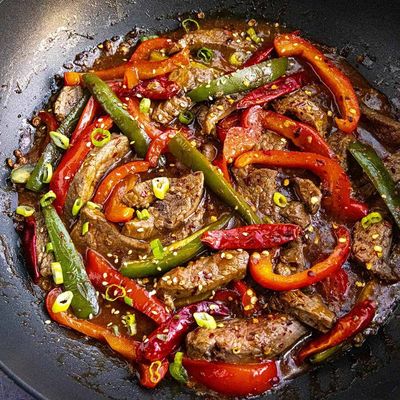
A Burmese curry from the country's Indian-origin community, sitting somewhere between a Madras and a Burmese ohn-no in spice profile. You marinate chunks of beef chuck or shin in turmeric, fish sauce and salt while you fry onions in oil until they're deep brown - that long onion fry is the foundation. The beef browns in the same oil, then ginger-garlic paste, paprika and chilli powder go in, then tomato and water turn it into a stew. Two hours of slow simmer until the meat falls apart at a fork. The signature finish is the see byan, a deep red-orange oil slick that rises to the top of the curry as it reduces, which is what the dish is named for. Eaten with rice or paratha, and a small bowl of pickled vegetable on the side.
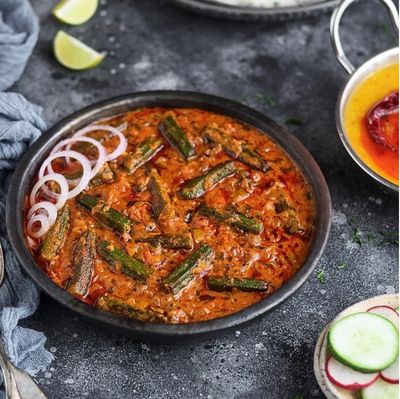
The okra is washed, dried thoroughly and trimmed, then cut into 2 cm pieces. A dry-fry over high heat for 10 minutes cooks away the surface moisture that causes slime. Onion is then browned with whole cumin in a separate go, ginger and garlic added, tomato cooked down with the ground spices, and the dry-fried okra folded in for a final dry simmer. Finished with garam masala, amchur and coriander.
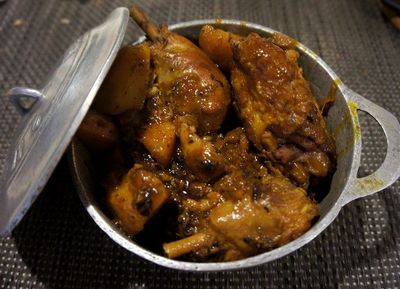
Mauritian cuisine is a layered conversation between Indian, African, Chinese and French traditions, and cari poulet is one of its clearest expressions. The Creole community took the Indian template of a wet curry and rebuilt it with local fresh herbs, particularly thyme and curry leaves grown in the yard, plus tomato, and a masala that is gentler and more aromatic than its mainland Indian cousins. Chicken on the bone is browned for fond, then potatoes are added and the whole pot is simmered in a curry-leaf and tomato gravy until the meat is falling off the bone and the potatoes are creamy on the outside but holding shape. The colour leans red-brown from paprika and turmeric rather than the bright yellow of a Punjabi-style curry. Heat is moderate, intended to complement rice and a chilli-based satini, not overwhelm them. For a home cook the difficulty is low to moderate; the only real demand is patience while the masala blooms in the oil at the start, which is what gives the dish its depth. Serve over plain steamed rice with a coriander satini and a spoon of green chilli pickle, the classic Mauritian Sunday plate.
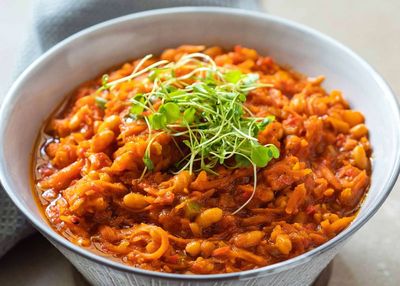
Onion is softened in oil; garlic, ginger and curry powder bloom. Carrots cook briefly to tender-crisp. Peppers (red and green) and chillies join. Tomatoes simmer everything down. Tinned baked beans go in last with a splash of vinegar to balance. Eaten warm or at room temperature; tastes better the next day.
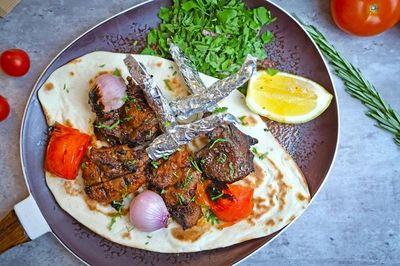
Chapli kebabs are the spiced beef patties sizzling on a wide flat tawa at any roadside grill from Peshawar to Kabul, big enough to wrap a hand around and seasoned with the unusual punch of dried pomegranate seeds and coriander. The mince mixes with grated onion, chopped fresh tomato, ginger, garlic, beaten egg and a little gram flour to bind, plus the signature Afghan spice blend (coriander seed, pomegranate seeds, chilli flakes, cumin and garam masala). A thirty-minute rest lets the gram flour absorb the moisture and the spices marry. Pat thin and wide (the word chapli means "flat" or "slipper-shaped"), then fry hard in oil three or four minutes a side until darkly crusted. Eat hot from the pan, wrapped in fresh naan with sliced raw onion and a green chutney.
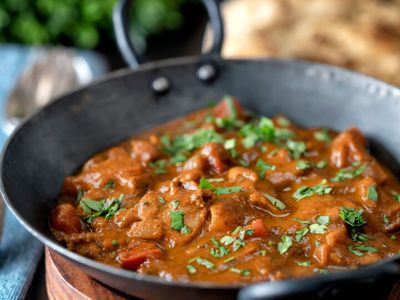
Birmingham's defining curry, cooked hard and fast in a thin two-handled steel balti pan over a roaring flame. The high heat caramelises the masala onto the meat and burns off the oil, leaving a slightly smoky, tomato-forward sauce. Eaten straight from the pan with naan; the sauce is medium-thick, not soupy.
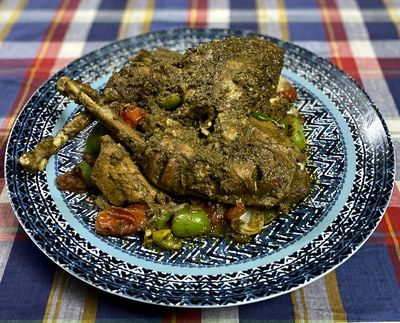
A vivid green masala is ground from coriander leaves, mint, green chilli, garlic, ginger, cumin, peppercorns and clove with palm vinegar. Chicken pieces are slashed and marinated for at least 4 hours (ideally overnight). The pieces are pan-fried in the marinade-paste over high heat until the herb crust dries out and chars at the edges, with a small splash of water added halfway through to keep the chicken juicy. Served with a wedge of lime and a salad of onion and tomato.
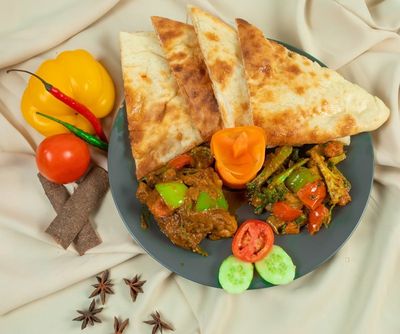
A curry-house jalfrezi inspired by a Balti House classic, featuring quick stir-fried peppers, chillies, onions and tender chicken in a light spiced sauce. It is traditionally dry and crisp, but can be adjusted for more sauce by adding extra base curry or stock.
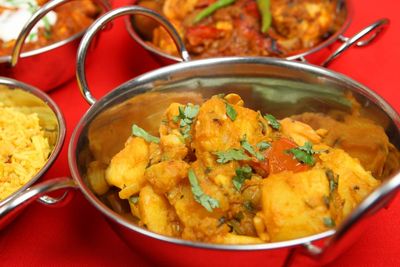
Ugandan curry potatoes are one of those everyday dishes that say more about a country's cooking than the showpiece feast plates do. Curry powder reached Uganda via the Indian and Goan communities of the East African coast and the railway-building era, and was quickly absorbed into the local repertoire as a flavour for stews rather than as a separate cuisine. The result here is mild, fragrant and unmistakably Ugandan: small chunks of waxy potato cooked through in a sauce built on onions sweated until soft, fresh tomato simmered down, and a generous spoon of mild yellow curry powder bloomed in the oil. Garlic and ginger run quietly underneath; a single chopped chilli does the heat work if you want it. It is a vegetarian dish in most homes, though it sits happily alongside fried fish or chicken stew on a fuller plate. The difficulty for a home cook is low, it is almost foolproof, but watch the potatoes; the dish is best when they hold their shape and the sauce just hugs them rather than dissolving everything into a mash. Eat with chapati to mop up the gravy, or with steamed rice, posho, or matooke.
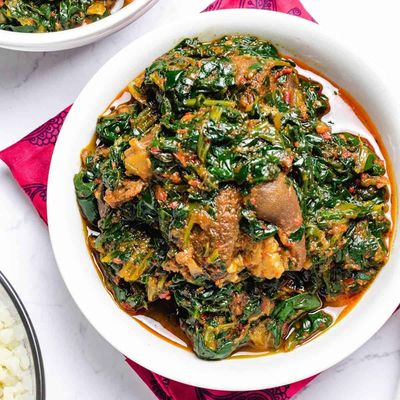
Beef (or goat, or prawns) parboils briefly. Smoked fish soaks. A pepper paste of red bell pepper, Scotch bonnet, onion and tomato blitzes in the blender. Palm oil heats; the pepper paste fries for 10 minutes until reduced and the oil rises. Stock, meat, smoked fish, ground crayfish and iru go in; simmers for 15 minutes. Spinach goes in last, wilts in 5 minutes. Served with rice, eba, fufu or pounded yam.
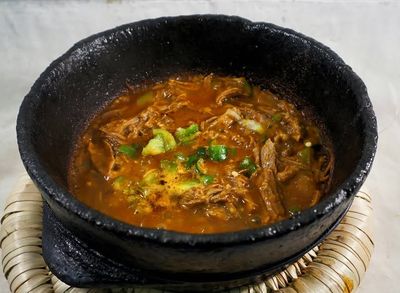
Lamb shoulder slow-cooks for 2 ½ hours until it shreds; the broth reduces hard with sautéed onion, tomato, garlic and Yemeni spice mix (hawaij) into a thick, dark sauce. The shredded meat goes back in; a small amount of cooking liquor keeps it loose. Transferred to a stone pot, brought to a hard boil at the table, topped with whipped hulba and a spoonful of sahawiq.
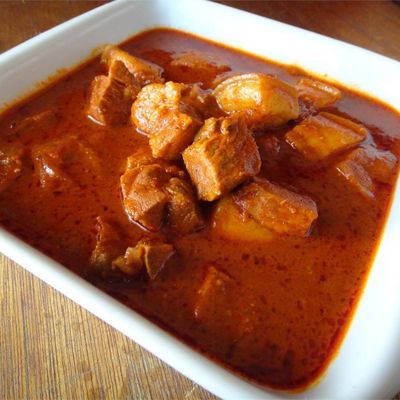
Whole Kashmiri red chillies soak in white wine vinegar; ground with garlic, ginger, cumin, peppercorns, cinnamon, cloves and mustard into a thick wet paste. Pork shoulder cubes marinate overnight in the paste. Browned in oil; cooked with onions, tomato and reserved marinade until the pork is tender and the gravy is glossy. Salt last. A small spoonful of jaggery balances the vinegar.
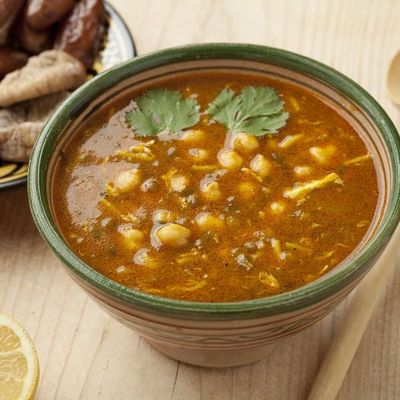
Lamb shoulder cubes simmer slow with chickpeas, lentils, tomatoes, vermicelli noodles, and a heavy spice mix (ginger, cinnamon, turmeric, cumin) in a generous broth. The soup is finished by adding the noodles in the last 10 minutes and a final scatter of fresh coriander, parsley and lemon juice.
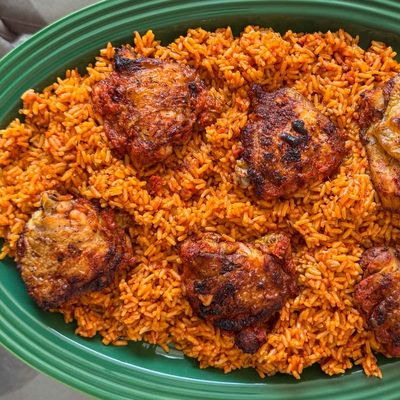
Chicken pieces simmer with onion, thyme, curry powder, salt and bay until tender; the cooking stock becomes the rice's liquid. A blender purées tomatoes, red peppers, scotch bonnets, onion, and ginger to a smooth red sauce. Vegetable oil cooks tomato paste until it darkens; the blended sauce reduces in for 15-20 minutes; bay leaves and curry powder bloom; the rice goes in with chicken stock, simmers covered until tender. The chicken roasts crispy under a hot grill, then perches on top.*
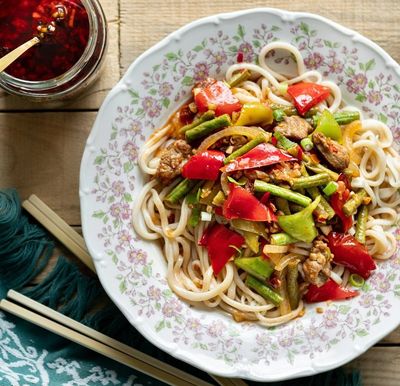
Two distinct elements that meet at the bowl: long, springy hand-pulled noodles with the chew of fresh ramen, and a brothy lamb-and-tomato topping that's somewhere between a stir-fry and a stew. The topping reads bright and savoury more than spicy, fresh tomato and sundried tomato together giving sweetness and depth, peppers and yardlong beans for crunch, cumin and white pepper for warmth, with a single fresh chilli for gentle heat. Smell-wise it's lamb fat hitting hot oil, then tomato vines, then cumin. The noodles are the difficulty: pulling a coiled rope of rested dough into long even strands takes practice, and your first few attempts will tear. The reward is a noodle nothing like the dried equivalent, thicker, glossier, with proper pull. A signature dish across the entire Uyghur world, eaten from Kashgar to Almaty to Toronto, with each family making minor variations on the topping; the noodle technique itself is shared with the lamian tradition of Lanzhou further east, which laghman is etymologically related to.
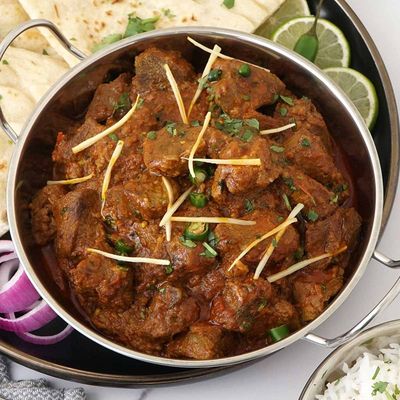
This is the Afghan take on a karahi, slow-cooked rather than the fast Pakistani version: lamb shoulder browned hard, then braised low for an hour and a half until the meat is tender enough to cut with a spoon. Onions cook deep brown alongside the lamb. Ginger, garlic, cumin, coriander and turmeric toast briefly in the rendered fat; tomato cooks down to a jammy base; the lamb returns with stock and disappears under a lid for ninety minutes. At the end the lid comes off, julienned green chillies and fresh ginger drop in, the gravy reduces and the cooking fat rises to the surface in a thin amber slick (that slick is the visual sign the meat is ready). Eat with naan or chalow rice, and a bowl of sliced raw onion and lemon on the side.
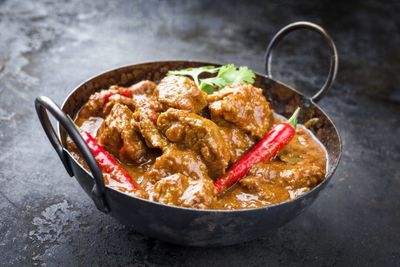
Hot, sharp curry inspired by the cooking of southern India. Reduced tomato base with a heavy dose of chilli powder, mustard seeds, curry leaves and tamarind. Sharper than a vindaloo (no vinegar) but in the same heat range; finished with lime juice and a spoon of mango chutney for sweet contrast.
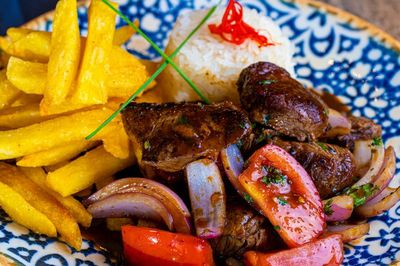
Beef strips are marinated briefly in soy and aji amarillo paste. Fries are cooked separately, pre-fried, set aside. The wok hits high heat; beef is seared in batches; red onion and tomato are added briefly so they keep their bite; soy, vinegar, lime and stock are poured in to sauce. The fries go in last, just before serving, a 30-second toss so they pick up flavour without going soggy.
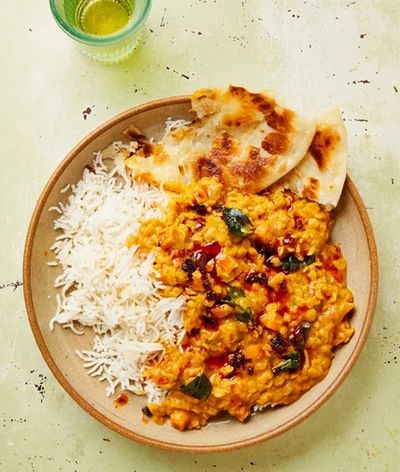
Yellow split peas (chana dal) simmer with onion, turmeric and tomato until very soft. The lentils break down into a thick soup. Right at the end, a tempering of mustard seeds, curry leaves, dried red chillies, garlic and shallots is poured sizzling-hot over the surface. The aromatic oil seeps through; the dish transforms.