Fahsa
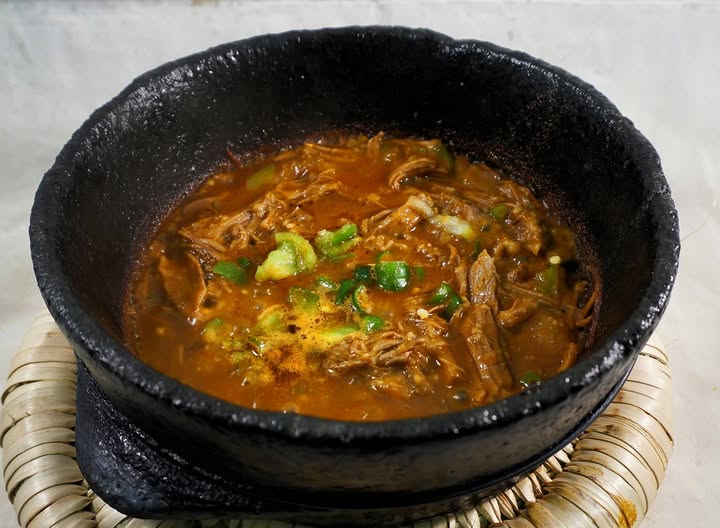
A Yemeni cousin of saltah: shredded slow-cooked lamb in a thick spiced gravy, served bubbling in a stone pot under a snowy whipped hulba froth.
Overview
Lamb shoulder slow-cooks for 2 ½ hours until it shreds; the broth reduces hard with sautéed onion, tomato, garlic and Yemeni spice mix (hawaij) into a thick, dark sauce. The shredded meat goes back in; a small amount of cooking liquor keeps it loose. Transferred to a stone pot, brought to a hard boil at the table, topped with whipped hulba and a spoonful of sahawiq.
Ingredients
- 1 kg lamb shoulder (bone-in, cut into large pieces)
- 1 tablespoon salt (for the boil)
- 3 tablespoons vegetable oil
- 2 onions (large, chopped)
- 8 garlic cloves (crushed)
- 1 thumb ginger (grated)
- 1 (400 g) tin chopped tomatoes
- 2 tablespoons tomato puree
- 2 tablespoons hawaij (or 1 teaspoon each: ground cumin, coriander, black pepper, turmeric, cinnamon)
- 1 teaspoon ground cardamom
- 1 teaspoon ground cloves
- 1 ½ teaspoons salt (to taste)
- 1 bay leaf
- 200 ml hot water (extra, for the sauce)
To finish
- 1 batch hulba (whipped fenugreek - see Saltah recipe)
- 4 tablespoons Sahawiq
- Lahoh (or flatbread)
Method
Stage 1 - Boil the lamb
- Place the lamb in a wide pot. Cover with cold water by 5 cm; add the 1 tablespoon salt.
- Bring to a boil; skim the scum.
- Reduce to a low simmer; cover; cook 2 hours 30 minutes, until the meat falls apart.
- Lift the lamb out; reserve 500 ml of the broth.
- Shred the meat off the bones; discard the bones.
Stage 2 - Build the sauce
- In a separate heavy pan, heat the oil.
- Soften the onion 10 minutes until deep gold.
- Add garlic and ginger; cook 1 minute.
- Add hawaij, cardamom and cloves; toast 30 seconds.
- Add tomato and tomato puree; reduce 8 minutes until thick.
Stage 3 - Combine
- Pour in 200 ml of the reserved broth and the extra hot water; add bay; bring to a simmer.
- Add the shredded lamb; cook 15 minutes on a low simmer to combine - the sauce should be thick and clinging.
- Add more broth if needed to keep it stew-like.
- Taste; adjust salt.
Stage 4 - Plate, boil and serve
- Transfer to a hot flameproof stone pot or cast-iron skillet.
- Place on high heat; bring to a violent boil at the table.
- Spoon dollops of hulba on top.
- Add a tablespoon of sahawiq in the centre.
Stage 5 - Eat
- Tear lahoh; scoop. Eat directly from the pot.
Notes
- Shred not chunk: Fahsa's identity is shredded meat in a thick sauce, distinct from saltah (chunks in a brothier stew). Don't be tempted to leave the meat in pieces.
- Boil at the table: The visual and aromatic of a bubbling stone pot is part of the dish; in restaurants, the pot arrives so hot that the diners flinch.
- Hulba note: See saltah for technique. Make it fresh, the same day.
Storage
- Refrigerate 3 days. Reheat covered with a splash of water.
- Hulba doesn't keep - make fresh each time.
Recipes mentioned here
Saltah
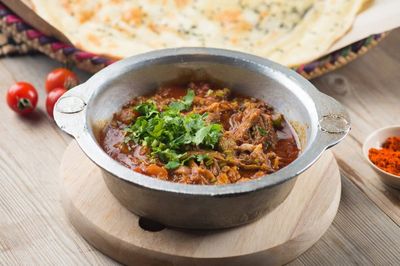
Lamb (or beef) is slow-cooked in a Yemeni tomato-onion-spice stew (called maraq) for two hours. Just before serving, the stew is transferred to a flameproof clay or stone pot, brought to a violent boil on direct heat. Whipped hulba (overnight-soaked fenugreek seeds, blended with lemon and a little water into a snowy froth) is spooned on top. The pot is brought to the table boiling. Sahawiq adds heat.
Lahoh
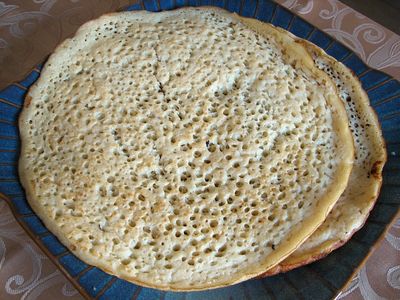
Plain flour, semolina, yeast, water and salt are whisked to a loose pancake batter; left to ferment 8 hours (or overnight). The batter goes onto a hot, lightly oiled pan; bubbles burst across the surface within 90 seconds; it's cooked one side only, no flipping. The top stays creamy white; the bottom turns pale gold. Pulled off the pan with a spatula, stacked, kept warm.
More like this
Saltah
Lamb (or beef) is slow-cooked in a Yemeni tomato-onion-spice stew (called maraq) for two hours. Just before serving, the stew is transferred to a flameproof clay or stone pot, brought to a violent boil on direct heat. Whipped hulba (overnight-soaked fenugreek seeds, blended with lemon and a little water into a snowy froth) is spooned on top. The pot is brought to the table boiling. Sahawiq adds heat.
Trinidadian Curry Goat
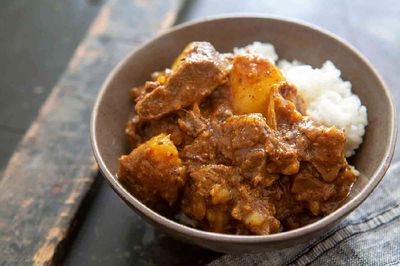
Trinidadian curry goat sits in a quiet rivalry with Jamaican curry goat, but the two are different dishes. Jamaican curry goat is built on Madras-style curry powder, scotch bonnet and allspice with little coconut and a wetter finish. Trinidadian curry goat is built on a fresh blend of green seasoning (a herb-and-aromatic puree of culantro, thyme, garlic, chives and onion), Caribbean curry powder (which leans heavily on amchar masala and roasted geera), and the bunjay technique of frying the curry paste in oil until it splits before the meat goes in. The result is a darker, herbier, drier curry that hugs the bone rather than pooling around it. Kid goat is the preferred meat; older mutton-goat works but takes longer. UK home cooks can usually find kid goat at Caribbean butchers, Halal butchers and many Asian supermarkets in the chilled or frozen section. Bone-in pieces are essential for flavour and gelatin. Lamb shoulder on the bone makes an honest substitute. Difficulty is low to moderate; the cook is mostly long and passive once the curry is bunjayed. Serve with paratha-style "buss-up-shut" roti, dhalpuri roti, white rice, or coconut rice.
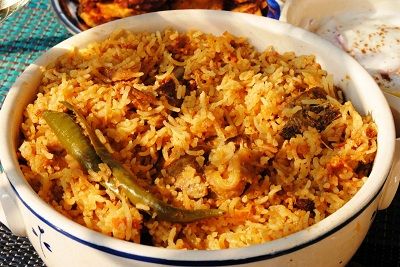
Biryani
Biryani represents the height of Indian culinary technique: multiple components prepared separately with precision, then assembled in layers where flavors permeate through steam cooking. This isn't a one-step rice dish; rather, it's an architectural construction where yogurt-marinated lamb develops tenderization and flavor, then cooks slowly with warm spices and tomato, while basmati rice is independently flavored with saffron infusion and whole spices. Upon assembly, the two elements marry through steam, creating a unified dish where lamb and rice are inseparable in flavor. Traditionally cooked during festivals and royal celebrations, biryani requires patience and multiple steps but rewards with sophistication.
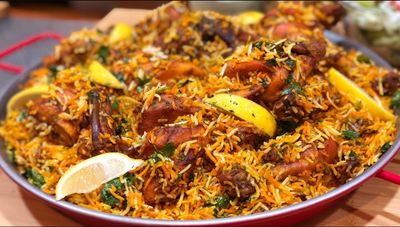
Lahori Mutton Biryani
Mutton is marinated overnight in yogurt with browned onion, ginger-garlic, Kashmiri chilli, garam masala and dried plums (aloo bukhara, a Lahori signature). The marinated meat is slow-cooked in its marinade until tender and the masala has reduced to a thick, oil-slicked gravy. Basmati is parboiled in salted water with a sachet of whole spices. The biryani is built in layers: meat, rice, fried onion, saffron milk, mint, repeated; sealed under a tight lid for the dum.