In season

May produce

Tap any item to find recipes that use it.

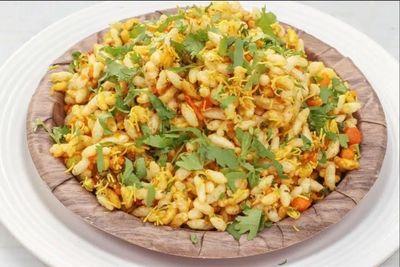
Jhal Muri

Jhal Muri

Jhal muri (literally "spicy puffed rice") is the most democratic snack in Bengal: assembled in seconds from a tin trunk by a muriwala, tipped into a rolled-newspaper cone, and eaten standing on a pavement for the price of a few rupees. The base is muri (puffed rice), and everything else is built around the principle of contrast. Raw mustard oil is the soul of the dish, sharp and nasal and slightly bitter; without it you have a salad, not jhal muri. The vegetables stay raw and crunchy, onion, green chilli, cucumber, tomato, chopped into tiny dice so each spoonful gets one of each. Peanuts and chana chur (or sev) add fat and crunch; black salt and chaat masala add the funky-tangy depth that makes Indian street snacks addictive. The lime goes in last so the puffs don't soften. This is a dish where technique matters less than ingredient quality: muri must be crisp (refresh in a dry pan if it's gone soft), mustard oil must be the proper pungent kind, and the lime must be fresh. It is everywhere in Bengal, tea-time at home, train platforms, the Maidan on a winter afternoon, and there is no recipe in any cookbook that quite captures the feel of it being mixed in front of you in a paper cone.
Snacks 10 minutes Serves2
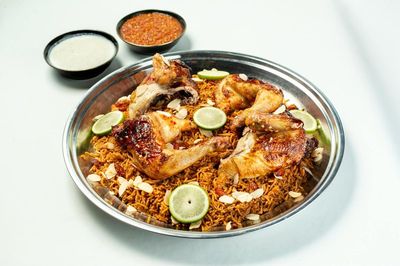
Kabsa

Kabsa

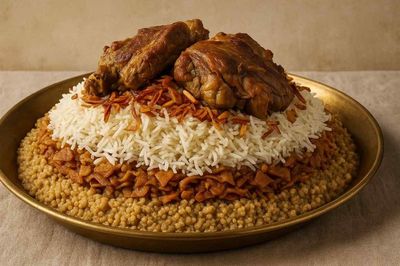
Saudi Arabia's national dish, the one platter you'll meet at almost every gathering from family lunch through wedding banquet. You brown chicken pieces or lamb shoulder hard in a heavy pot, then build a base of onion, garlic and ginger softened in the same fat, with tomato and a spoonful of baharat (or a dedicated kabsa spice mix) blooming until the kitchen fills with cardamom and cinnamon. The protein simmers in tomato and stock until it's tender and pulling away from the bone, then long-grain rice goes in to cook absorption-style in the same liquid, drinking up every layer of flavour the broth carries. You finish with almonds toasted in butter, raisins plumped briefly, and a fresh salsa of tomato, onion, chilli and parsley spooned on the side to cut the richness. Eaten communally from the centre platter, with hands or a long spoon.

Arabian 1 hour 35 minutes Serves6
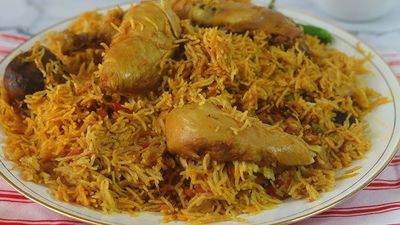
Madghoot

Madghoot

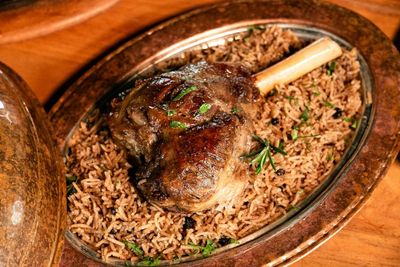
The fast Saudi cousin of mandi, made when you want kabsa-deep flavour but the day doesn't have three hours in it for the meat to cook. You give bone-in lamb a quick wet marinade of crushed tomato, baharat, dried lime, garlic and yogurt (the yogurt tenderises while the spice mix works in), then it goes into a pressure cooker with onion and stock for thirty minutes under pressure, which is what a slow oven would otherwise do in three hours. The cooking liquid gets strained out (it is the dish's stock), basmati cooks absorption-style in it for twelve to fifteen minutes, and the lamb returns on top to rest while the rice steams through. Served straight from the pot with sahawiq (the chilli-coriander relish that shows up on every Khaleeji table) and salata on the side. Weeknight kabsa, basically.

Arabian 2 hours 10 minutes Serves4
Mathloutha

Mathloutha

The Saudi gathering platter built for the night when one cut of meat isn't enough. Three proteins share the same pot: lamb shoulder and beef chunks go in first with a kabsa-spiced tomato base for ninety minutes of slow simmer until they're meltingly tender, then chicken pieces drop in for the last thirty-five minutes (their cook time is shorter, so they go in later). The strained meat broth, deeply spiced from everything that has braised in it, becomes the cooking liquid for basmati scented with saffron and dried lime. At the end you arrange all three meats on top of the rice in the same platter and bring the whole thing to the centre of the table. The kind of dish you make for a wedding lunch, an Eid gathering, or the night the extended family arrives unannounced.

Arabian 3 hours Serves8
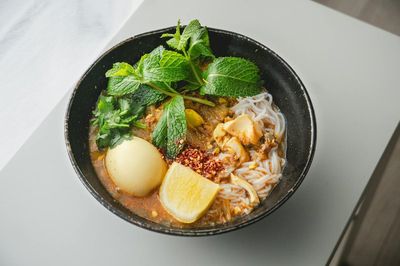
Traditional Pad Thai

Traditional Pad Thai

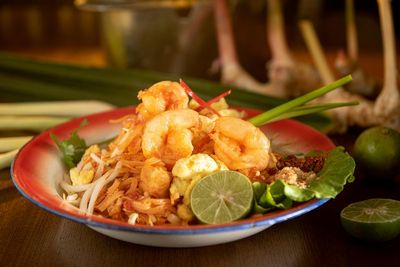
Pad thai began as a 1930s government-promoted national dish during a campaign to reduce rice consumption, and has since become Thailand's best-known noodle export. The success of any version comes down to the sauce: equal parts fish sauce, tamarind and palm sugar, with a spoonful of finely chopped pickled radish for backbone. Once the sauce is mixed the wok work is fast, with soft rice noodles, chicken, tofu, dried shrimp and egg joining in quick succession before the dish is finished with peanuts, chives, lime and chilli at the table.

Thai 40 minutes Serves4