In season

May produce

Tap any item to find recipes that use it.

Aussie Burger with Beetroot

Aussie Burger with Beetroot

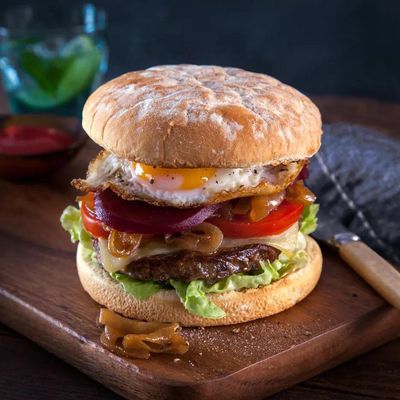
The Aussie burger, sometimes called "the lot", is a milk-bar institution that emerged in Australia in the mid-twentieth century when European immigrants and returning soldiers reshaped the corner takeaway. What distinguishes it from any American or British burger is the insistence on tinned pickled beetroot, a slice of canned pineapple, a fried egg and rashers of streaky bacon, all stacked under a thick beef patty on a toasted bun. The beetroot is non-negotiable: it stains the bread, it stains your fingers, it leaks down your wrist, and it is the entire point. The combination sounds chaotic but works because each layer plays a clear role: sweet pineapple against salty bacon, earthy beetroot against rich egg yolk, sharp tomato chutney cutting through melted cheese. The patty itself is generously sized, hand-shaped, and seasoned simply so the toppings can do the talking. Difficulty is low; the only real skill is timing several pans at once so the egg, bacon and patty all arrive hot together. This is not delicate food. It is built to be eaten leaning forward over a paper wrapper with napkins and a cold drink. Serve it at a backyard barbecue and watch grown adults negotiate the architecture of the bite.
Australian 40 minutes Serves4
Beef Wellington

Beef Wellington

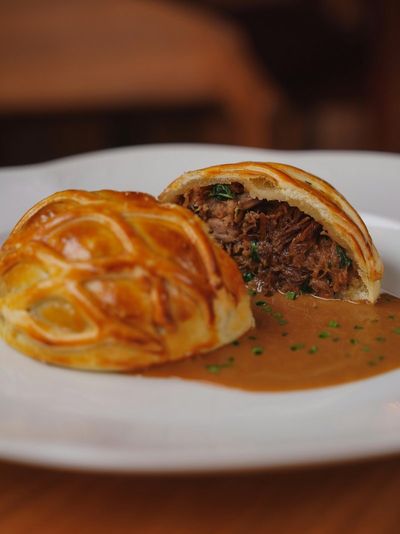
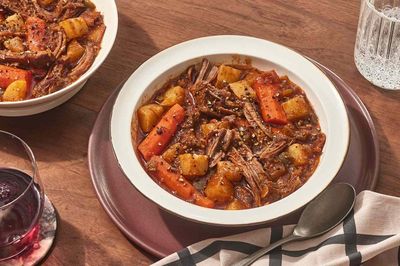
The defining British dinner-party showpiece, somewhere between French haute cuisine and English roast tradition, made famous in the modern era by Gordon Ramsay even if the Iron Duke himself probably never ate it. You sear a centre-cut beef fillet hard for colour, smear it with English mustard, wrap it in a tight blanket of mushroom duxelles and prosciutto, then encase the lot in all-butter puff pastry and roast at high heat. The pastry insulates the beef so it cooks gently to medium-rare while the crust crisps to deep mahogany above. The one technical trick the recipe insists on is drying the duxelles thoroughly so the pastry stays crisp underneath rather than going soggy from leaking mushroom water. Sliced at the table into thick rosy rounds, with a red-wine jus and roasted root vegetables on the side, the kind of plate that makes the evening feel like a special occasion before anyone says it.

British 1 hour 55 minutes Serves6
Boerewors

Boerewors

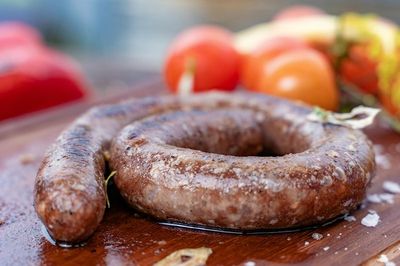
Boerewors, literally "farmer's sausage" in Afrikaans, is the national sausage of South Africa and the obligatory centrepiece of any braai. South African law actually defines it: minimum 90 per cent meat (beef the dominant component, often with pork or lamb for fat), no more than 30 per cent fat overall, no offal, and a defined spice profile led by toasted ground coriander. That coriander is the signature; combined with clove, nutmeg, allspice and black pepper, and brought together with a splash of malt or brown vinegar, it produces a flavour quite unlike any European sausage. The sausage is always coiled rather than linked, and grilled in a single long spiral that can be turned in one piece with a pair of long forks. Difficulty for the home cook is very low if you can buy ready-made boerewors from a South African butcher, deli or online supplier, which is the practical route for most. Making it from scratch needs a meat grinder and sausage stuffer but the spicing is straightforward. Cooking is the part everyone gets wrong: boerewors is a coarse-ground sausage with chunks of fat in the meat, and it cooks at medium heat, never high. Too hot and the casing splits, fat renders out and the sausage shrivels; just right and it stays plump, juicy, with a deep mahogany crust. The classic accompaniments are pap (a stiff white maize porridge), tomato-and-onion relish (sous), or stuffed into a fresh bread roll with tomato chutney and crispy fried onions as a boerie roll.

South African 35 minutes Serves6
Chorrillana

Chorrillana

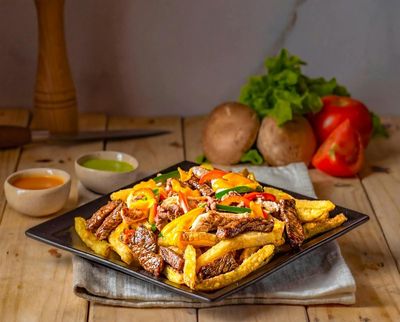
The Valparaíso bar classic, the giant shareable platter that lands in the middle of the table at every port-city watering hole. You deep-fry thick-cut chips until they're crisp and gold, sear thinly-sliced sirloin (lomo) hot in a wide pan, soften and lightly char onion in the same fat, and fry eggs sunny-side up. Everything piles into a single wide platter: chips on the bottom, steak and onion on top, eggs cracked over the lot so the yolks can run down. Some versions add slices of chorizo. Eaten communally with forks reaching from every side and a cold beer doing the rounds.

Chilean 1 hour 5 minutes Serves4
Dirty Rice

Dirty Rice

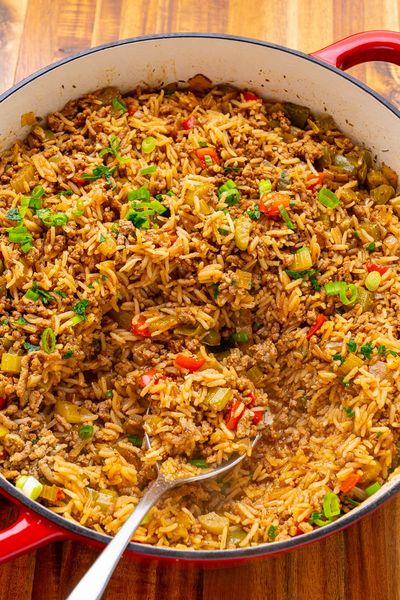
A staple of the Cajun home kitchen, the rice dish that turns up alongside fried chicken at Sunday lunch or as a centre-of-the-plate dinner on a Wednesday. You blitz chicken livers to a fine paste (so they melt into the rice rather than appearing as recognisable pieces - the texture is the point), brown minced beef or pork hard for colour, then add the Cajun trinity of onion, celery and bell pepper to soften in the rendered fat. Cajun spice blooms in the heat, rice toasts in the same pan, stock pours in, and everything simmers covered until the rice is tender and has drunk up the cooking liquid. The result is grey-brown rice studded with meat and trinity. The "dirty" name describes the look (livers staining the grains) not the cleanliness. Eaten with hot sauce on the table and a wedge of cornbread on the side.

Cajun 1 hour 5 minutes Serves6
Fried Börek with Meat Filling

Fried Börek with Meat Filling

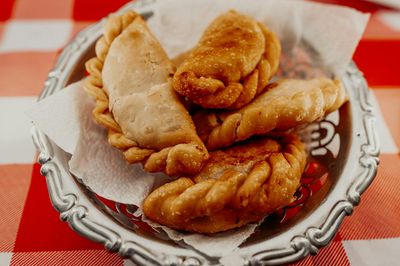
Fried börek are Turkish-influenced pastries that combine simple pastry (made from water, oil, and flour) with a seasoned ground meat filling. The meat is cooked in aromatics, bound together with egg, and enriched with fresh parsley. The pastry is thin and tender, becoming shatteringly crisp when deep-fried. The key to success is ensuring the filling is completely cold before assembling (otherwise it creates soggy pastry), rolling the pastry thin (for crispness rather than doughiness), and maintaining proper oil temperature during frying. These are best consumed immediately, while still warm and crispy.

Snacks 1 hour 35 minutes Serves30
Gimbap

Gimbap

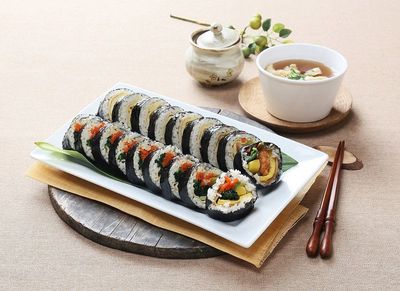
Rice cooks, dresses with sesame oil and salt while still warm. Fillings prep separately: carrots julienne and stir-fry briefly with salt; spinach blanches, drains, dresses with garlic, salt and sesame oil; egg cooks as a thin omelette, slices into strips; pickled yellow radish (danmuji) cuts into long strips; protein (ham, beef bulgogi, tuna mayo, fishcake) preps to size. Each gim sheet (toasted seaweed) lays on a bamboo mat; rice spreads thin over two-thirds of the sheet; fillings line in the centre; the mat rolls everything tightly. Cut into 12 slices per roll. Brushed with sesame oil; sprinkled with sesame seeds.

Snacks 1 hour 25 minutes Serves4
Keftedakia (Greek Mini Meatballs)

Keftedakia (Greek Mini Meatballs)

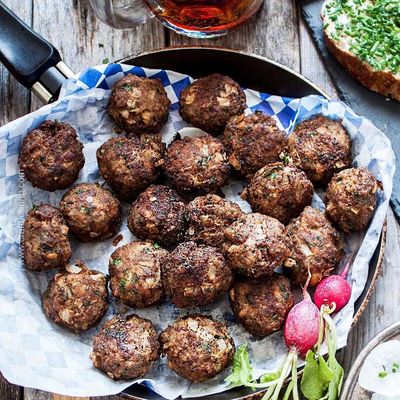
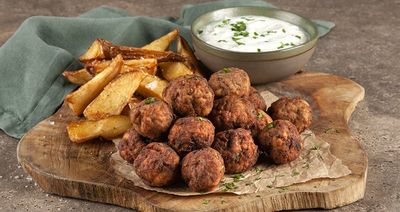
A grated onion (juice squeezed out) folds into beef-or-pork-and-beef mince with bread soaked in milk and squeezed dry, an egg, a generous amount of dried mint and oregano, parsley, garlic, salt and pepper. A tablespoon of ouzo or red wine adds depth. Mixture rests for 30 minutes (the flavours mingle, the bread fully absorbs). Rolls into walnut-sized balls, dusts in flour, pan-fries in olive oil 6-8 minutes turning often until deep brown and cooked through. Serves with tzatziki and lemon wedges.

Snacks 1 hour 10 minutes Serves6
← Prev Page 1 of 2 Next →