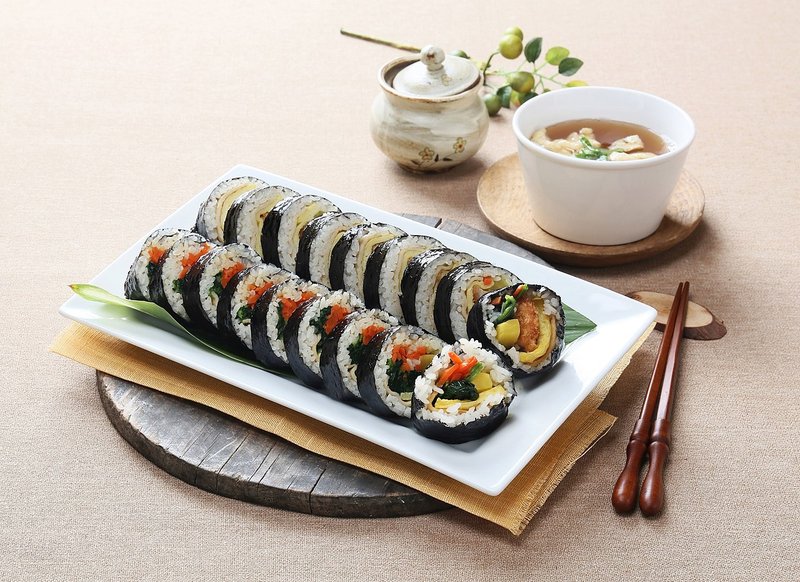
Gimbap
Korea's lunchbox roll: short-grain rice with sesame oil, rolled with pickled radish, spinach, carrot, ham and egg inside a sheet of nori.
Overview
Rice cooks, dresses with sesame oil and salt while still warm. Fillings prep separately: carrots julienne and stir-fry briefly with salt; spinach blanches, drains, dresses with garlic, salt and sesame oil; egg cooks as a thin omelette, slices into strips; pickled yellow radish (danmuji) cuts into long strips; protein (ham, beef bulgogi, tuna mayo, fishcake) preps to size. Each gim sheet (toasted seaweed) lays on a bamboo mat; rice spreads thin over two-thirds of the sheet; fillings line in the centre; the mat rolls everything tightly. Cut into 12 slices per roll. Brushed with sesame oil; sprinkled with sesame seeds.
Ingredients
Rice
- 400 g short-grain rice
- 480 ml water (1.2:1 ratio)
- 1 tablespoon toasted sesame oil
- 1 teaspoon salt
- 1 teaspoon sesame seeds (optional, mixed in)
Fillings (per 4 rolls - adjust to taste)
- 4 eggs (large)
- 1 carrot (medium, julienne 3 mm × 3 mm × 15 cm)
- 200 g spinach (or pre-trimmed baby spinach)
- 4 strips pickled yellow radish (danmuji), 15 cm long
- 4 strips ham (or 200 g beef bulgogi cooked, or 1 tin tuna mixed with mayo)
- 2 garlic cloves (minced)
- 1 ½ tablespoons toasted sesame oil (for fillings)
- salt
- pepper
Wrapping
- 4 sheets gim (roasted seaweed for gimbap - bigger than nori)
- 1 tablespoon sesame oil (for brushing)
- 1 tablespoon sesame seeds (for sprinkling)
Equipment
- 1 bamboo sushi mat (makisu) - strongly recommended
Method
Stage 1 - Rice
- Rinse the rice in 3 changes of water until the runoff is clear.
- Cook in a rice cooker (or 480 ml water, lid on, low heat, 18 minutes, 10 min rest).
- While still warm, transfer to a wide bowl; drizzle with sesame oil and salt; fluff with a fork.
- Cool to lukewarm (cold rice is too firm to spread; hot rice steams the seaweed).
Stage 2 - Fillings
- Carrot: stir-fry the julienned carrot in a teaspoon of sesame oil with a pinch of salt for 2 minutes. Spread on a plate to cool.
- Spinach: boil a pot of water; blanch spinach 30 seconds; drain; rinse cold; squeeze hard. Toss with 1 minced garlic, 1 teaspoon sesame oil and a pinch of salt.
- Egg: beat the eggs with a pinch of salt. Heat a non-stick pan over medium-low; add a teaspoon of oil. Pour in the eggs; cook 2 minutes as a thin sheet; flip; cook 30 seconds; slide onto a board; cool; cut into long strips 1 cm wide.
- Protein: if using ham, cut into 4 long strips. If using bulgogi, cook 200 g sliced beef in a hot pan with soy + sugar + garlic + sesame oil; cool; cut into strips. If using tuna, drain a 150 g tin; mix with 2 tablespoons mayo + a pinch of salt.
Stage 3 - Assemble
- Place a bamboo mat on the work surface; lay a sheet of gim shiny-side-down.
- With wet hands or a wet rice paddle, spread a quarter of the cooked rice evenly across the bottom two-thirds of the sheet (leave the top third bare).
- Press gently so the rice sticks but stays loose.
- Lay strips of each filling horizontally across the rice, near the bottom edge: pickled radish, carrot, spinach, egg, protein.
Stage 4 - Roll
- Lift the bottom of the bamboo mat over the fillings; tuck the fillings tightly under the rice.
- Roll forward, pressing firmly through the mat to compact the roll.
- Once the bare seaweed edge is reached, dampen it lightly with water and press to seal.
- Squeeze gently through the mat to firm the cylinder.
- Unroll the mat; the gimbap is done.
Stage 5 - Finish
- Brush the outside of each roll with a thin coat of sesame oil.
- Sprinkle a few sesame seeds.
- With a very sharp wet knife (wipe between cuts), slice each roll into 10-12 rounds about 1 ½ cm thick.
Stage 6 - Serve
- Arrange the slices on a plate, cut-side up to show the cross-section.
- Serve cool or room temperature.
- Pair with a small dish of kimchi.
Notes
- Rice at lukewarm: not steaming hot (seaweed turns soggy and tough), not cold-from-fridge (rice splits when rolled). Aim for body temperature.
- Wet the knife between cuts: dry blade tears the seaweed and squashes the rice. A damp cloth on the counter is helpful.
- Don't over-rice: common mistake is to use too much rice. A thin even layer rolls cleanly; thick rice makes a fat ungainly roll.
- Pickled yellow radish (danmuji) is the soul: the salty-sharp sweet crunch is iconic. Korean and Japanese groceries stock it; substitute pickled cucumber if absolutely necessary.
Storage
- Best within 8 hours of making.
- Refrigerate the unsliced roll if needed; bring back to room temperature 30 minutes before slicing and serving.
- Don't refrigerate sliced gimbap - the rice goes hard and the seaweed turns chewy.
More like this
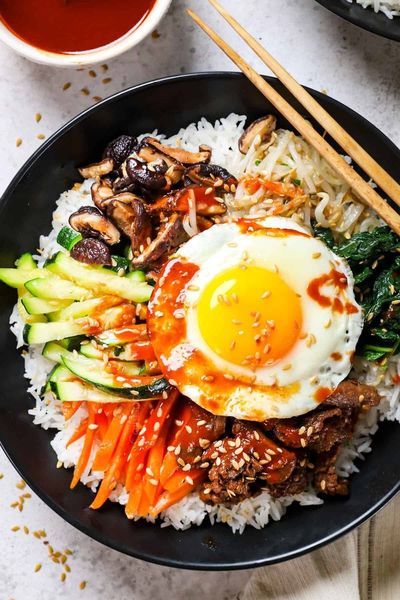
Bibimbap
Each vegetable cooks separately and gets dressed with sesame oil, garlic and soy. They arrange in colourful piles around a mound of rice; an egg fries on top. Gochujang sauce on the side. Diners mix vigorously before eating.
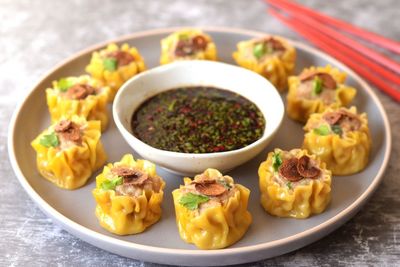
Kanom Jeeb
A filling of minced pork and chopped prawn binds with coriander root (pounded with garlic and white pepper into the traditional Thai "rak pak chee" paste), oyster sauce, soy sauce, sugar, sesame oil, and a beaten egg. The mixture chills for 20 minutes to firm. Square wonton wrappers go around the filling cupcake-style: filling in the centre, edges pulled up and pleated open around the meat, top brushed with a tiny smear of beaten egg and topped with a thin slice of carrot. Steamed in a bamboo basket over boiling water for 8 minutes. Dip is black soy sauce with sliced chilli and rice vinegar.
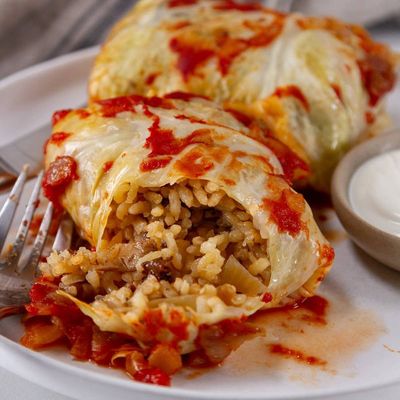
Holubtsi
A whole cabbage is cored and lowered into boiling water; the outer leaves soften and peel off in turn. The filling, half-cooked rice mixed with beef, pork, onion, garlic, herbs, egg, gets a heaped tablespoon onto each leaf, which folds and rolls into a parcel. The rolls layer in a pot with sauce of tomato, stock and soured cream; everything braises for 1 hour. Soured cream and dill at the table.
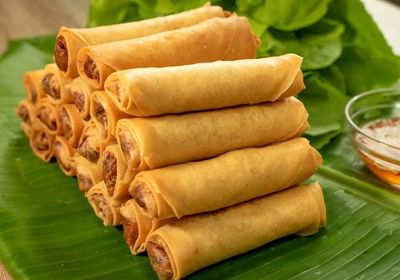
Chả Giò
A pork and prawn filling is bound with shredded carrot, glass noodles and reconstituted wood-ear mushrooms, then rolled tightly in moistened rice paper and fried twice for maximum crunch. The double-fry technique gives chả giò their characteristic bubbled, blistered crust. Served with cool lettuce leaves, herbs and a punchy nước chấm dipping sauce.