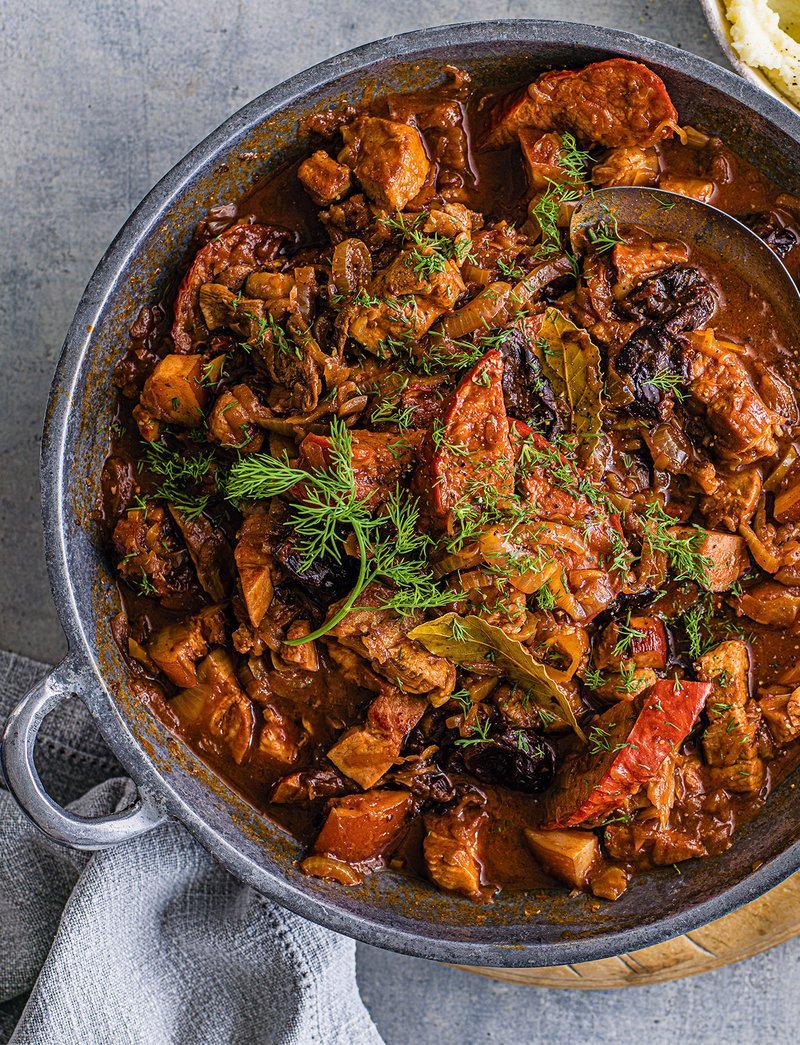
Bigos
Polish hunter's stew: sauerkraut and fresh cabbage simmered slow with mixed meats (pork, beef, sausage, sometimes game), dried mushrooms, prunes and red wine. Three days of cooking - properly bigos is reheated and reheated, deepening each day.
Overview
Pork shoulder, beef, smoked sausage and bacon all brown separately, then meet sauerkraut, fresh cabbage, dried porcini, prunes, tomato and red wine in a heavy pot. Simmers for 3 hours minimum; reheats over 2-3 days, getting better each round.
Ingredients
- 500 g pork shoulder (cubed)
- 300 g beef chuck (cubed)
- 200 g smoked Polish sausage (kielbasa; sliced)
- 200 g smoked bacon lardons
- 2 onions (chopped)
- 4 garlic cloves (crushed)
- 800 g sauerkraut (rinsed and drained)
- 500 g white cabbage (shredded)
- 30 g dried porcini mushrooms (soaked in 200 ml hot water for 30 minutes)
- 200 g prunes (pitted)
- 2 tablespoons tomato purée
- 250 ml red wine
- 500 ml beef stock
- 2 bay leaves
- 1 tablespoon caraway seeds
- 1 teaspoon allspice berries
- 6 juniper berries (lightly crushed)
- 1 teaspoon sweet paprika
- 1 tablespoon brown sugar
- salt
- pepper
- 2 tablespoons olive oil
Method
Stage 1 - Brown the meats
- Heat the oil in a very large heavy pot.
- Brown the bacon until the fat renders; lift out.
- Brown the pork in batches; lift out.
- Brown the beef; lift out.
- Lightly brown the kielbasa; lift out.
Stage 2 - Build the base
- Cook the onions in the rendered fat for 10 minutes.
- Add the garlic; cook 1 minute.
- Stir in the tomato purée; cook 1 minute.
- Pour in the red wine; reduce by half.
Stage 3 - Combine
- Return all the meats.
- Add the sauerkraut, fresh cabbage, soaked mushrooms (with their soaking liquid; strained), prunes, stock, bay, caraway, allspice, juniper, paprika and brown sugar.
- Stir to combine.
Stage 4 - Simmer
- Bring to a simmer; cover loosely.
- Cook on low heat for 3 hours, stirring occasionally, adding more stock if it dries out too much.
- Taste; season with salt and pepper. The sauerkraut already brings salt, so check before adding.
Stage 5 - Rest and reheat
- Cool overnight in the fridge.
- Reheat the next day for 30 minutes; the flavour deepens.
- On day three (and four), reheat again for another 20 minutes each time.
- Bigos really does improve over multiple reheats; patience is the recipe.
Stage 6 - Serve
- Ladle into deep bowls.
- Serve with rye bread and sharp mustard; mashed potato is also traditional.
Notes
- Multiple meats matter: Single-meat bigos is bland. The complexity comes from pork, beef, smoked sausage and bacon all contributing different notes.
- Reheat for days: Once cooked, bigos isn't done - it improves over 2-3 days of reheats. Plan accordingly.
- Don't drain the sauerkraut too well: Some of its briny liquid is part of the dish. Squeeze, don't rinse, unless yours is very salty.
Storage
- Improves over 3-4 days. Keeps a full week refrigerated.
- Freezes 3 months.
More like this
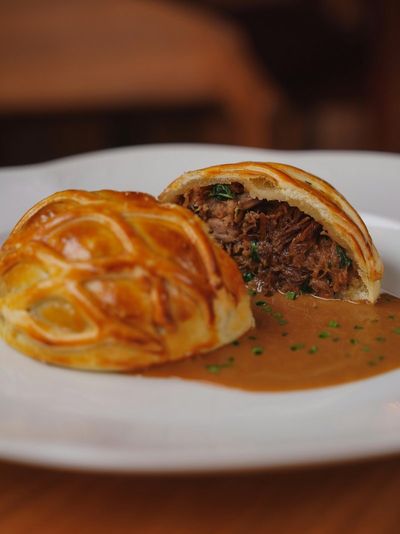
Beef Wellington
The defining British dinner-party showpiece, somewhere between French haute cuisine and English roast tradition, made famous in the modern era by Gordon Ramsay even if the Iron Duke himself probably never ate it. You sear a centre-cut beef fillet hard for colour, smear it with English mustard, wrap it in a tight blanket of mushroom duxelles and prosciutto, then encase the lot in all-butter puff pastry and roast at high heat. The pastry insulates the beef so it cooks gently to medium-rare while the crust crisps to deep mahogany above. The one technical trick the recipe insists on is drying the duxelles thoroughly so the pastry stays crisp underneath rather than going soggy from leaking mushroom water. Sliced at the table into thick rosy rounds, with a red-wine jus and roasted root vegetables on the side, the kind of plate that makes the evening feel like a special occasion before anyone says it.
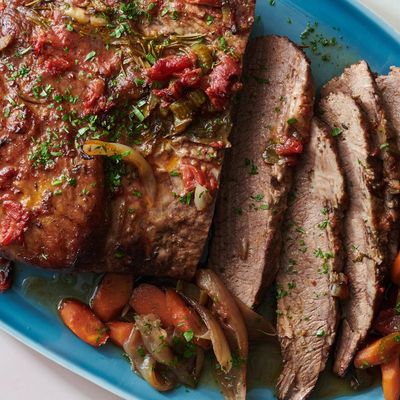
Jewish Brisket
This is the brisket that anchors every Ashkenazi holiday table - Rosh Hashanah dinner, the Passover seder, a Friday-night Shabbat. You sear the meat hard until the surface is mahogany, then build a slow braise on its rendered fat: onions caramelised down to gold, garlic and tomato paste deepened with paprika and brown sugar, wine and stock pulling the lot together. The brisket goes back in fat-side up and the pot disappears into a low oven for three hours plus, until a fork meets no resistance. The trick almost every recipe insists on is the overnight rest. You cool the meat in its sauce, slice it cold against the grain (warm brisket shreds, cold brisket slices clean), then reheat the slices in the sauce before serving. Spoon the onion-rich gravy generously over mashed potato, kasha or buttered egg noodles.
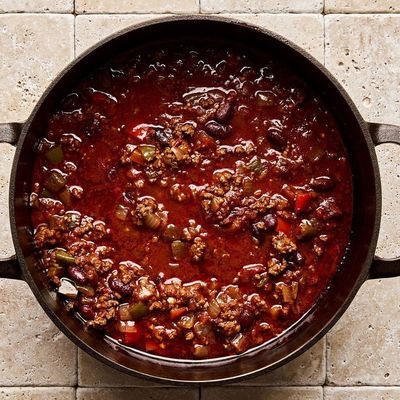
Mixed Meat and Bean Chilli
Chilli con carne is a hearty, flavour-packed stew that celebrates bold Mexican spicing combined with slow-cooked beef, beans, and tomatoes. This version builds deep, complex flavours through toasted whole spices, umami ingredients (marmite and soy sauce), and slow simmering. The result is a comforting, warming dish that improves with time and is perfect for feeding a crowd.
Creole Daube
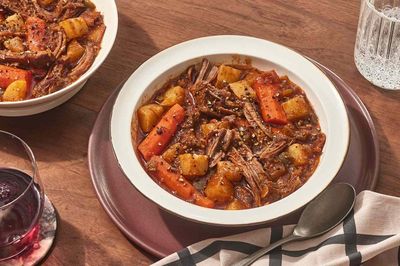
Beef chuck cubes brown hard; the trinity (onion, celery, pepper) soften deep in the rendered fat; tomato puree and tinned tomato build a rich base; red wine, stock, herbs and the beef simmer for 3 hours covered. Uncovered for the last 30 minutes to reduce. Serve over rice with chopped parsley.