In season

May produce

Tap any item to find recipes that use it.

Asparagus 0Rhubarb 0Peas 0Broad beans 0Radish 0Lettuce 0New potato 0Spring onion 0Watercress 0Sorrel 0
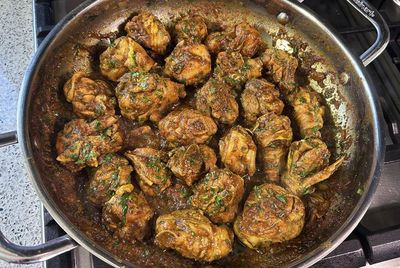
Bunjay-Style Curry Chicken

Bunjay-Style Curry Chicken

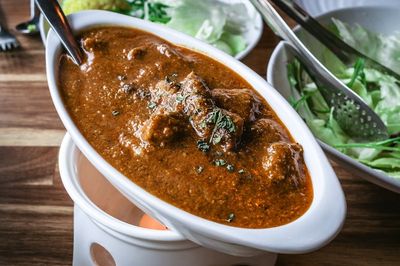
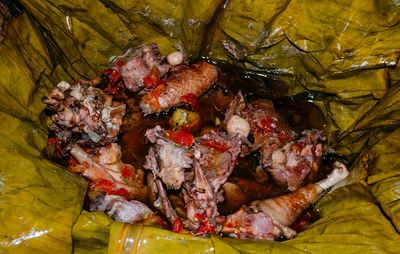
A dry curry rather than a saucy one, "bunjay" is Trinidadian patois for "fry-down", the technique of cooking meat in its own juices until the gravy completely disappears and the spices coat the surface of the meat in a sticky, glaze-like crust. The flavour is concentrated rather than diluted; nothing's been thinned with water or coconut milk, so what you taste is bone-in chicken, rendered chicken fat, and toasted spice. The spice mix is the East Indian Trinidadian signature: turmeric for colour and earth, roasted geera (toasted cumin, ground) for nuttiness, anchar masala for tang, regular curry powder for breadth. The pan oil splits and separates around the chicken at the end, which is the visual cue you're looking for. Smell when the curry powder hits hot oil is deeply aromatic, almost incense-like. Not difficult but it requires attention during the cook-down phase; if you walk away the curry burns onto the bottom of the pan. A Trinidadian household staple, eaten across the country with white rice and dhal, and a clean example of how Indian indentured labourers' descendants in the Caribbean evolved a distinct curry tradition over 150 years.
Trinidadian 2 hours 50 minutes Serves6
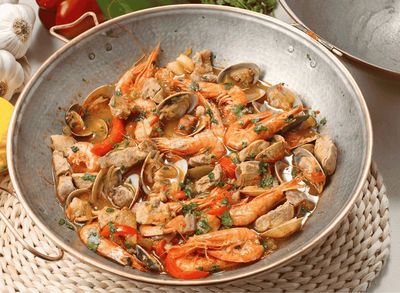
Cataplana de Marisco

Cataplana de Marisco

A cataplana is a hinged copper clamshell pan, and the seafood stew named after it is one of those dishes where the cookware does the work. You build a base of onions, peppers, sliced chouriço, smoked paprika, tomato and white wine in the bottom of the cataplana, then layer clams, mussels, prawns and chunks of firm white fish on top, clamp the lid shut, and steam it all for less than ten minutes. The lid lifts at the table to release a cloud of paprika-and-wine-scented steam, which is the entire point of the dish. If you do not have a cataplana, any wide pan with a tight lid does the same job. Coriander and lemon at the end, crusty bread for the broth, and vinho verde for everything else.

Portuguese 55 minutes Serves4
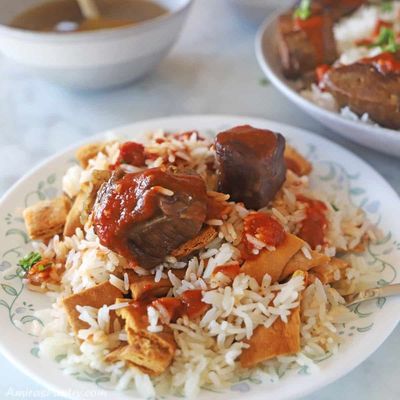
Kabsa

Kabsa

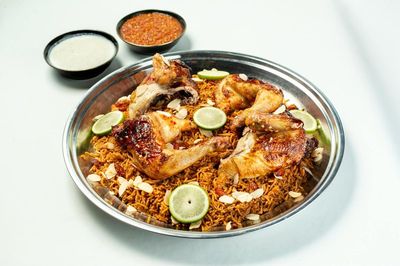
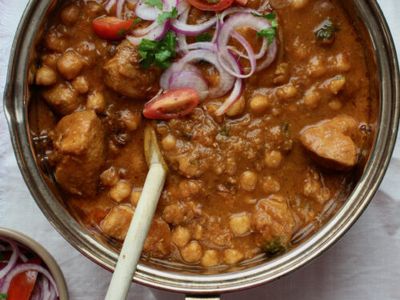
Saudi Arabia's national dish, the one platter you'll meet at almost every gathering from family lunch through wedding banquet. You brown chicken pieces or lamb shoulder hard in a heavy pot, then build a base of onion, garlic and ginger softened in the same fat, with tomato and a spoonful of baharat (or a dedicated kabsa spice mix) blooming until the kitchen fills with cardamom and cinnamon. The protein simmers in tomato and stock until it's tender and pulling away from the bone, then long-grain rice goes in to cook absorption-style in the same liquid, drinking up every layer of flavour the broth carries. You finish with almonds toasted in butter, raisins plumped briefly, and a fresh salsa of tomato, onion, chilli and parsley spooned on the side to cut the richness. Eaten communally from the centre platter, with hands or a long spoon.

Arabian 1 hour 35 minutes Serves6
Kefta Tagine

Kefta Tagine

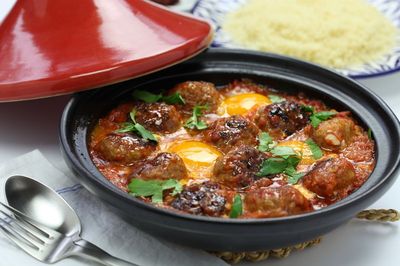
Beef or lamb mince is mixed with grated onion, garlic, fresh parsley and coriander, cumin, paprika, cinnamon, salt and pepper; shaped into small (3 cm) balls. A tomato sauce is built in the tagine: onion sweats in olive oil, garlic, cumin and paprika join, tomato passata and a stock cube simmer for 10 minutes. The meatballs are nestled in; cooked for 12 minutes turning once. Eggs are cracked into wells; lid on; 4 minutes more until the whites are just set. Scattered with parsley and served hot.

North African 45 minutes Serves4
Kofta Burger

Kofta Burger

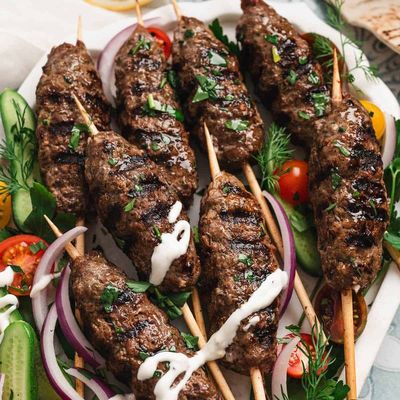
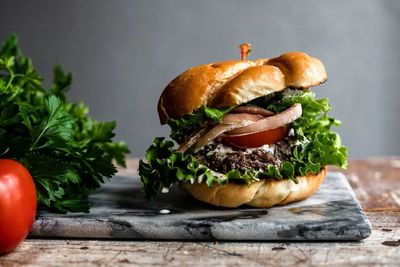
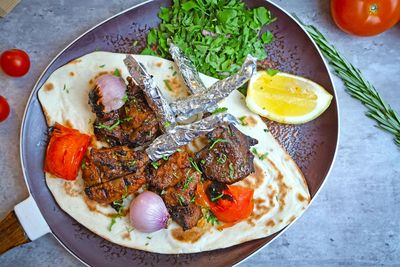
Lebanese kofta, sometimes spelled kafta, is minced lamb (often with a little beef) seasoned with grated onion, parsley and the warm spice blend known variously as baharat, sabaa baharat or seven-spice: allspice, black pepper, cinnamon, cloves, nutmeg, cumin and coriander. Traditionally it is moulded around flat metal skewers and grilled over charcoal at a mangal, where it sears fast and stays juicy. Shaping the same mince into a patty for a flatbread sandwich is a natural extension and one you will find in Beirut bakeries and Levantine takeaways from Sydney to Detroit. What makes this burger taste authentic and not just a "Middle-Eastern-spiced lamb burger" is the grated onion: pulled across a box grater so it dissolves into the mince and seasons every gram from the inside, releasing moisture as it cooks. Squeezing out the excess liquid first keeps the patty from falling apart. The sauce is a loosened tahini-yoghurt, tart with lemon and garlic, and the contrast comes from sumac-dusted onions whose sharp, almost berry-like sourness cuts through the lamb's richness. Wrap it in toasted khobz or a soft brioche, depending on the occasion. Difficulty is low. The only skill is restraint with the mince: knead just enough to bind, no more.

Lebanese 35 minutes Serves4
Lahem Bi Ajeen

Lahem Bi Ajeen

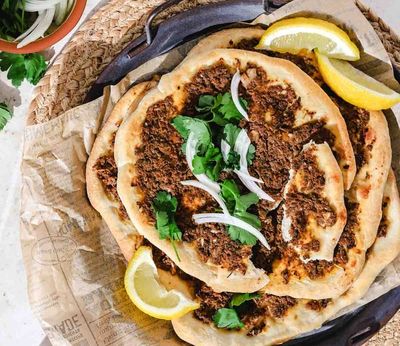
A soft yeasted bread dough rises for 1 hour. While it rises, the lamb mince is mixed by hand with grated onion, chopped parsley, finely diced tomato, garlic, baharat, allspice, cinnamon, pomegranate molasses, lemon juice and salt, no cooking, the mince stays raw and cooks on the pies. The dough divides into 12 balls; each rolls into a thin 12 cm disc; a heaped tablespoon of the meat mix spreads to the edges. Bakes for 8-10 minutes at 230°C on a baking stone (or hot tray) until the dough is crisp and the meat is glossy and just cooked through.

Palestinian 1 hour 57 minutes Serves6
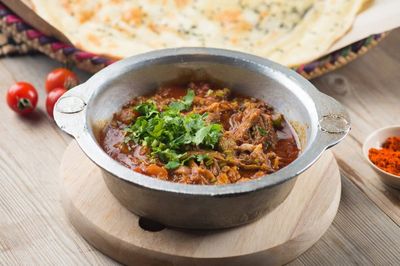
Lahori Mutton Karahi

Lahori Mutton Karahi

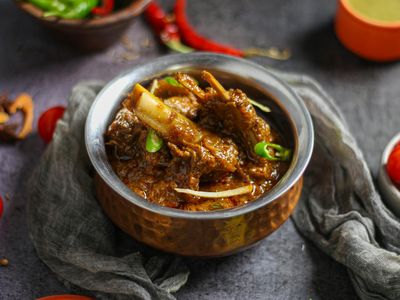
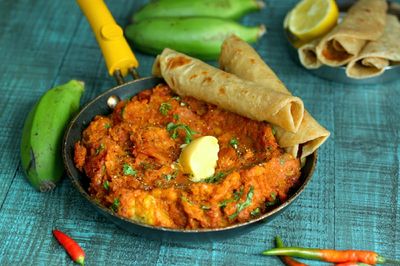
Bone-in lamb is browned in ghee with a small handful of whole spices, then ginger-garlic paste and tomato are added in two stages: first chopped, to break down into a base sauce, then sliced, to give texture at the end. The dish cooks uncovered the entire time, which is what defines Lahori karahi (the gravy reduces by half and concentrates). Green chilli, fresh ginger and coriander finish; a tablespoon of butter or ghee makes the slick on top.

Lahori 1 hour 30 minutes Serves4-6
Piri Piri Chicken

Piri Piri Chicken

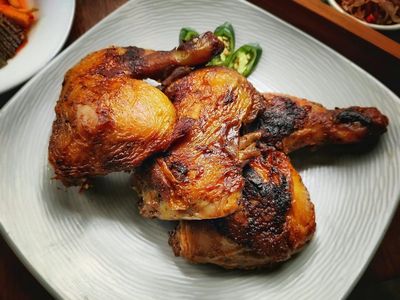
Piri-piri chicken is the dish that travelled from Mozambique to Portugal to the high street, and the original is still the best: a whole chicken spatchcocked flat, marinated overnight in a vivid red paste of bird's-eye chillies, garlic, paprika, lemon and olive oil, then grilled hard over charcoal until the skin is darkly blistered and the meat just-cooked through. The marinade itself takes five minutes in a blender. The bird wants a minimum of four hours in it, ideally overnight. A home broiler on max works if you do not have a barbecue, but the smoke from the coals is half the dish. Serve with a second bowl of the same marinade as a sauce, a green salad, and chips.

Portuguese 5 hours Serves4
← Prev Page 1 of 2 Next →