Saltah
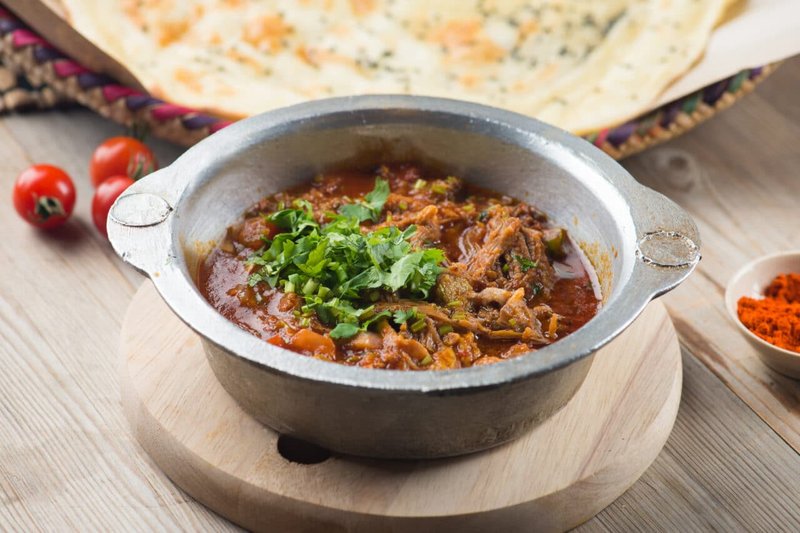
Yemen's national dish: a deeply savoury stew of slow-cooked lamb, tomato and fenugreek, served in a bubbling clay pot under a snowy whipped hulba froth.
Overview
Lamb (or beef) is slow-cooked in a Yemeni tomato-onion-spice stew (called maraq) for two hours. Just before serving, the stew is transferred to a flameproof clay or stone pot, brought to a violent boil on direct heat. Whipped hulba (overnight-soaked fenugreek seeds, blended with lemon and a little water into a snowy froth) is spooned on top. The pot is brought to the table boiling. Sahawiq adds heat.
Ingredients
Maraq (meat stew)
- 800 g lamb shoulder, neck (or beef shin, cut into 3 cm chunks)
- 3 tablespoons vegetable oil
- 2 onions (chopped)
- 6 garlic cloves (crushed)
- 1 thumb fresh ginger (grated)
- 2 (400 g) tins chopped tomatoes (or 6 fresh, grated)
- 2 tablespoons tomato puree
- 1 tablespoon ground cumin
- 1 tablespoon ground coriander
- 1 teaspoon ground turmeric
- 1 teaspoon ground cardamom
- 1 teaspoon ground black pepper
- 1 teaspoon salt
- 2 bay leaves
- 1.2 litres hot water
Hulba (whipped fenugreek)
- 3 tablespoons fenugreek seeds (the smaller, more bitter Yemeni variety if available)
- 250 ml cold water (for overnight soaking)
- 1 lemon (juice)
- 1 garlic clove
- ½ teaspoon salt
- 2 tablespoons cold water (for whipping)
To finish
- 4 tablespoons Sahawiq (Yemeni green chilli sauce, recipe in the sides)
- Lahoh (or hot flatbread, to scoop)
Method
Stage 1 - Soak the fenugreek (the night before)
- Place fenugreek seeds in a bowl; cover with cold water by 5 cm; soak overnight.
- Drain; rinse twice to remove the bitter outer slime.
Stage 2 - Brown the meat
- Heat the oil in a heavy pot. Pat the meat dry; brown hard on all sides in batches. Set aside.
Stage 3 - Build the stew
- In the same pot, soften the onions 10 minutes.
- Add garlic and ginger; cook 1 minute.
- Stir in cumin, coriander, turmeric, cardamom, pepper; cook 1 minute.
- Add tomatoes and tomato puree; reduce 8 minutes until thick.
- Return the meat with juices; add bay, salt and hot water.
- Cover; simmer on low 2 hours, until the meat falls apart at a fork.
Stage 4 - Make hulba
- Place soaked fenugreek seeds, lemon juice, garlic, salt and 2 tablespoons cold water in a blender.
- Blend on high until foamy, white and triple in volume (3-4 minutes). It should look like meringue.
- Refrigerate until serving.
Stage 5 - Final boil and serve
- Transfer the hot stew to a flameproof stone pot or cast-iron skillet (or keep in the same pot if no clay).
- Place over high heat; bring to a violent boil.
- Spoon dollops of hulba over the surface.
- Spoon a tablespoon of sahawiq into the centre.
- Bring the pot, still boiling, to the table.
Stage 6 - Eat
- Tear lahoh or flatbread; scoop directly from the pot. The first bites are eaten in the still-bubbling stew.
Notes
- Fenugreek bitter at first: Hulba is an acquired taste - intensely savoury, slightly bitter. Yemenis eat it from childhood. Soaking overnight and rinsing twice keeps the bitterness in check.
- Stone pot (madra): Traditional. A cast-iron skillet or any flameproof clay pot works to keep the boiling-at-the-table effect.
- Heat options: Add more sahawiq for heat. The hulba itself is not spicy.
Storage
- Stew refrigerates 3 days; reheats well, though the hulba doesn't keep - make fresh before serving.
- Soaked seeds keep 2 days refrigerated.
More like this
Yemeni Sambusa
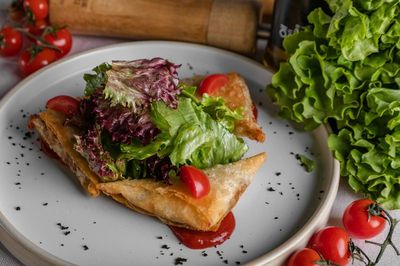
Lamb mince fries with onion, garlic, cumin, coriander and chilli to a dry savoury filling. Spring-roll pastry sheets are cut into long strips; a teaspoon of cooled filling goes on a corner; the strip folds into a small triangular packet via the flag-fold method. Sealed with flour-water paste; deep-fried 170°C until shatteringly golden. Eaten with a wedge of lemon and sahawiq.
Lahori Mutton Karahi
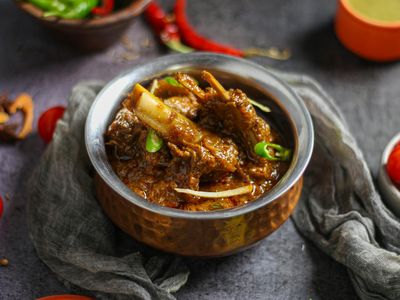
Bone-in lamb is browned in ghee with a small handful of whole spices, then ginger-garlic paste and tomato are added in two stages: first chopped, to break down into a base sauce, then sliced, to give texture at the end. The dish cooks uncovered the entire time, which is what defines Lahori karahi (the gravy reduces by half and concentrates). Green chilli, fresh ginger and coriander finish; a tablespoon of butter or ghee makes the slick on top.
Lamb Achari
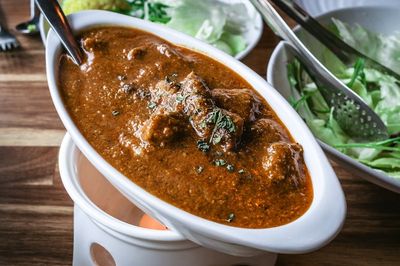
A Punjabi-inspired achari curry featuring pickle spices like panch poran and dried chillies, balanced with sweet mango chutney and tangy lime pickle. This dish captures the essence of Indian pickles in a rich, flavorful lamb curry.
Thukpa
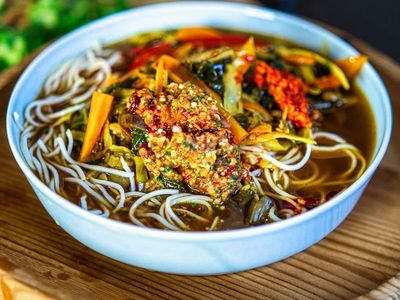
A simple wheat-flour dough rests while a clear, ginger-and-garlic-forward broth simmers with beef (standing in for yak), Sichuan peppercorn and a tomato. The dough is rolled and cut into thin noodles, or, if you prefer, store-bought egg noodles. Vegetables and greens go in at the end; fresh coriander and chilli on top. Honest, restorative, not fancy.