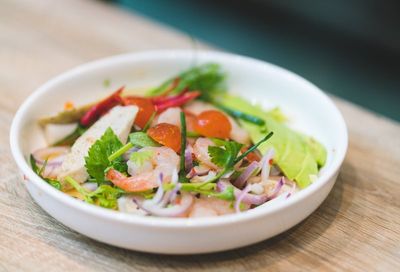
Glass Noodle Salad
Spicy Thai salad with glass noodles, prawns, and pork. Nostalgic dish from Thai barbecues; serve hot or at room temperature.
Salads
Tap a chip to add another filter, or use Clear all below.
Tap any item to find recipes that use it.
Spicy Thai salad with glass noodles, prawns, and pork. Nostalgic dish from Thai barbecues; serve hot or at room temperature.
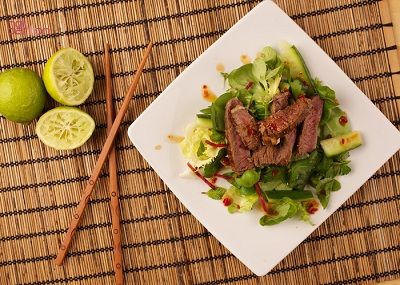
Go Bo Hoi An is a piquant Vietnamese beef salad featuring thinly sliced seared beef tossed with crisp vegetables, fresh herbs, and a bright tamarind-lime dressing. This dish has delicate undertones of lime and garlic which carry through the tamarind flavours perfectly. The combination of tender beef, crunchy vegetables, aromatic herbs, and crispy rice papers creates a textural and flavourful celebration of Vietnamese cuisine. Quick to make but requires advance preparation, ensure the salad, dressing, and toppings are made and ready to use before cooking the beef.
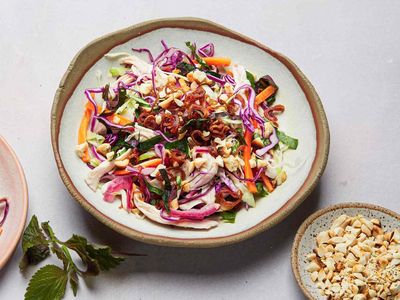
Poached chicken is shredded and tossed with finely shredded cabbage, carrot and onion that has been softened in a light vinegar bath. A bright nước chấm style dressing brings everything together and toasted peanuts and fried shallots finish the top. The trick is balance: the salad should be crunchy, not waterlogged, and the dressing should taste sharp on its own before it hits the salad.
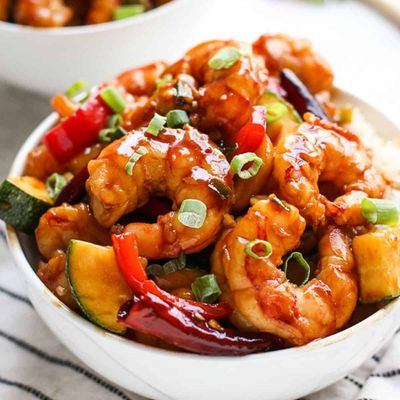
Kung pao (gongbao) shrimp is the seafood cousin of the classic Sichuan gongbao jiding, named for the 19th-century governor-general Ding Baozhen whose title was Gong Bao. Where the chicken version uses diced meat, the shrimp version keeps the prawns whole or halved so they curl into bright pink commas around the chillies and peanuts. The flavour profile is the signature Sichuan "lychee" balance: a touch of sweetness from sugar, sourness from black vinegar, salt and umami from soy, and the warm tingle (ma la) of toasted Sichuan peppercorn paired with the smoky bite of dried er jing tiao chillies. This is a fast dish, fundamentally a wok exercise: every ingredient must be prepped and lined up before the heat goes on, because once the chillies hit the oil you have maybe ninety seconds before everything is overcooked. Difficulty is moderate for a home cook with a working wok and high burner; the trick is keeping the chillies dark red and fragrant without scorching them black, and pulling the shrimp out the moment they curl. Served over plain rice it is one of the most rewarding ten-minute meals in the repertoire.
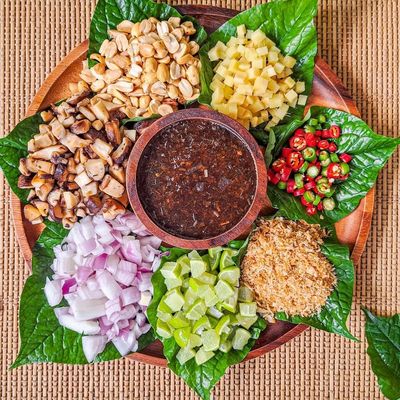
The sauce (the technical heart of the dish) reduces palm sugar, fish sauce, tamarind paste, water, ginger and dried shrimp to a thick, glossy, dark amber syrup. The fillings, diced lime (skin and all), diced ginger, sliced shallot, chopped roasted peanuts, dried shrimp, small chilli, and toasted shredded coconut, are arrayed in small mounds on a serving platter. Fresh young betel leaves go alongside. Each diner takes a leaf, layers a tiny pinch of each filling, drops a quarter-teaspoon of the sauce on top, folds and pops the whole thing in one bite.
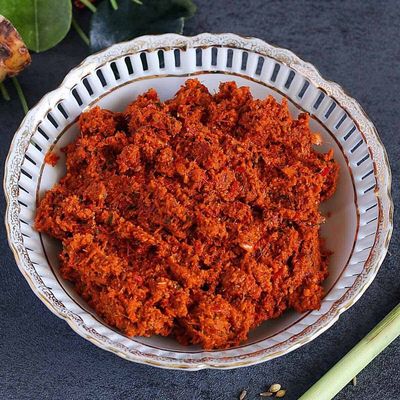
Milder, sweeter than red curry paste, with roasted peanuts. Key ingredient for Panang curries; adjust spice and sweetness as desired.
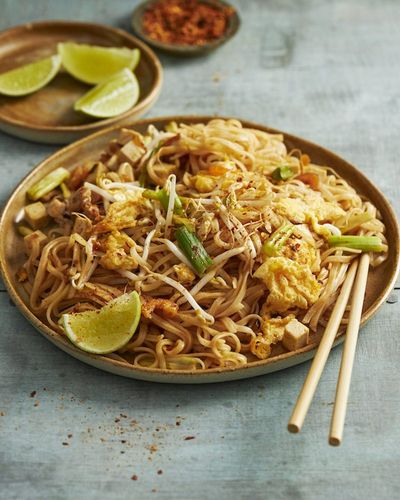
This classic Thai dish of noodles is both aromatic and lightly spicy, serving well as either a main course or a starter. Pad Thai combines stir-fried rice noodles with tender chicken, pork, and prawns in a balanced sauce of curry paste, oyster sauce, and fish sauce. Fresh herbs, crushed peanuts, and a squeeze of lime complete this iconic Thai street food favourite.
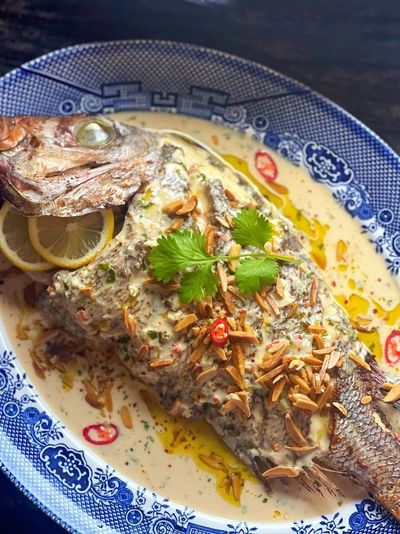
A whole fish is rubbed with salt, lemon, garlic and olive oil inside and out. While it rests, a sauce of tahini, lemon juice, water, garlic and chopped fresh coriander whisks together, adjusted with more water until the texture of pourable double cream. Diced red onion, Aleppo pepper, cumin and a pinch of cayenne fry briefly in olive oil. The tahini sauce stirs in; warms gently to a velvety consistency. The fish nestles on top in an oven dish; the sauce surrounds it; covered with foil; baked for 20 minutes; uncovered another 5-10 minutes. Topped with toasted pine nuts, pomegranate seeds and extra coriander at the table.
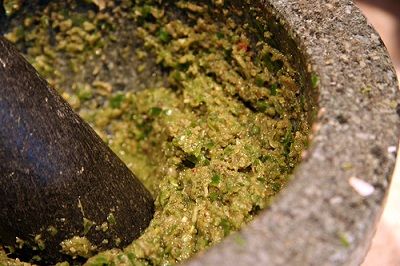
Thai green curry paste combines fresh green chillies (not reduced in heat like Thai red paste), fresh herbs including cilantro and lemongrass, and aromatic spices. The "green" comes from fresh coriander and green chillies, not fromprocessing. This is one of Thailand's most iconic curry pastes. Unlike red curry paste which is often toasted-spice based, green relies on fresh ingredients for its character and building, sustained heat.