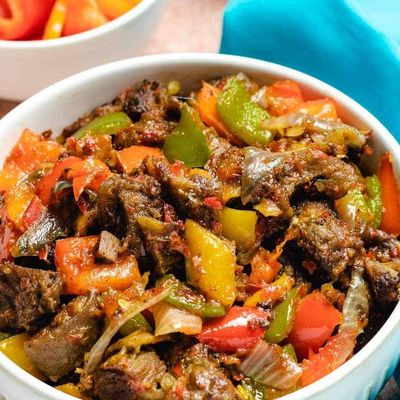
Asun (Spicy Smoky Goat Meat)

Asun (Spicy Smoky Goat Meat)

Goat meat (bone-in pieces, ideally) simmers in water with onion, garlic, bay, salt and bouillon till tender (45 min). Lifts out; pats dry; grills over high heat (or under a hot grill / on a griddle pan) till charred (8-10 min). Pepper base: scotch bonnet, red pepper, onion, garlic blitz to paste; sautés in oil with curry powder, thyme, ginger till fragrant. Charred meat tosses in the pepper paste; cooks for 5 minutes more; tops with fresh chopped onion. Eats hot.

Snacks 1 hour 35 minutes Serves4
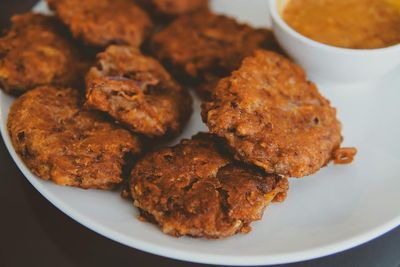
Bean Akyaw

Bean Akyaw

The Burmese yellow split-pea fritter, sold by street vendors in hot oil-spattered cones of newspaper across Yangon's evening markets. You soak yellow split peas overnight until they're softened but not mushy, then blitz to a coarse sandy paste with shallot, garlic, ginger, turmeric and coriander. No flour, no binder; the natural starch in the peas holds the fritters together as they fry. Tablespoonfuls drop into hot oil and fry until they're deep gold and craggy at the edges. Eaten hot from the cone with a sour-sweet tamarind dipping sauce, a wedge of lime, and whatever you can carry while you walk on through the evening crowds.

Snacks 6 hours 35 minutes Serves4
Beef Si Byan

Beef Si Byan

A Burmese curry from the country's Indian-origin community, sitting somewhere between a Madras and a Burmese ohn-no in spice profile. You marinate chunks of beef chuck or shin in turmeric, fish sauce and salt while you fry onions in oil until they're deep brown - that long onion fry is the foundation. The beef browns in the same oil, then ginger-garlic paste, paprika and chilli powder go in, then tomato and water turn it into a stew. Two hours of slow simmer until the meat falls apart at a fork. The signature finish is the see byan, a deep red-orange oil slick that rises to the top of the curry as it reduces, which is what the dish is named for. Eaten with rice or paratha, and a small bowl of pickled vegetable on the side.

Burmese 3 hours 20 minutes Serves4
Burmese Tea-Leaf Snack Mix

Burmese Tea-Leaf Snack Mix

The older, more ceremonial form of lahpet, the version that predates the salad. Unlike lahpet thoke (the salad), there's no cabbage, no tomato, no fresh dressing - the fermented tea leaves stay pungent and concentrated, and the fried elements supply texture and salt. You keep all the components separate on a divided plate until they reach the table, so the crispy bits don't soften, and each guest builds their own bite from the spread. Eaten as an afternoon teashop snack with a small cup of green tea, or traditionally at the close of formal meals as a sign of welcome and reconciliation - a Burmese custom that dates back centuries and still turns up at weddings.

Snacks 25 minutes Serves6
Cataplana de Marisco

Cataplana de Marisco

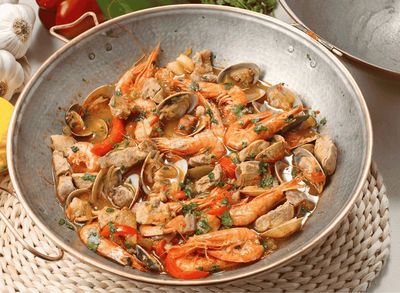
A cataplana is a hinged copper clamshell pan, and the seafood stew named after it is one of those dishes where the cookware does the work. You build a base of onions, peppers, sliced chouriço, smoked paprika, tomato and white wine in the bottom of the cataplana, then layer clams, mussels, prawns and chunks of firm white fish on top, clamp the lid shut, and steam it all for less than ten minutes. The lid lifts at the table to release a cloud of paprika-and-wine-scented steam, which is the entire point of the dish. If you do not have a cataplana, any wide pan with a tight lid does the same job. Coriander and lemon at the end, crusty bread for the broth, and vinho verde for everything else.

Portuguese 55 minutes Serves4
Chruok

Chruok

A Cambodian quick-pickle, the bright sharp counter that turns up on every Khmer table next to grilled meats and rich curries. You julienne daikon, carrot and cucumber thin so the brine penetrates fast, then salt them briefly in a colander to draw the water out. The brine is sweet-sour: lime juice, white vinegar, palm sugar, fish sauce (or soy for a vegetarian version) and a sliced bird's-eye chilli. Pour it over the drained vegetables and leave to sit at room temperature for an hour, then refrigerate. Ready in an hour, better after three, best the next day. Eaten alongside grilled fish or chicken, piled into a bowl of rice with anything saucy, or tucked into a sandwich.

Cambodian 1 hour 15 minutes Serves4
Curry Smelts

Curry Smelts

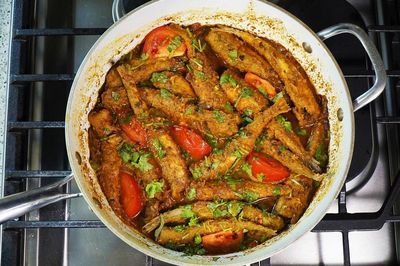
Trinidadian comfort food that brings together the East Indian and Afro-Caribbean strands of Trini cookery in one pan: small whole fried fish (a West African and Caribbean coastal habit) drowned in a Trinidadian East Indian curry sauce. The fish are smelts, sardines or whitebait, whole, head-on, eaten with a small bite to remove the spine. Once fried they sit crisp; when the curry sauce hits, the outer crust softens slightly and absorbs the gravy while the centre stays meaty. The sauce is the dish's signature: roasted geera (dry-toasted cumin) gives a smoky, nutty depth that pre-ground supermarket cumin can't touch, anchar masala adds a fermented-tangy edge (it's the Trinidadian pickled-mango spice mix), and Caribbean curry powder rounds the warmth. Whole pierced Scotch bonnet scents without flooring. Smell when the spices bloom in hot oil is heavy and pungent in the best possible way. Not difficult but it's a two-pan dance, so timing matters. A daily-cookery dish across Trinidad and Tobago and the Indo-Trinidadian diaspora, eaten with steamed rice or with sada roti torn and used as a scoop.

Trinidadian 50 minutes Serves5
Doenjang Jjigae

Doenjang Jjigae

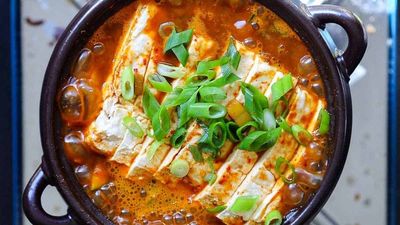
A quick anchovy-and-kelp stock makes the broth backbone (the Korean kitchen standard, taking 10 minutes). Doenjang (about 3 tablespoons) whisks into the hot stock with a small spoonful of gochujang for warmth, never aggressive heat. The vegetables go in by sturdiness: potato first, then courgette and mushrooms, then onion and chilli, finally cubed tofu and clams (or anchovies) at the end. Simmers for 12-15 minutes total. A little minced garlic stirs in at the very end so it doesn't dull. Brought to the table in the cooking pot, still bubbling.

Korean 40 minutes Serves4
Egusi Soup

Egusi Soup

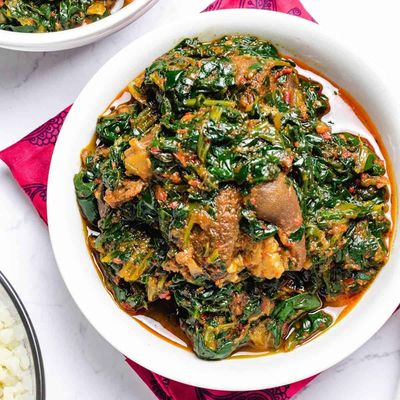
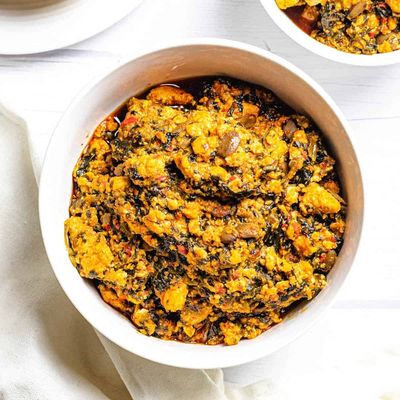
Beef or goat is parboiled with onion, stock cube and salt to make a base stock. Smoked fish hydrates in hot water and is picked clean. Egusi seeds are ground (or already-ground egusi powder is used) into a thick paste with a little water. Onion, garlic, ginger and Scotch bonnet blitz into a hot pepper paste. Palm oil heats until just smoking; the pepper paste fries in it 5 minutes. Egusi paste goes in and "fries" 10 minutes until it forms small clumps. Stock and meat join; everything simmers for 20 minutes. Smoked fish, ground crayfish and locust beans add depth. Chopped spinach (or bitter leaf) goes in for the last 5 minutes. Salt to season.

Nigerian 1 hour 40 minutes Serves6
Ensaladang Talong (Grilled Eggplant Salad)

Ensaladang Talong (Grilled Eggplant Salad)

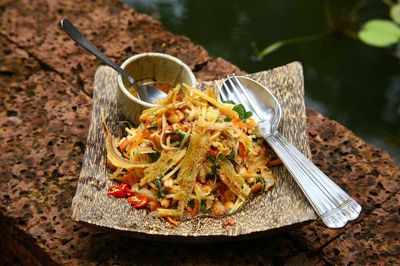
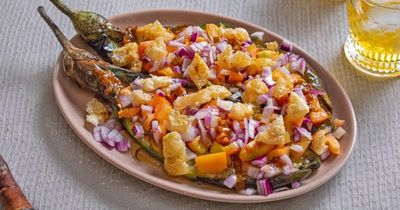
Long Asian aubergines char directly over a gas flame or hot grill until blackened all over and totally soft inside (poke through to test, no resistance). Cool for 10 minutes; peel away the charred skin (it slips off if cooked enough). Tear the flesh into 5 cm strips. Dress with diced tomato, thin-sliced red onion, fish sauce, white-cane vinegar and calamansi juice. Rest for 5 minutes to let the eggplant absorb the dressing. Serve room temperature.

Sides 27 minutes Serves4
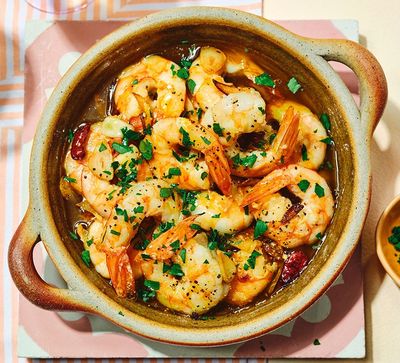
Firecracker Prawns

Firecracker Prawns

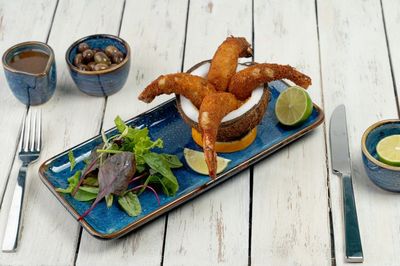
Prawns (shrimp) curl naturally into half-circles. To get your firecracker prawns looking right you need to do some cosmetic work but it’s an easy job: the underside of the prawns needs to be scored in three places so that you can straighten them up. I have seen this popular starter prepared with many different marinades but as the name implies, it’s the chilli that is important. In this recipe I suggest using both chilli paste and roasted chilli flakes. How much of each you add, however, is completely down to you and how spicy you like your food. I recommend serving these with sweet chilli sauce.

Starters 30 minutes Serves20
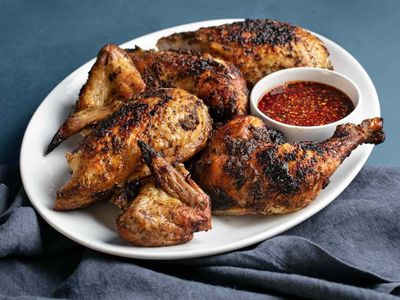
Gai Yang

Gai Yang

Gai yang ("grilled chicken") is one of the cornerstones of Isaan cooking, the cuisine of north-eastern Thailand that has spread across the whole country and into Thai restaurants worldwide. The defining flavour is coriander root, an ingredient barely used in Western cooking but central to Thai marinades. Pounded in a granite mortar with garlic, white peppercorns and a pinch of salt, it forms an aromatic paste that's then mixed with fish sauce, oyster sauce and a touch of sugar. The chicken is butterflied (spatchcocked) so it lies flat on the grill, marinated for at least 4 hours, then cooked slowly over moderate charcoal. The proper Isaan technique is patient: 30 minutes or more, turning often, sometimes pressed flat between two bamboo splints, so the skin slowly crisps and the meat takes on smoke without burning. The flavour is savoury-funky from fish sauce, peppery-warm from white pepper, deeply garlic-and-herb from the paste, with no chilli in the marinade itself; heat comes from the dipping sauce. Difficulty is low for the home cook: a good mortar or a small food processor makes the paste in 2 minutes, butterflying a chicken is a single cut down the backbone, and any covered grill or kettle does the cooking. Eaten by hand with balls of sticky rice and dipped into nam jim jaew, the toasted-rice-and-tamarind dipping sauce.
Thai 5 hours Serves4
← Prev Page 1 of 5 Next →