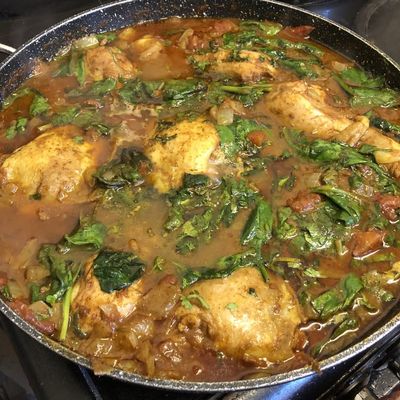
Agra Ginger Chicken
A light, cleansing chicken curry from Agra with fresh ginger, warm spices and bright tomato notes. This vibrant dish is designed to be accessible and fresh, with spinach and lime lifting the finished curry.
Indian
Tap a chip to add another filter, or use Clear all below.
Tap any item to find recipes that use it.
A light, cleansing chicken curry from Agra with fresh ginger, warm spices and bright tomato notes. This vibrant dish is designed to be accessible and fresh, with spinach and lime lifting the finished curry.
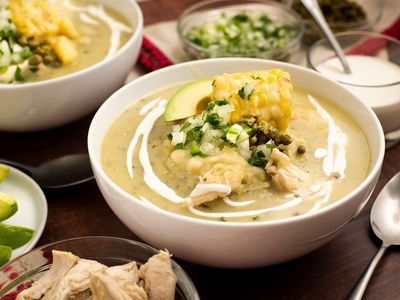
Chicken poaches with onion, garlic and herbs into a clean, golden broth. The first potato (sabanera, or floury maris piper) drops in to start; the small yellow papa criolla follows to break down and thicken; pastusa or red potatoes go in last to hold shape. Cobs of sweet corn cook in the same pot. Guascas, the dish's signature herb, adds at the very end. Each bowl tops with shredded chicken, avocado, capers and a generous spoon of cream; rice on the side.
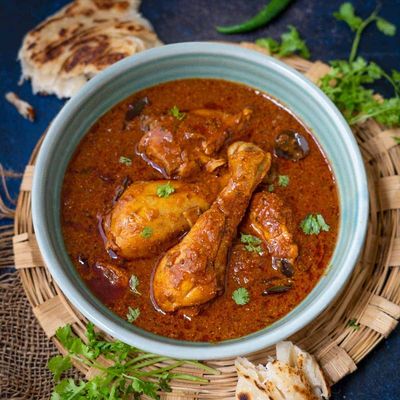
Chicken thighs are marinated briefly with turmeric, ginger-garlic paste, yogurt and a pinch of red chilli. A dry-roast of poppy seeds, sesame seeds, coconut, fennel, coriander and dried red chillies is ground with a splash of water into a coarse paste. The base is built with shallots, curry leaves and tomato; the chicken is browned in stages; and the masala paste is folded in for the long, gentle simmer. Tamarind and a curry-leaf temper finish.
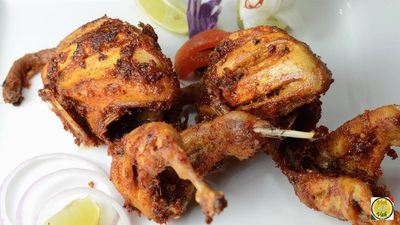
Simple tandoori-style chicken thighs marinated in yogurt and spices for tender, flavorful meat. Thighs or drumsticks work best; use mild paprika for color and flavor, or chilli powder for heat. Yogurt and lemon tenderize the meat, allowing spices to penetrate deeply.
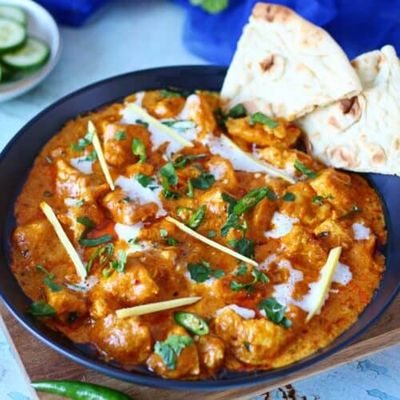
A rich, ghee-laden chicken handi cooked in the traditional style, featuring tender chicken thighs simmered in a spiced tomato-onion base with yoghurt and cream. Named for the handi pot, this dish varies by chef but delivers deep, authentic flavors.
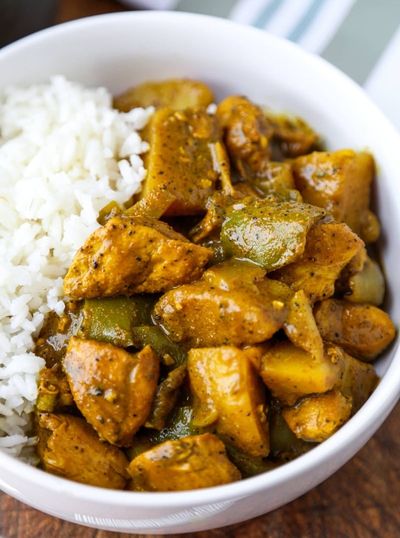
Jamaican curry sits in its own corner of the global curry map: heavier on turmeric and allspice than Indian Madras, lighter on cumin, and built on a technique called "burning the curry" that gives the dish its character. The technique is exactly what it sounds like, dry curry powder hits hot oil and is stirred for 30 seconds until it darkens from yellow to deep gold and smells like toasted spice. That move concentrates the flavours and removes any raw edge. The finished stew is bright yellow stained slightly orange, savoury and aromatic rather than searingly hot, with thyme and a whole pierced Scotch bonnet scenting the gravy without flooring it. Smell: bloomed curry powder, allspice, browned chicken fat. Not difficult, but requires confidence in the 30-second bloom (under-do it and the dish is flat; over-do it and you have to start over). A Sunday-dinner staple across Jamaica and the diaspora, served over white rice with the gravy spooned generously over.
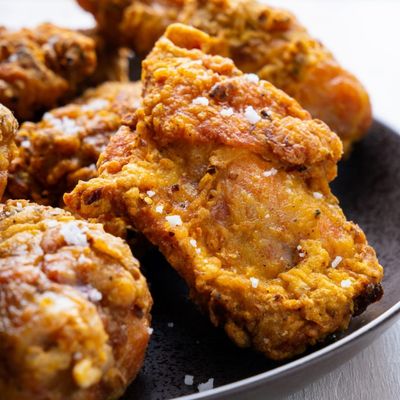
Bone-in chicken pieces are marinated with a freshly pounded spice paste of shallots, garlic, ginger, galangal, lemongrass and turmeric, then dipped in a thin egg and cornflour batter and shallow-fried until golden. The result is a deeply spiced, crackly-crusted fried chicken that picks up colour from the turmeric and depth from the toasted seeds. An overnight marinate is optional but rewards the wait.
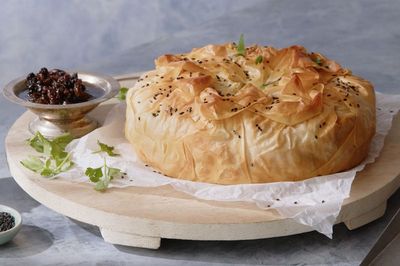
Chicken poaches in a heavily spiced broth (saffron, ginger, cinnamon, lemon). The shredded meat returns to a reduced sauce thickened with beaten eggs to make a soft set. Toasted almonds with sugar and cinnamon form a layer. Everything wraps in butter-brushed filo, baked golden, and dusted with icing sugar and cinnamon.
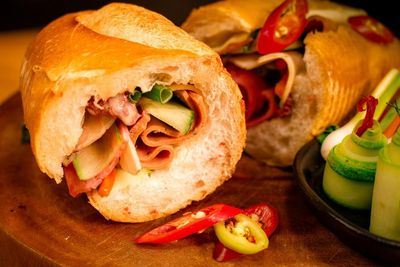
A good bánh mì is mostly assembly. The bread should be light and crackly, the pâté smeared on thickly, the mayo generous, the meat layered cold and the herbs and pickles loaded right to the edges. A short blast in a hot oven is what crisps the loaf; the filling goes in straight after. Eat standing up over the sink.
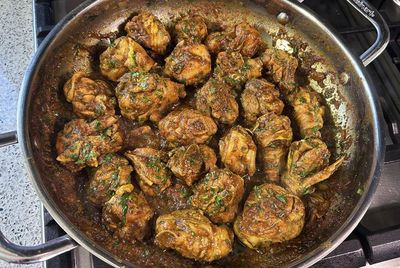
A dry curry rather than a saucy one, "bunjay" is Trinidadian patois for "fry-down", the technique of cooking meat in its own juices until the gravy completely disappears and the spices coat the surface of the meat in a sticky, glaze-like crust. The flavour is concentrated rather than diluted; nothing's been thinned with water or coconut milk, so what you taste is bone-in chicken, rendered chicken fat, and toasted spice. The spice mix is the East Indian Trinidadian signature: turmeric for colour and earth, roasted geera (toasted cumin, ground) for nuttiness, anchar masala for tang, regular curry powder for breadth. The pan oil splits and separates around the chicken at the end, which is the visual cue you're looking for. Smell when the curry powder hits hot oil is deeply aromatic, almost incense-like. Not difficult but it requires attention during the cook-down phase; if you walk away the curry burns onto the bottom of the pan. A Trinidadian household staple, eaten across the country with white rice and dhal, and a clean example of how Indian indentured labourers' descendants in the Caribbean evolved a distinct curry tradition over 150 years.
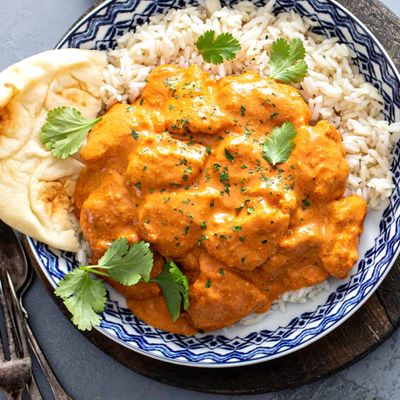
The BIR icon: tandoori-grilled chicken finished in a velvety tomato-onion sauce enriched with double cream, butter and a hit of garam masala at the end. Mildly spiced, lightly sweet, deeply savoury. The sauce is built on a paste of cooked onion, tomato and cashews / almonds, finished off-heat with cold butter for the signature gloss.
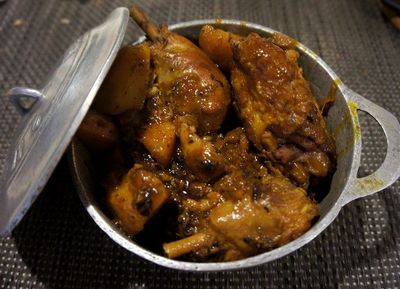
Mauritian cuisine is a layered conversation between Indian, African, Chinese and French traditions, and cari poulet is one of its clearest expressions. The Creole community took the Indian template of a wet curry and rebuilt it with local fresh herbs, particularly thyme and curry leaves grown in the yard, plus tomato, and a masala that is gentler and more aromatic than its mainland Indian cousins. Chicken on the bone is browned for fond, then potatoes are added and the whole pot is simmered in a curry-leaf and tomato gravy until the meat is falling off the bone and the potatoes are creamy on the outside but holding shape. The colour leans red-brown from paprika and turmeric rather than the bright yellow of a Punjabi-style curry. Heat is moderate, intended to complement rice and a chilli-based satini, not overwhelm them. For a home cook the difficulty is low to moderate; the only real demand is patience while the masala blooms in the oil at the start, which is what gives the dish its depth. Serve over plain steamed rice with a coriander satini and a spoon of green chilli pickle, the classic Mauritian Sunday plate.
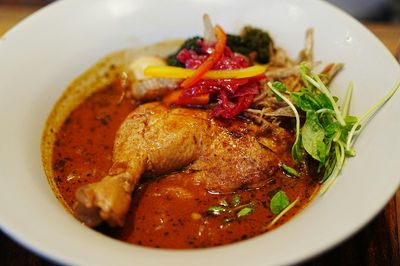
In many Caribbean stew dishes there is an initial step of burning sugar in oil which is used to brown the meat in. This adds a very unique sweetness to the stews from this region and this sweetness paired with the unmistakable flavour (and heat) from the wonderful scotch bonnet chilli is simply astounding. This curry uses curry powder for a fragrant and delicious result that captures the essence of Caribbean cooking.
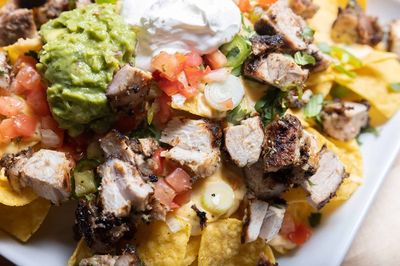
A Caribbean-American fusion that works because both food cultures speak the language of "everything on one tray". The base is American nachos: tortilla chips, melted cheese, black beans. On top sits jerk-marinated chicken thigh, which carries the dish's flavour, allspice, Scotch bonnet, nutmeg, cinnamon, thyme, soy and brown sugar blended into a wet jerk paste, marinated into the meat overnight, then oven-baked and sliced. The fresh element on top is a Trinidadian-style fruit chow: diced mango, pineapple, red bell pepper and red onion dressed with lime juice and cilantro. The chow is what makes this work; without it the nachos are just spicy meat-and-cheese, with it the dish has acid, crunch and sweetness to cut through the richness. Smell is melted cheese hitting jerk seasoning, with a citrus-tropical lift from the chow on top. Not difficult but it's three components running on different timelines, so plan ahead. A modern party-and-Super-Bowl-tray dish rather than something a Kingston grandmother makes, popularised by Caribbean-American food bloggers in the 2010s.
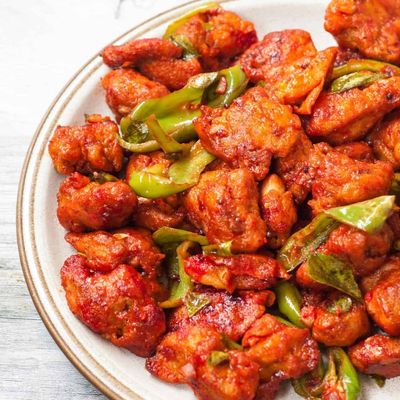
Chicken thighs cube small; marinate for 1 hour in yogurt, ginger-garlic paste, Kashmiri chilli, garam masala and cornflour. Deep-fried in two stages, first to cook through, second to crisp. While the chicken rests, a hot tempering of curry leaves, garlic, dried chillies, soy and vinegar sputters in a wok. The fried chicken tosses through the tempering for 30 seconds and goes straight to the plate.
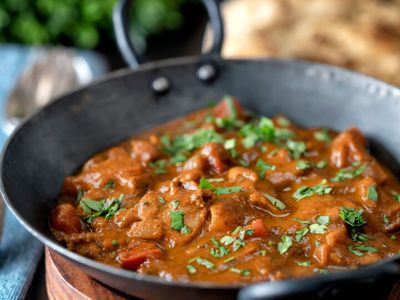
Birmingham's defining curry, cooked hard and fast in a thin two-handled steel balti pan over a roaring flame. The high heat caramelises the masala onto the meat and burns off the oil, leaving a slightly smoky, tomato-forward sauce. Eaten straight from the pan with naan; the sauce is medium-thick, not soupy.