Ajiaco
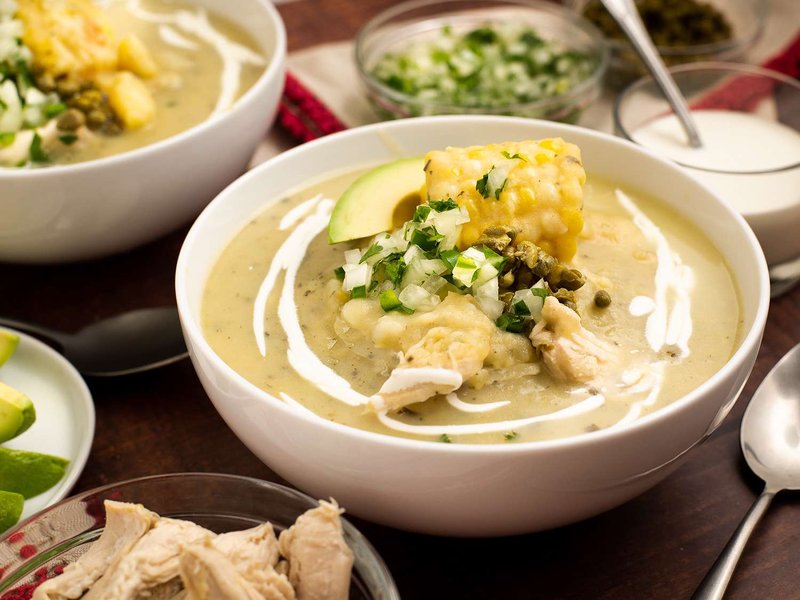
Bogotá's Andean chicken soup: three different potato varieties cooked with chicken and the herb guascas. Served with avocado, capers, cream and corn.
Overview
Chicken poaches with onion, garlic and herbs into a clean, golden broth. The first potato (sabanera, or floury maris piper) drops in to start; the small yellow papa criolla follows to break down and thicken; pastusa or red potatoes go in last to hold shape. Cobs of sweet corn cook in the same pot. Guascas, the dish's signature herb, adds at the very end. Each bowl tops with shredded chicken, avocado, capers and a generous spoon of cream; rice on the side.
Ingredients
Soup
- 1 ½ kg chicken pieces (bone-in thighs and drumsticks)
- 1 onion (large, quartered)
- 6 garlic cloves (smashed)
- 4 spring onions (whole, smashed)
- 1 small bunch coriander stems (tied with string)
- 2 bay leaves
- 1 teaspoon black peppercorns
- 1 teaspoon ground cumin
- 2 teaspoons salt
- 2 ½ litres water
Potatoes and corn
- 600 g sabanera (or maris piper potatoes, peeled, sliced 1 cm)
- 600 g papa criolla (peeled, halved if large; or substitute baby Yukon golds)
- 600 g pastusa (or red-skinned potatoes, peeled, cut into 3 cm chunks)
- 3 ears sweet corn (cut into 4 cm rounds)
To finish
- 4 tablespoons dried guascas (the herb that defines the dish; sold at Latin grocers)
- A small bunch coriander (chopped)
To serve
- 2 ripe avocados (sliced)
- 4 tablespoons capers (rinsed)
- 200 ml double cream (or crème fraîche)
- 1 lime (cut into wedges)
- Cooked white rice
Method
Stage 1 - Poach the chicken
- Place the chicken in a large pot with the onion, garlic, spring onions, coriander stems, bay, peppercorns, cumin, salt and water.
- Bring to the boil; skim the foam.
- Reduce to a steady simmer; cook 25-30 minutes until the chicken is tender.
- Lift the chicken onto a plate; cool slightly. Strain the broth through a fine sieve into a clean pot.
Stage 2 - Shred the chicken
- Pull the meat from the bones into shreds; discard skin and bones. Cover and reserve.
Stage 3 - First potato
- Bring the strained broth back to a simmer.
- Add the sabanera potatoes; cook 15 minutes.
Stage 4 - Papa criolla
- Add the papa criolla; cook 20 minutes, mashing some of them against the side of the pot to release starch (this is what gives ajiaco its characteristic body).
Stage 5 - Pastusa and corn
- Add the pastusa potatoes and the corn rounds.
- Cook 15 minutes more until everything is tender and the broth has thickened.
Stage 6 - Finish
- Stir in the guascas and chopped coriander.
- Return the shredded chicken; warm through 2 minutes.
- Taste; adjust salt.
Stage 7 - Serve
- Ladle into wide bowls - make sure each bowl gets a wedge of corn on the cob.
- Top each with avocado slices.
- Bring capers, cream, lime and rice to the table; each diner garnishes their own.
Notes
- Three potatoes is the dish: Substituting just one type gives a different soup. Floury + waxy + small yellow gives the layered texture that defines ajiaco.
- Guascas: Sold dried at Latin/Colombian grocers. Without it, this is a chicken-potato soup, not ajiaco. No real substitute.
- Add cream and capers at the table: Stirring them into the pot mutes them. Each diner adjusts to taste.
Storage
- Keeps 4 days refrigerated; the broth thickens further. Reheat gently with a splash of water.
- Freezes 3 months without the cream / capers / avocado.
More like this
Sancocho de Gallina
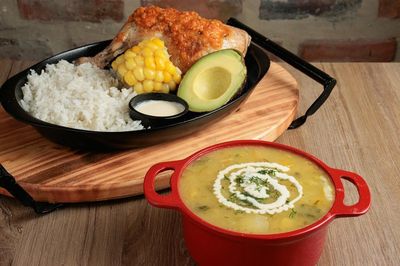
A whole hen (or chicken thighs and drumsticks if you can't get a stewing bird) simmers with aromatics for 90 minutes until tender. Cassava and plantain join for 30 minutes. Potato, sweet potato and corn-on-the-cob for the last 20. Coriander folds in. Served in deep bowls with rice on the side; the broth is poured over the rice, the meat eaten alongside.
Domoda
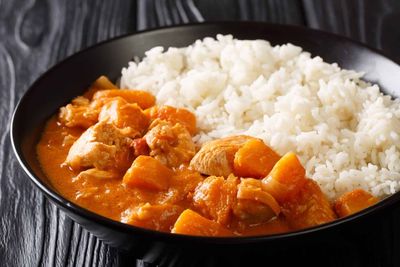
Chicken thighs (or lamb) are browned, onions and tomato cooked down with garlic and a single whole chilli, then the meat simmers in stock until tender. A loose peanut paste is stirred in for the final 20 minutes, kept thin enough to ladle. Sweet potato or pumpkin softens in the sauce. A spoon of lime juice at the end balances the richness.
Authentic Jamaican Curry Chicken
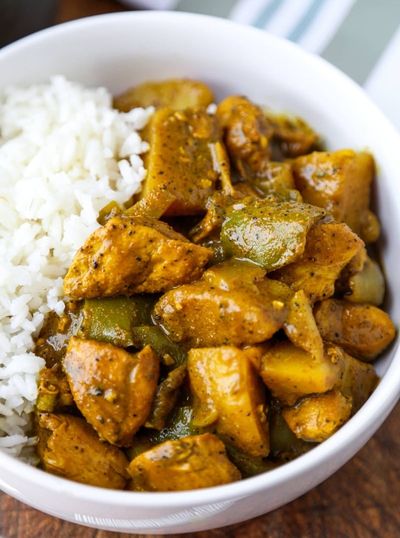
Jamaican curry sits in its own corner of the global curry map: heavier on turmeric and allspice than Indian Madras, lighter on cumin, and built on a technique called "burning the curry" that gives the dish its character. The technique is exactly what it sounds like, dry curry powder hits hot oil and is stirred for 30 seconds until it darkens from yellow to deep gold and smells like toasted spice. That move concentrates the flavours and removes any raw edge. The finished stew is bright yellow stained slightly orange, savoury and aromatic rather than searingly hot, with thyme and a whole pierced Scotch bonnet scenting the gravy without flooring it. Smell: bloomed curry powder, allspice, browned chicken fat. Not difficult, but requires confidence in the 30-second bloom (under-do it and the dish is flat; over-do it and you have to start over). A Sunday-dinner staple across Jamaica and the diaspora, served over white rice with the gravy spooned generously over.
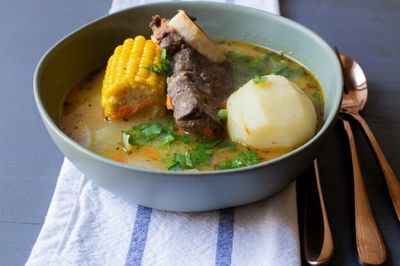
Cazuela de Vacuno
The Chilean Sunday-lunch one-pot, the soup-stew that turns up on every kitchen table from Santiago to Patagonia. You brown bone-in beef shin to colour, then drop it into a simple broth of onion, garlic, oregano and cumin and simmer slowly for ninety minutes until the meat is tender and the broth has built depth. The vegetables go in for the last twenty-five minutes - a thick chunk of pumpkin, a section of corn-on-the-cob, a whole potato, a handful of green beans - each piece kept whole because the cazuela is meant to arrive in the bowl looking like a still life. Rice or vermicelli cooks separately in a ladle of the broth and joins at the very end. Served in deep bowls with chopped coriander and a wedge of lime, the steam rising while you eat. Comfort food at its plainest and deepest.