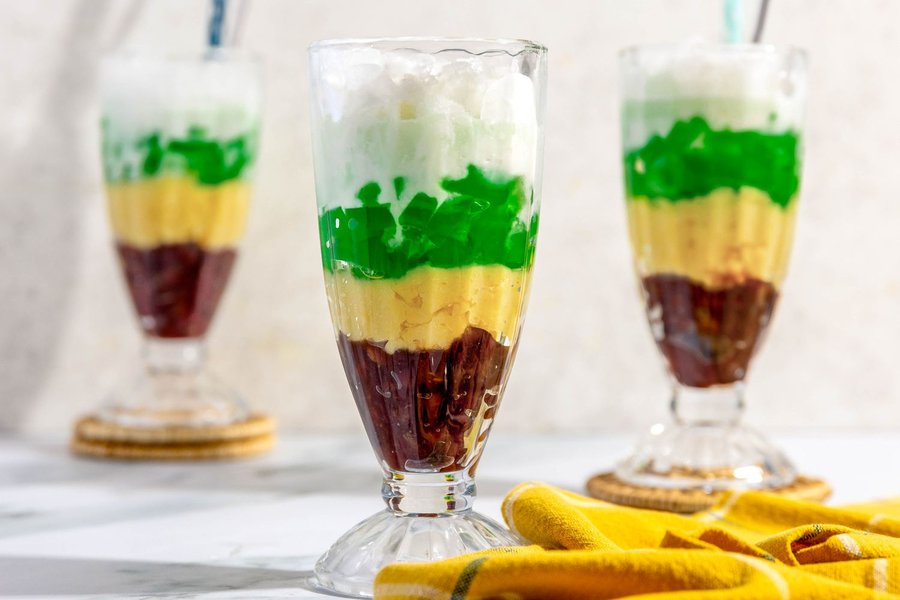
Chè Ba Màu
Vietnam's three-colour dessert: red bean, yellow mung bean and emerald pandan jelly layered in a tall glass, topped with crushed ice and coconut cream.
Overview
Three sweet components are prepared separately: red beans simmered until tender then mixed with sugar, split mung beans cooked until just holding shape and lightly sweetened, and pandan-flavoured agar jelly cut into small cubes. Each layer goes into a glass with crushed ice between them and a generous drizzle of sweetened coconut cream over the top.
Ingredients
Red bean layer (đậu đỏ)
- 100 g dried azuki red beans (soaked overnight)
- 50 g caster sugar
- A pinch of fine sea salt
Mung bean layer (đậu xanh)
- 100 g dried split yellow mung beans (đậu xanh tách vỏ; soaked 2 hours)
- 40 g caster sugar
- A pinch of fine sea salt
Pandan jelly layer (thạch lá dứa)
- 4 g agar agar powder (about 1 teaspoon)
- 400 ml water
- 50 g caster sugar
- 1 teaspoon pandan extract (or 4 pandan leaves blended with the water and strained)
- A few drops green food colouring (optional, for a vivid green)
Coconut cream topping
- 200 ml coconut cream
- 50 ml water
- 2 tablespoons caster sugar
- A pinch of fine sea salt
- 1 teaspoon cornflour mixed with 1 tablespoon water
To serve
- 400 g crushed ice
- 2 tablespoons toasted sesame seeds (or crushed roasted peanuts, optional)
Method
Stage 1 - Cook the red beans
- Drain the soaked red beans and rinse. Place in a saucepan with 600 ml fresh water.
- Bring to the boil, then reduce to a gentle simmer. Cook for 40-50 minutes, topping up with hot water as needed, until the beans are completely soft but still hold their shape. They should crush easily between two fingers.
- Drain off most of the liquid (leave a tablespoon or two clinging to the beans). Stir in the sugar and salt while still hot. The sugar will melt and glaze the beans.
- Set aside to cool.
Stage 2 - Cook the mung beans
- Drain the soaked mung beans. Place in a saucepan with 400 ml fresh water.
- Bring to a simmer over medium heat. Cook for 15-20 minutes until tender but not collapsed. Mung beans cook far faster than red beans.
- Drain off the cooking liquid (it should be mostly absorbed). Stir in the sugar and salt while warm.
- Set aside to cool. The mung beans will firm up as they cool into a soft, scoopable mass.
Stage 3 - Make the pandan jelly
- Place a small square baking dish (about 15 x 15 cm) on the counter.
- In a small saucepan, whisk the agar agar powder into the water until dispersed.
- Bring to a simmer over medium heat, whisking constantly. Cook for 2 minutes; agar needs to actually boil to set.
- Add the sugar and whisk until dissolved. Stir in the pandan extract and food colouring (if using).
- Pour into the baking dish to a depth of about 1 cm. Leave to set at room temperature for 20 minutes (agar sets at warm temperatures, unlike gelatine).
- Once firm, slice into small 6 mm cubes.
Stage 4 - Make the coconut cream topping
- In a small saucepan, combine the coconut cream, water, sugar and salt. Bring to a gentle simmer over medium heat.
- Whisk in the cornflour slurry and cook for 1 minute, stirring, until very lightly thickened. It should still pour easily.
- Tip into a jug and cool to room temperature.
Stage 5 - Assemble
- Take 4 tall glasses (200-300 ml capacity each).
- Spoon 2 tablespoons of red beans into the bottom of each glass.
- Layer 2 tablespoons of mung beans on top.
- Add 2 tablespoons of pandan jelly cubes.
- Top with a generous handful of crushed ice.
- Pour over 3-4 tablespoons of coconut cream to soak through the ice.
- Scatter with sesame seeds or peanuts if using.
- Serve immediately with a long iced-tea spoon.
Notes
- Eat from the bottom: The whole point of chè ba màu is mixing the layers as you spoon. Tell first-time eaters to dig down to the bottom of the glass on every spoonful so they get red bean, mung bean, jelly and coconut cream all together.
- Agar, not gelatine: Agar sets firm at room temperature and holds its shape against the ice, gelatine would melt. Vegan-friendly too.
- Bean texture: Cook the red beans until soft, but don't let them break down into mush; you want distinct beans. The mung beans should be the opposite, soft enough that a spoon glides through.
- Pandan flavour: Fresh pandan leaves (blended with water then strained) give a more rounded flavour than extract. Asian grocers sell them frozen in bundles. Extract works fine if you can't find them.
- Make ahead: All three layers and the coconut cream keep separately for 3 days in the fridge. Assemble at the moment of serving so the ice doesn't melt.
Variations
Four-colour (chè bốn màu): Add a fourth layer of tapioca pearls cooked until clear. With taro: Replace one bean layer with 100 g steamed and sweetened taro cubes. With sweet corn (chè bắp): Stir 2 tablespoons of sweet corn kernels into the coconut cream topping.
Serving
Serve with: a long iced-tea spoon and an extra jug of coconut cream on the side for those who want more. Garnish with: a fresh pandan leaf curled into the glass, or a sprinkle of toasted coconut.
Storage
- Assembled chè is best eaten within 15 minutes before the ice melts and dilutes everything
- All components keep separately in the fridge for 3 days
- The pandan jelly can be cut and kept in cold water in the fridge for up to 4 days
- Do not freeze any of the layers
More like this
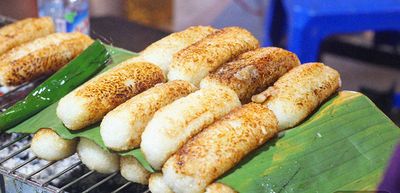
Chuối Nướng
Sticky rice is soaked, steamed and pressed around small Asian bananas (Chuối sứ), wrapped in banana leaves and grilled until the rice forms a chewy crust. A coconut cream sauce thickened with a little cornflour and salt is spooned over the split-open bundles, and toasted peanuts and sesame finish the top. The contrast of crisp-burnt outside, soft hot banana, and cool coconut sauce is the whole point.
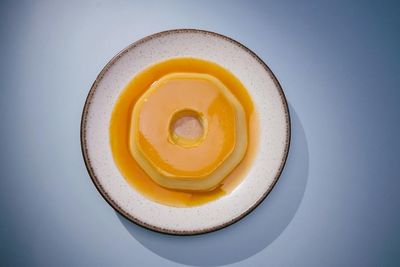
Bánh Flan
A simple custard of whole eggs, condensed milk and evaporated milk is poured over a hard caramel base and baked in a bain-marie at low temperature for a silken set. The caramel melts into a sauce as the flan chills overnight in the fridge. Tipped out onto a plate, the dark caramel runs down the sides and pools at the base.
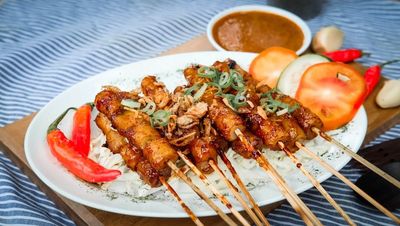
Chicken Satay with Peanut Sauce
I’m a big fan of Thai chicken satay with peanut sauce. Although it isn’t necessary, it is best to marinate the chicken for at least a day. You could get away with 30 minutes but a longer marinating time will get you much tastier results. As the chicken soaks up that incredible marinade, it not only tenderizes it but makes it much juicier when cooked. This recipe could be used with thinly sliced pork or beef, both are also popular at Thai restaurants and takeaways. Pork is the meat of choice in Thailand but chicken is the most popular in the UK. I also like to serve this dish with cucumber and chilli relish.
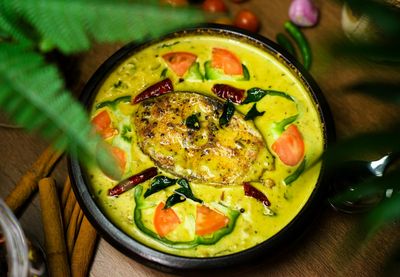
Kerala Fish Curry
A masala paste of shallot, ginger, garlic and red chilli is bloomed in coconut oil with mustard seeds, fenugreek and curry leaves. Coconut milk is poured in and the curry brought to a simmer, then tamarind water and a tomato are added. The fish goes in last and poaches in the gravy for just long enough to set; over-stirring breaks the pieces.