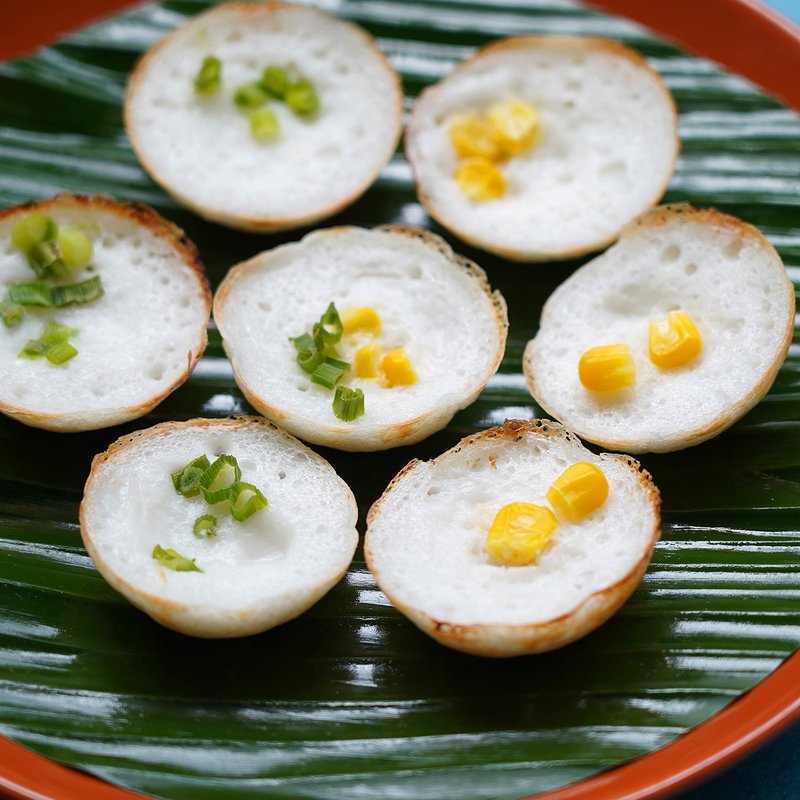
Khanom Krok
Thailand's coconut-cream dimples: rice-flour batter and pure coconut cream griddled into crisp-bottomed, custard-topped half-spheres.
Overview
Two batters. The first (the base) is rice flour, palm sugar, salt, coconut milk and a small amount of mung-bean flour; rests for 2 hours so the rice flour hydrates. The second (the top) is just coconut cream, salt and a pinch of rice flour. A khanom krok pan (or an aebleskiver pan, or a takoyaki pan) is heated; each dimple is brushed with oil; the base batter goes in three-quarters; covered briefly to set; the top coconut-cream batter spoons over to fill; covered again; the half-spheres release when the bottom is golden and the tops are barely jiggling. Two are paired together and served on a small banana-leaf square.
Ingredients
Base batter
- 150 g rice flour
- 1 tablespoon mung-bean flour (or substitute cornflour)
- 60 g palm sugar (chopped - or 50 g caster sugar)
- ½ teaspoon salt
- 250 ml coconut milk
- 80 ml water (more if needed)
Top batter (coconut cream)
- 200 ml coconut cream (the thick layer from the top of a tin of coconut milk; OR the cream from a fresh coconut)
- 1 tablespoon rice flour
- ½ teaspoon salt
- ½ teaspoon sugar
Optional add-ins (sprinkled between the two halves)
- 2 spring onions (finely chopped)
- 50 g sweetcorn kernels (drained)
- 50 g cooked pumpkin (small dice)
- 1 tablespoon toasted black sesame seeds
For cooking
- 3 tablespoons sunflower oil (or coconut oil)
- A khanom krok pan (sold at Thai shops), OR an aebleskiver / takoyaki pan, OR a small non-stick pan with deep dimples
Method
Stage 1 - Base batter
- In a wide bowl, whisk rice flour, mung-bean flour, palm sugar and salt.
- Pour in the coconut milk, whisking smoothly to dissolve.
- Add 80 ml water; whisk to a thin pourable batter (like single cream).
- Rest 2 hours at room temperature - this lets the rice flour hydrate and gives a smoother texture.
Stage 2 - Top batter
- In a separate small bowl, whisk coconut cream, rice flour, salt and sugar until smooth.
- Should be thicker than the base batter - like double cream.
Stage 3 - Heat the pan
- Place the pan over medium-low heat.
- Brush each dimple with a tiny bit of oil using a pastry brush.
- Heat 2 minutes.
Stage 4 - Pour the base batter
- Whisk the rested base batter (it settles).
- Pour into each dimple until three-quarters full.
- Cover with a lid (use a saucepan lid or foil if your pan doesn't have one).
- Cook 90 seconds - the edges should set and the base should be just colouring.
Stage 5 - Add the top
- Lift the lid.
- Spoon the top coconut-cream batter into each dimple until full to the rim.
- Optional: scatter a pinch of spring onion or corn / pumpkin on top of half the dimples.
- Cover again.
- Cook 2-3 minutes - the bottoms should be deep golden, the tops just-set (jiggling slightly).
Stage 6 - Lift out
- Use a small spoon or skewer to lift each half-sphere out of its dimple.
- Place two halves together (tops facing each other) - like a sphere or a coconut clamshell.
- Set on a plate.
Stage 7 - Repeat
- Re-oil the dimples; repeat with remaining batter.
Stage 8 - Serve
- Eat warm, within 15 minutes of cooking.
- Serve with sliced banana on the side if eating as a sweet snack, or alone as an in-between-meal.
Notes
- The pan is the challenge: A proper khanom krok pan has perfectly sized dimples (about 4 cm diameter, 2 cm deep). Aebleskiver or takoyaki pans are widely available substitutes; cake-pop pans don't work (too deep, wrong shape). Without a dimpled pan, scale this recipe up and bake the batter in a 12-hole mini-muffin tin at 180°C 15 minutes (won't have the same crisp base, but the flavour is identical).
- Two batters, two layers: The base batter is thinner and sweeter; the top is thicker, saltier, and almost custard. Both layers are needed - the contrast is the dish.
- Crisp base = right cook: The signature texture is a crisp bottom and a tender just-set top. If your bottoms come out pale, increase heat slightly; if the tops are still wet, cover for longer.
Storage
- Best within 30 minutes.
- Don't reheat - they go rubbery. Eat fresh.
- Both batters can be made ahead 4 hours; cook just before serving.
More like this
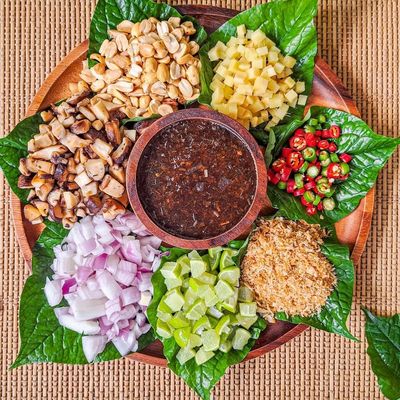
Miang Kham
The sauce (the technical heart of the dish) reduces palm sugar, fish sauce, tamarind paste, water, ginger and dried shrimp to a thick, glossy, dark amber syrup. The fillings, diced lime (skin and all), diced ginger, sliced shallot, chopped roasted peanuts, dried shrimp, small chilli, and toasted shredded coconut, are arrayed in small mounds on a serving platter. Fresh young betel leaves go alongside. Each diner takes a leaf, layers a tiny pinch of each filling, drops a quarter-teaspoon of the sauce on top, folds and pops the whole thing in one bite.
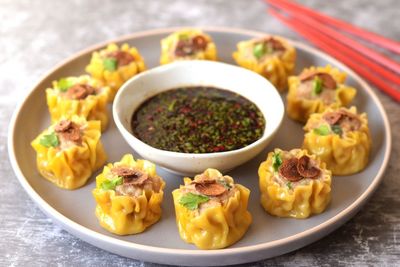
Kanom Jeeb
A filling of minced pork and chopped prawn binds with coriander root (pounded with garlic and white pepper into the traditional Thai "rak pak chee" paste), oyster sauce, soy sauce, sugar, sesame oil, and a beaten egg. The mixture chills for 20 minutes to firm. Square wonton wrappers go around the filling cupcake-style: filling in the centre, edges pulled up and pleated open around the meat, top brushed with a tiny smear of beaten egg and topped with a thin slice of carrot. Steamed in a bamboo basket over boiling water for 8 minutes. Dip is black soy sauce with sliced chilli and rice vinegar.
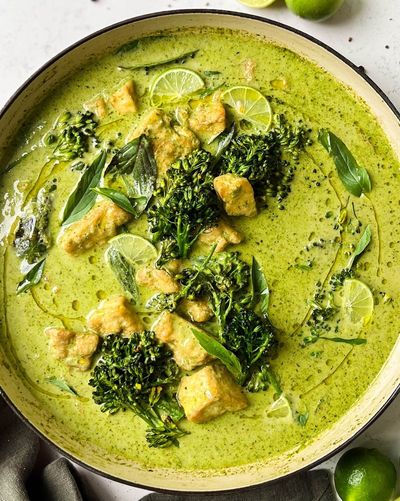
Thai Green Curry (Vegetarian)
A spice paste of green chillies and aromatics blends fresh (or starts from a good Thai paste with fresh additions). Coconut cream from the top of the can is cracked in the wok until oil splits out; paste fries; coconut milk loosens; vegetables, Thai aubergine, pea aubergine, bamboo shoots, broccoli, baby corn, go in by cook time. Tofu joins; the curry simmers briefly. Soy sauce (instead of fish sauce), palm sugar, lime leaves, Thai basil to finish.
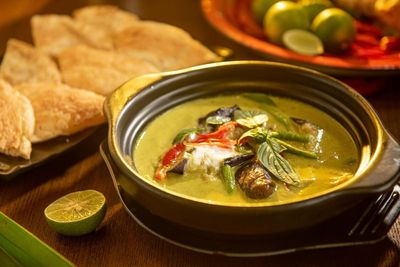
Thai Beef Massaman Curry
Rich, slow-cooked beef curry with Persian influences, featuring cinnamon, cardamom, and cloves. Tender beef and potatoes in coconut milk sauce; no vegetables traditionally, but can add. Serve with rice or enjoy as is.