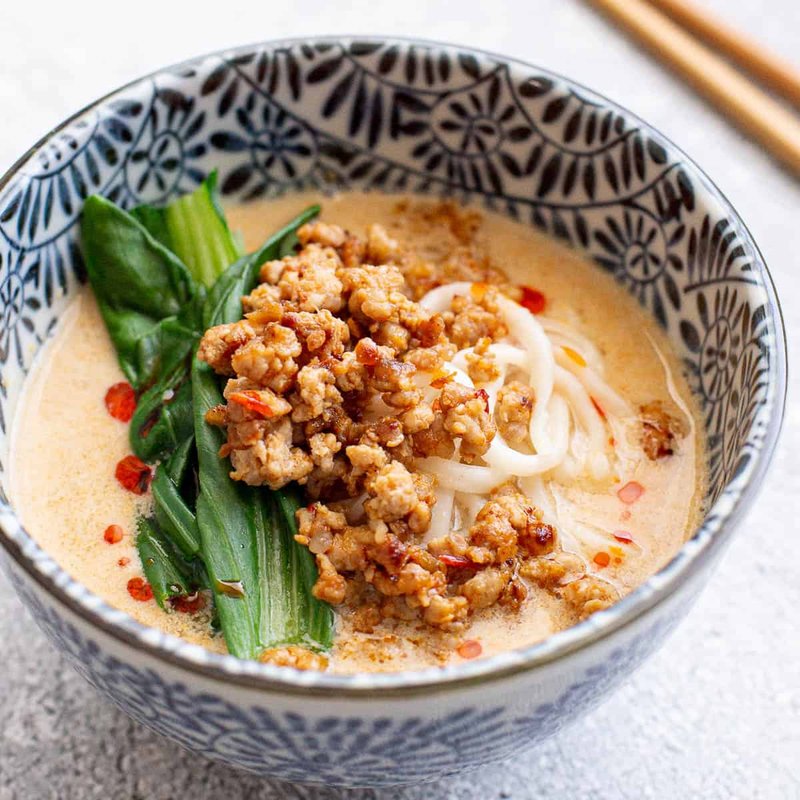
Tantanmen
Japan's take on dan-dan noodles: a brothy ramen with a thick sesame-and-chilli tare, topped with spiced ground pork and a soft-boiled egg.
Overview
Three components assemble at service. (1) Niku miso: ground pork stir-fries with garlic, ginger, doubanjiang and miso, then sweetened with sugar and finished with sesame oil. (2) Tare (concentrated seasoning paste): white sesame paste (tahini), soy sauce, rice vinegar, chilli oil, miso paste, garlic, whisked together. (3) Hot soup: chicken stock with a touch more sesame paste and chilli oil swirled in. Ramen noodles cook separately. Bowls layered: tare in the bottom, hot soup ladled over, cooked noodles, mound of niku miso, blanched bok choy, soft-boiled marinated egg, scallions, extra chilli oil.
Ingredients
Niku miso (spiced pork topping)
- 200 g pork mince
- 1 tablespoon neutral oil
- 4 garlic cloves (minced)
- 25 g fresh ginger (minced)
- 1 tablespoon doubanjiang (Sichuan fermented chilli bean paste)
- 1 tablespoon red miso paste
- 1 tablespoon Shaoxing rice wine (or dry sherry)
- 1 tablespoon soy sauce
- 1 teaspoon caster sugar
- 1 teaspoon toasted sesame oil
Tare (per bowl, makes 2)
- 3 tablespoons white sesame paste (Asian style - runnier than tahini; substitute tahini whisked smooth)
- 2 tablespoons soy sauce
- 1 tablespoon rice vinegar
- 1 tablespoon chilli oil (la-yu - Japanese rayu chilli oil; substitute homemade or a good shop-bought)
- 1 teaspoon white miso paste
- 1 garlic clove (grated to a paste)
- ½ teaspoon caster sugar
Soup
- 800 ml chicken stock (good quality)
- 1 tablespoon white sesame paste (extra, whisked into the soup)
- 1 teaspoon chilli oil
Noodles
- 200-250 g fresh ramen noodles (or 200 g good dried ramen)
Toppings
- 2 soft-boiled eggs (6 ½ minutes from cold water; peel and marinate in 2 tablespoons soy + 2 tablespoons mirin + 50 ml water overnight if possible)
- 200 g baby bok choy (halved lengthways)
- 4 spring onions (sliced thin, green parts)
- 1 tablespoon toasted sesame seeds
- Extra chilli oil and Sichuan pepper for the table
Method
Stage 1 - Niku miso
- Heat oil in a small pan over medium-high heat.
- Add the pork mince; brown 5 minutes, breaking up.
- Add garlic and ginger; 30 seconds.
- Add doubanjiang and miso; stir-fry 1 minute (they should darken and become fragrant).
- Add Shaoxing, soy and sugar; cook 2 minutes till the liquid mostly evaporates.
- Off heat; stir in sesame oil. Keep warm.
Stage 2 - Tare
- In each serving bowl directly, whisk together: 1 ½ tablespoons sesame paste, 1 tablespoon soy sauce, ½ tablespoon rice vinegar, ½ tablespoon chilli oil, ½ teaspoon white miso, ½ grated garlic clove, ¼ teaspoon sugar.
- The tare will be a thick glossy paste at the bottom of the bowl.
Stage 3 - Soup
- Heat the chicken stock in a saucepan to just-simmering.
- Whisk in 1 tablespoon sesame paste and 1 teaspoon chilli oil - the soup turns a creamy beige with red flecks.
- Keep hot.
Stage 4 - Bok choy and noodles
- Bring a wide pot of water to a rolling boil.
- Blanch the bok choy halves 90 seconds; lift out; set aside.
- Cook the ramen noodles according to packet (usually 90 seconds for fresh, 3-4 minutes for dried).
Stage 5 - Assemble
- Working fast (everything wants to be hot):
- Pour 400 ml of the hot soup into each bowl over the tare - whisk briefly with chopsticks so the tare emulsifies into the soup.
- Drain the noodles; lift into the soup; arrange in a small mound at the centre.
- Spoon half the niku miso on top of the noodles in each bowl.
- Add 2 bok choy halves alongside.
- Halve a soft-boiled egg and place cut-side-up.
- Scatter the spring onion greens, sesame seeds.
- Extra drizzle of chilli oil for those who want more heat.
Stage 6 - Serve
- Bring to the table immediately, with extra chilli oil and Sichuan pepper available.
- Eat by stirring the niku miso into the soup; slurp the noodles loudly (Japan-approved).
Notes
- Doubanjiang is critical: Sichuan fermented broad-bean chilli paste. Pixian brand is the standard. Other chilli pastes (sambal, harissa, gochujang) are all wrong flavour profiles.
- Two sesame pastes (Asian + tahini): Japanese tantanmen uses runnier roasted-sesame paste; Middle-Eastern tahini works but is slightly nuttier. Whisk well into the soup or it sinks.
- Tare in the bowl, soup over the top: unlike clear ramens, tantanmen's flavour is in the bottom paste that the soup emulsifies into. Mixing in a separate jug loses the layered effect.
- Eat fast: the noodles soften in the hot soup within 5 minutes. Serve in a hot bowl and don't dawdle photographing.
Storage
- Niku miso keeps 5 days refrigerated; reheats well.
- Marinated eggs keep 3 days refrigerated.
- Tare components keep 2 weeks refrigerated as a base.
- Don't pre-assemble; build each bowl to order.
More like this
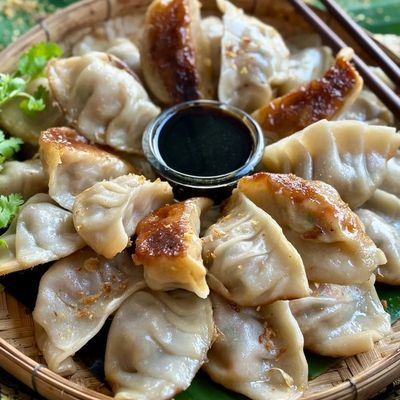
Pork Gyoza
A pork mince filling spiked with garlic, ginger, soy, sesame oil and finely chopped cabbage is wrapped in shop-bought gyoza skins, then pan-fried on the flat bottom and finished by steaming with a splash of water in the lidded pan. Serve with a soy-rice-vinegar-chilli oil dip.
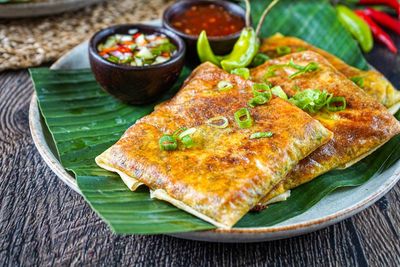
Martabak Telur
A simple flour-water-oil dough rests for 1 hour (gluten relaxes; will roll paper-thin). Filling: beef mince cooks with shallot, garlic, ginger, curry-leaf, ground spices till dry and aromatic; cools; mixes with beaten eggs, spring onion and chopped coriander just before frying. Dough divides; each portion stretches paper-thin like a strudel; filling spoons in the centre; the edges fold over to make a flat square parcel; pan-fries for 3 minutes per side. Cuts in quarters; eats with chilli-pickle sauce.
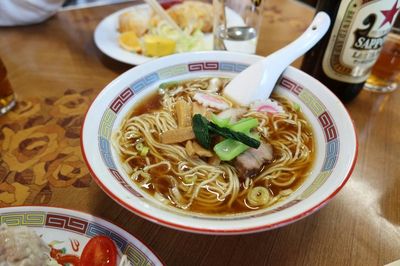
Shoyu Ramen
Of the four main ramen styles, shoyu (soy) is the cleanest and most aromatic, leaning on a clear roasted-chicken broth rather than the milky richness of tonkotsu or the heavy punch of miso. The technique splits the work: a long, gentle simmer with kombu and shiitake builds the broth, and a separate seasoning sauce called tare goes in bowl by bowl at the end. That last step is what lets you tune the saltiness without compromising the broth's clarity.
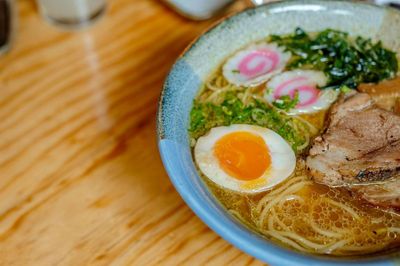
Yasai Ramen
Mushroom (dried shiitake) and kombu (kelp) infuse hot water for the broth base. Garlic-and-ginger oil fries; miso paste, soy and mirin make the tare. Noodles cook fresh; everything assembles in deep bowls with toppings stacked artfully.