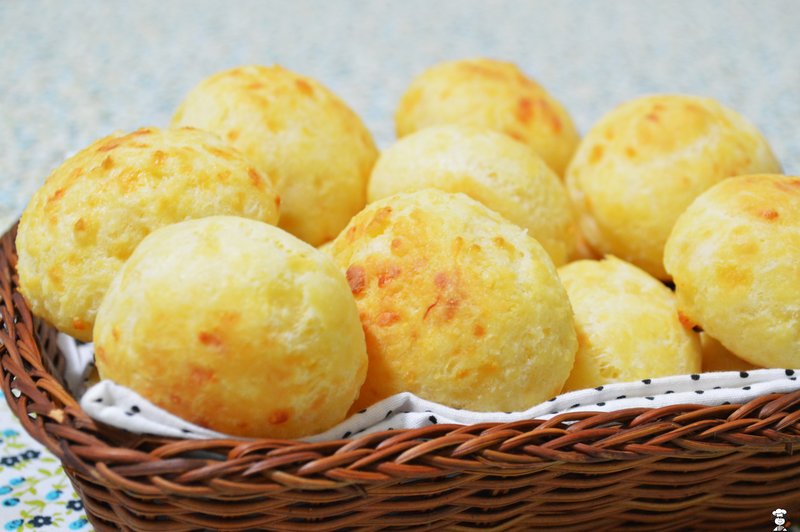
Pão de Queijo
Brazilian cheese bread: small puffs of tapioca-flour dough enriched with eggs, milk and cheese, baked golden and chewy on the outside, soft and stretchy inside. Naturally gluten-free; eats hot from the oven, with coffee for breakfast or alongside any Brazilian meal. Snack-sized; you'll eat several.
Overview
Sweet (sour, "polvilho doce" or sweet) tapioca starch combines with hot milk-and-oil mixture (scalds the starch), then eggs and grated cheese. The mixture is sticky and unmanageable, refrigerate for 30 minutes to firm up, or use damp hands to roll. Small balls bake until puffed and golden. Best straight from the oven.
Ingredients
- 250 ml whole milk
- 80 ml vegetable oil (or 80 g unsalted butter)
- ½ teaspoon salt
- 250 g sour tapioca starch (polvilho azedo) or sweet tapioca starch (polvilho doce; both work; sour gives the proper Minas style)
- 2 eggs (large)
- 200 g parmesan (or a mix of parmesan and a soft, mild Brazilian-style cheese like queso fresco or feta)
Method
Stage 1 - Scald
- Combine the milk, oil and salt in a small pan.
- Bring to a steady boil - pull off the heat the moment it bubbles up.
Stage 2 - Mix with starch
- Place the tapioca starch in a wide bowl.
- Pour the hot milk mixture over; stir with a wooden spoon - the starch will go from powder to a stringy, lumpy paste.
- Cool 10 minutes (you'll be adding eggs; don't cook them).
Stage 3 - Eggs and cheese
- Beat the eggs in one at a time, fully incorporating before the next. The mixture will look broken; keep mixing - it comes together.
- Stir in the grated cheese.
- The dough will be sticky and a bit unruly.
Stage 4 - Rest
- Refrigerate 30 minutes; the dough firms up significantly.
Stage 5 - Shape
- Heat the oven to 200°C (180°C fan).
- Wet your hands; pinch off walnut-sized pieces; roll into balls.
- Place on lined baking trays, 3 cm apart (they puff).
Stage 6 - Bake
- Bake 22-25 minutes until puffed and deep golden.
Stage 7 - Serve
- Eat hot from the oven, ideally within 10 minutes of baking.
Notes
- Tapioca starch only: Cornflour or cassava flour is not the same - they don't give the chew that defines pão de queijo. Polvilho is sold at Brazilian grocers and online.
- Sour vs sweet polvilho: Sour (azedo) is fermented, gives a slight tang and more lift. Sweet (doce) is milder. Both work; many recipes mix 50/50.
- Eat fresh: The chew is at its best within 10 minutes of baking. Cooled pão de queijo is still tasty but loses its character - re-warm at 180°C for 5 minutes to revive.
Storage
- Best fresh. Frozen unbaked dough balls keep 2 months - bake from frozen, adding 5 minutes.
More like this
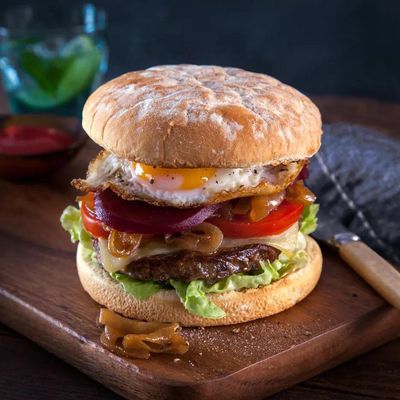
Aussie Burger with Beetroot
The Aussie burger, sometimes called "the lot", is a milk-bar institution that emerged in Australia in the mid-twentieth century when European immigrants and returning soldiers reshaped the corner takeaway. What distinguishes it from any American or British burger is the insistence on tinned pickled beetroot, a slice of canned pineapple, a fried egg and rashers of streaky bacon, all stacked under a thick beef patty on a toasted bun. The beetroot is non-negotiable: it stains the bread, it stains your fingers, it leaks down your wrist, and it is the entire point. The combination sounds chaotic but works because each layer plays a clear role: sweet pineapple against salty bacon, earthy beetroot against rich egg yolk, sharp tomato chutney cutting through melted cheese. The patty itself is generously sized, hand-shaped, and seasoned simply so the toppings can do the talking. Difficulty is low; the only real skill is timing several pans at once so the egg, bacon and patty all arrive hot together. This is not delicate food. It is built to be eaten leaning forward over a paper wrapper with napkins and a cold drink. Serve it at a backyard barbecue and watch grown adults negotiate the architecture of the bite.
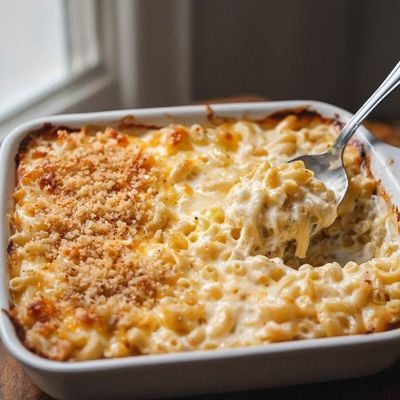
Big Mike’s Mac ’n’ Cheese
The Cajun take on mac and cheese, with the Southern heat dial turned up to where you'd expect at a Louisiana cookout. You build a creamy béchamel base, fold in sharp white cheddar with a generous splash of hot sauce and a hit of Cajun seasoning, then toss the lot through hot pasta until every shape is coated. The whole thing goes into a baking dish, gets a topping of more grated cheese, and slides under a hot grill until the top is bubbling and freckled deep gold. Eaten as a side at a barbecue or as the centre of a weeknight plate with a green salad and a beer. Comfort food with backbone.
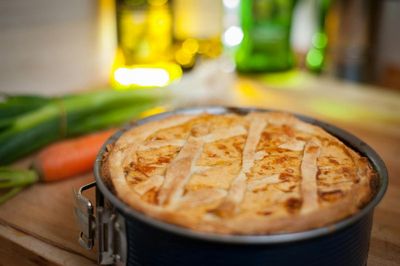
Cheese and Onion Pie
A British pub-and-cafe classic, the vegetarian counter to the meat pies on every menu from Pendle to Penzance. You cook onions slowly in butter until they're very soft and sweet (this is the only step that matters; rush it and the pie tastes raw), then bind them with mashed potato and grated mature cheddar so the filling slices cleanly rather than collapsing the moment a knife touches it. The pie sits in a shortcrust pastry case with a shortcrust lid, gets an egg wash for shine, and bakes until the top is deep gold. Eaten warm with HP sauce or pickled red cabbage on the side, often with chips and gravy if it's a proper pub plate.
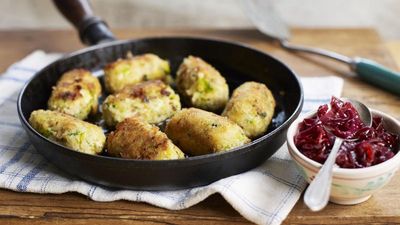
Glamorgan Sausages
The Welsh vegetarian sausage, named after the south Wales county of Glamorgan and traditionally made with caerphilly, the crumbly slightly-acidic white Welsh cheese. You soften leeks in butter (slowly, until they're pale gold and sweet), then mix them with grated caerphilly (or mature cheddar if caerphilly is hard to find), breadcrumbs, mustard, sage and beaten egg. The mixture chills in the fridge for an hour to firm up, then rolls into sausage shapes, gets a flour-egg-breadcrumb coat, and fries until deep gold and crisp on the outside. Eaten with chutney and mashed potato, or sliced into a roll with a bit of salad for lunch. A wartime substitute for meat sausages that became a permanent fixture of the Welsh table.