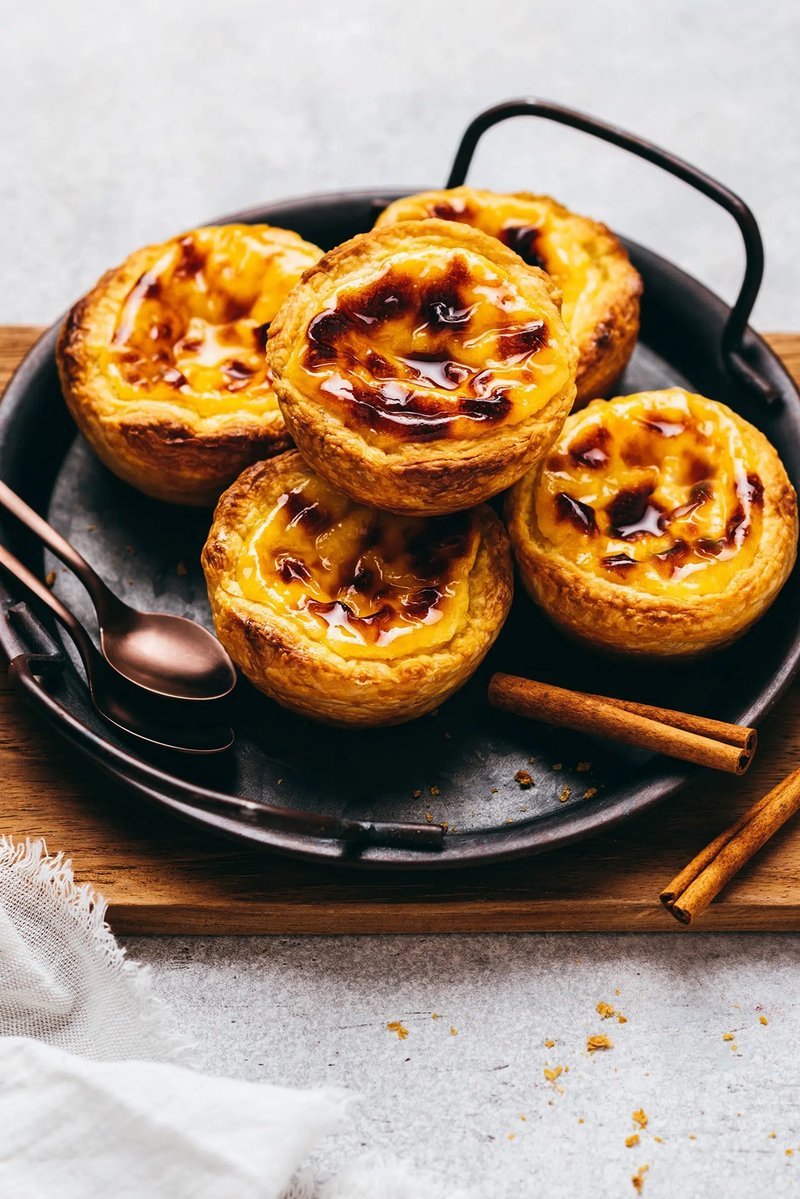
Pastéis de Nata
Lisbon's egg custard tart: shatter-flaky puff pastry filled with a silky cream-and-yolk custard, blasted in a hot oven till the surface chars.
Overview
Pastéis de nata are Portugal's answer to a cup of coffee, and you would never have one without the other. The puff pastry shells are rolled thin, brushed with butter, rolled back into a tight cylinder, then sliced into pinwheels and pressed into the cups of a deep muffin tin (the swirl of the slice becomes the spiral shell). The custard is a hot sugar syrup whisked into milk thickened with cornflour and tempered into egg yolks. Filled three-quarters full, baked at the hottest temperature your oven will go (the original Belém bakery uses 290°C). The blackened, blistered top is the signature, the custard underneath is silky and only just set, and you eat them warm with a dusting of cinnamon and a strong espresso at eleven in the morning.
Ingredients
Pastry shells
- 1 sheet ready-rolled all-butter puff pastry (about 320 g, or 250 g block)
- 30 g unsalted butter (very soft, almost melted)
- A little flour for rolling
Custard
- 250 ml whole milk
- 25 g plain flour
- 200 g caster sugar
- 100 ml water
- 1 cinnamon stick
- A strip of lemon peel
- 6 egg yolks (large)
- ½ teaspoon vanilla extract
To serve
- Ground cinnamon
- Icing sugar
Method
Stage 1 - Sugar syrup
- Combine the sugar, water, cinnamon stick and lemon peel in a small saucepan.
- Heat to a boil; simmer 5 minutes until slightly thickened.
- Off the heat, leave to infuse and cool slightly. Discard the cinnamon and lemon peel.
Stage 2 - Milk thickener
- Whisk the flour into 50 ml of the milk in a small bowl until smooth.
- Heat the rest of the milk in a saucepan to just below boiling.
- Whisk the flour-milk slurry into the hot milk; cook 2-3 minutes, whisking, until thick and glossy.
Stage 3 - Combine
- Pour the warm sugar syrup slowly into the milk mixture, whisking.
- Off the heat, whisk in the egg yolks one at a time, then the vanilla.
- Strain through a fine sieve into a jug.
Stage 4 - Shape pastry shells
- Heat the oven to 250°C (230°C fan, or as hot as your oven goes).
- Unroll the puff pastry on a lightly floured surface; if it's a block, roll to a 25 x 30 cm rectangle.
- Brush all over with the soft butter.
- From a long edge, roll up tightly into a log.
- Cut the log into 12 equal slices (about 2 cm thick).
- Place each slice cut-side up in a muffin tin (deep cups, not flat trays).
- Wet your thumb; press each slice down and out from the centre, stretching the spiral up the sides into a shell. The centre should be thin; the rim slightly proud.
Stage 5 - Fill and bake
- Pour the custard into the shells, filling ¾ full (about 2 tablespoons each).
- Bake on the highest rack 12-15 minutes until the custard tops are dark brown / blackened in spots and the pastry is deeply golden.
- The aggressive char on top is correct - it's what makes pastéis de nata taste like pastéis de nata.
Stage 6 - Cool briefly
- Cool 5 minutes in the tin.
- Lift out carefully (a thin knife runs around each shell helps).
- Cool 10 more minutes on a wire rack.
Stage 7 - Serve
- Dust with cinnamon and icing sugar.
- Eat warm or at room temperature, ideally within a few hours.
Notes
- Hot oven: The custard needs to set fast and the pastry needs to puff before the cream weeps. 250°C minimum; 280-300°C if your oven goes higher. Many home ovens cap at 250°C - that works.
- Deep cups: The traditional pastel mould is deep and slightly flared. Standard muffin tins work; small fluted brioche moulds are even better.
- Eat fresh: The pastry shell's shatter is the dish. Pastéis de nata go limp by day 2; refrigerated they're sad. Best in the first 4 hours.
Storage
- Best the day made. Refrigerated keeps 2 days; re-crisp in a 200°C oven for 4-5 minutes before serving.
More like this
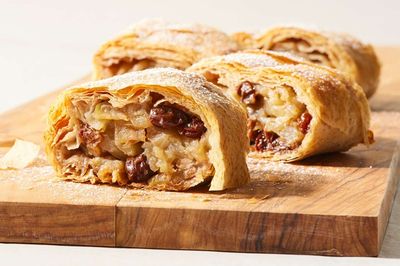
Apfelstrudel
A simple flour-egg-oil dough kneads until silky, rests so the gluten relaxes, then stretches over a floured cloth until you can read newsprint through it. A filling of grated and sliced tart apples, sugar, cinnamon, raisins, lemon zest and butter-toasted breadcrumbs spreads across the dough. The cloth helps roll the whole thing into a long log. Bakes brushed with butter until shatteringly crisp.
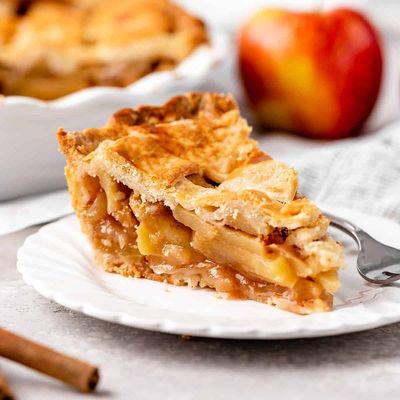
Apple Pie
All-butter pie pastry rests in two discs. The filling, a mix of apples (Bramleys for tartness and break-down, Granny Smith and Braeburn for hold), brown sugar, cinnamon, lemon, cornflour, pre-cooks slightly to release water and keep the crust from going soggy. Bottom crust lines a pie dish; filling piles in tall (it sinks); top crust seals on, vented. Egg-washed and sugar-dusted; baked until deep gold.
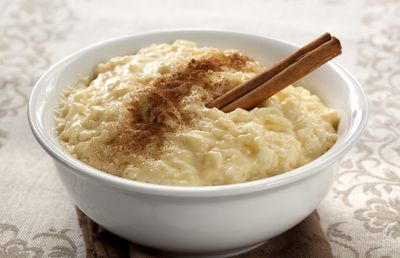
Arroz Con Leche
Short-grain rice (paella-style or pudding rice) cooks slow in a mix of water then whole milk, infused with cinnamon stick and lemon zest. Once the rice is tender, sweetened condensed milk goes in for richness and sweetness, along with vanilla and a pinch of salt. Cooked a little longer until creamy and just-thick (it firms further as it cools). Optional finish with butter or egg yolk; dusted with cinnamon to serve.
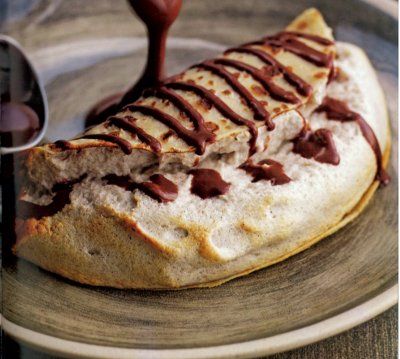
Banana Soufflé Crêpes with Chocolate Sauce
Delicate crèpes folded around a light banana soufflé mixture and baked until the soufflé rises impressively above the edges, creating a dramatic and sophisticated dessert. The combination of creamy banana flavor with the ethereal soufflé texture delivers luxury in every bite, finished with warm chocolate sauce.