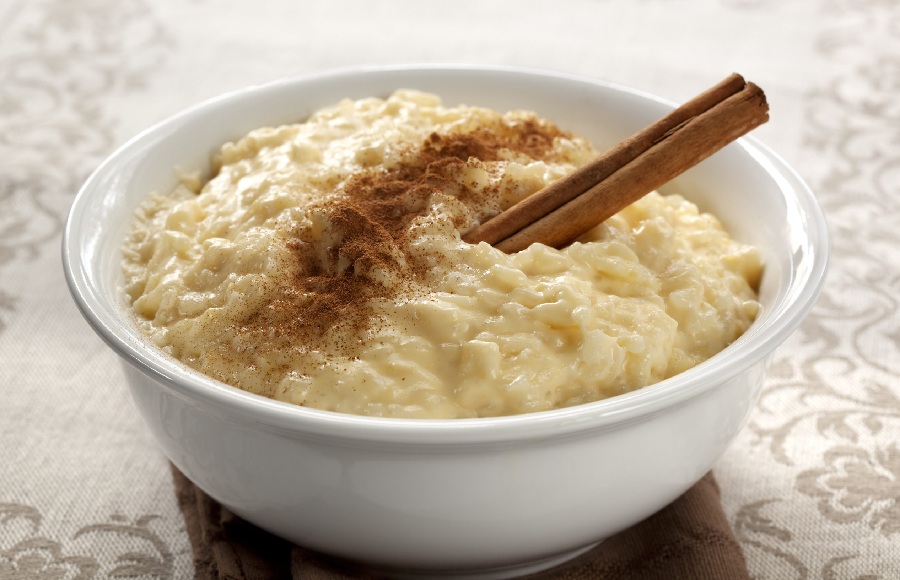
Arroz Con Leche
Cuban rice pudding: short-grain rice slow-cooked in whole milk with cinnamon, lemon zest, vanilla and condensed milk. Eaten warm or cold, dusted with cinnamon.
Overview
Short-grain rice (paella-style or pudding rice) cooks slow in a mix of water then whole milk, infused with cinnamon stick and lemon zest. Once the rice is tender, sweetened condensed milk goes in for richness and sweetness, along with vanilla and a pinch of salt. Cooked a little longer until creamy and just-thick (it firms further as it cools). Optional finish with butter or egg yolk; dusted with cinnamon to serve.
Ingredients
- 150 g short-grain rice (paella rice, pudding rice or arborio - not basmati or long-grain)
- 500 ml water
- 1 cinnamon stick
- 1 strip of lemon zest (about 5 cm long, no pith)
- 1 strip of orange zest (optional)
- A pinch of salt
- 750 ml whole milk
- 397 g tin sweetened condensed milk
- 1 teaspoon vanilla extract
- 20 g unsalted butter (optional, for richness)
- 1 egg yolk (large, optional, for a custardy finish)
To serve
- Ground cinnamon, for dusting
- Optional: a tablespoon of raisins per serving, soaked in 1 tablespoon dark rum (or hot water)
Method
Stage 1 - Rice in water
- Rinse the rice in cold water until the water runs clear; drain.
- Place in a heavy saucepan with the 500 ml water, cinnamon stick, lemon zest, orange zest (if using) and salt.
- Bring to the boil; reduce to a gentle simmer.
- Cook uncovered 12-15 minutes, stirring occasionally, until the rice is half-cooked and most of the water has been absorbed.
Stage 2 - Add the milk
- Pour in the whole milk; stir.
- Reduce the heat to low (the milk catches and burns easily).
- Cook 20-25 minutes, stirring often (every 2-3 minutes), until the rice is tender and the mixture is creamy but still loose. It will thicken as it cools.
Stage 3 - Sweeten
- Stir in the condensed milk and vanilla; cook another 5-6 minutes over low heat until the pudding has just thickened to your liking. It should coat the back of a spoon and drop in soft, slow blobs.
- Off the heat, stir in the butter if using.
- For a richer, custardy version: beat the egg yolk with 2 tablespoons of the hot pudding to temper, then stir back into the pot. Cook 30 seconds more over low heat to set the yolk (don't boil).
- Fish out and discard the cinnamon stick and citrus zest strips.
- Taste; if you want it sweeter, add a tablespoon more condensed milk.
Stage 4 - Serve
- Divide between glasses, ramekins or shallow bowls.
- Top each with a spoonful of rum-soaked raisins (if using).
- Dust generously with ground cinnamon.
- Serve warm, or chill and serve cold.
Notes
- Short-grain rice: Paella, pudding or arborio - the starch is what makes the pudding creamy. Long-grain or basmati won't give the right texture: the grains stay separate and the milk stays thin.
- Condensed milk over plain sugar: The Cuban version uses sweetened condensed milk for richness and a slight caramel note. Substituting with plain sugar gives a thinner, less rich pudding.
- Cinnamon stick, not powder: Powder makes the pudding dusty-grey. The stick infuses cleanly and lifts out.
- Stir often: Milk on the base of the pan catches and burns; the burn taints the whole pot. Stir every few minutes.
- It thickens on cooling: Pull it off the heat when it looks slightly looser than you want; it sets up firm in the fridge.
Variations
Coconut (arroz con leche de coco): Replace half the whole milk with coconut milk; tropical, lush. Chocolate: Stir in 60 g grated dark chocolate at the end of cooking. With raisins (con pasas): Add 60 g raisins (soaked in 2 tablespoons rum or warm water for 10 minutes) at the same time as the condensed milk. Spanish-style: Skip the condensed milk; use 80 g caster sugar instead, and serve with a thicker dusting of cinnamon.
Serving
Serve warm in glass cups for a comforting after-dinner sweet, or cold from the fridge for a hot-day pudding. A small glass of dark rum on the side is traditional.
Storage
- Keeps 4 days refrigerated, covered.
- Thickens significantly when cold: loosen with a splash of warm milk if needed.
- Don't freeze: the rice goes grainy.
More like this
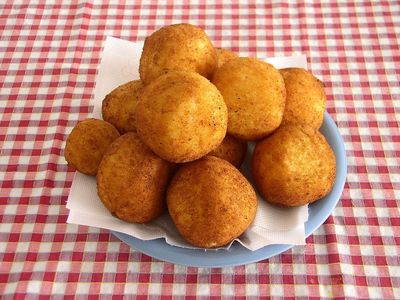
Arancini
Cold risotto (saffron Milanese-style is traditional in arancini "alla Milanese"; plain works too) is mixed with grated parmesan and beaten egg to bind. Filling, a stew of beef-and-pork ragù with peas, OR a cube of mozzarella, sits in the centre of each ball. Hands wet with water shape the rice around the filling into a tight orange-sized ball (or cone, for the Catania style). Each ball is rolled first in flour, then in beaten egg, then in fine breadcrumbs (or in the doubled-up "panata" mix of flour + water for the Sicilian original). Deep-fried at 180°C in 4-5 cm of oil for 4-6 minutes per ball until deep gold. Drained on kitchen paper; eaten warm.
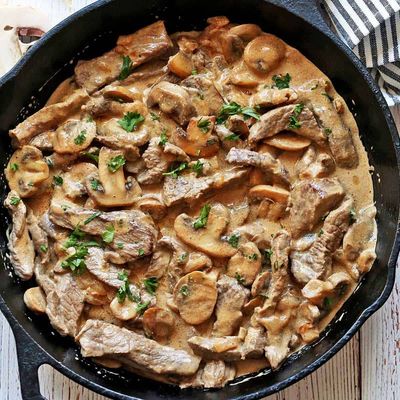
Beef Stroganoff
Strips of fillet or sirloin sear hard in a hot pan and lift out so they don't overcook. Onion and mushrooms cook in the same pan with butter; brandy or wine deglazes; mustard, stock and soured cream make the sauce. The beef returns at the end to warm through, off the heat to keep it pink.
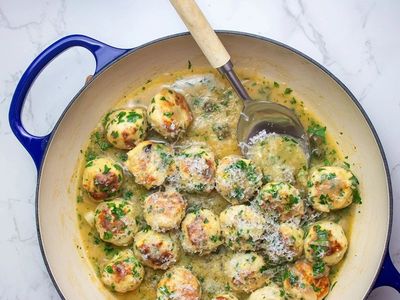
Chicken Piccata Meatballs
Chicken piccata, the Italian-American mid-century classic of pounded chicken cutlets in a lemon-butter-caper pan sauce, reshaped into meatball form, which trades the precise look of cutlets for a juicier, more forgiving texture. The flavour is unmistakably piccata: butter as the body of the sauce, lemon as the brightness, capers as the salty-vinegary punctuation. Underneath sits a chicken meatball lightened by ricotta (it keeps the lean ground chicken from going dry and dense) and parmesan, with parsley, garlic, smoked paprika and a pinch of red pepper flakes lifting the seasoning. The meatballs themselves stay tender because the mix isn't overworked and because they finish cooking in the sauce rather than the pan. Smell is melted butter, lemon and capers, the same smell every Italian-American restaurant kitchen has on a Tuesday lunch service. Easy enough for a weeknight, restrained enough not to feel like a stand-in dish; the technique is essentially "make meatballs, build pan sauce, return meatballs". Serves over pasta, rice or crusty bread to mop the sauce.
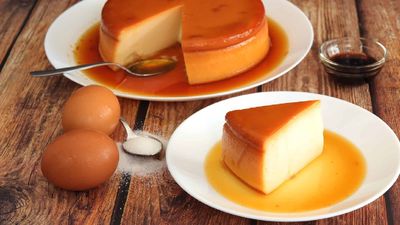
Flan Cubano
A dry caramel is made by melting sugar to a deep amber and poured into the bottom of a flan mould (or individual ramekins). A custard of whole eggs, condensed milk, evaporated milk, vanilla and a pinch of salt is whisked together (no whipping, no air bubbles), poured over the set caramel, and baked in a water bath at low heat until just set with a slight wobble in the centre. Chilled overnight; inverted to serve, the caramel sliding down the sides in a glossy sauce.