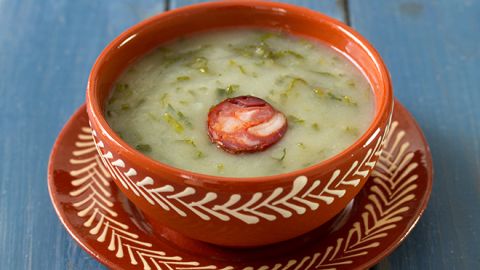
Caldo Verde
Portugal's beloved soup: a smooth potato base with finely shredded collard kale, slices of chouriço floating on top and a generous slick of olive oil.
Overview
This is the soup Portugal eats in winter and at every wedding, christening and Christmas Eve: a velvety potato base, a confetti of impossibly thin kale shredded in right at the end, and a few slices of chouriço floating on top to flavour the broth. You sweat onions in olive oil, simmer potatoes in stock until soft, blend the lot smooth, then drop the kale in for the final two minutes (which is when the colour brightens and the texture stays alive). Lay the chouriço on top, drizzle olive oil at the table, tear bread in. It is a five-ingredient soup that depends entirely on the quality of the olive oil and the kale being cut almost transparently thin, ribbon by ribbon.
Ingredients
- 4 tablespoons olive oil (plus more for serving)
- 1 onion (large, chopped)
- 4 garlic cloves (crushed)
- 800 g floury potatoes (Maris Piper, King Edward; peeled and cubed)
- 1 ½ litres water (or vegetable stock)
- 2 teaspoons salt (or to taste)
- ½ teaspoon black pepper
- 250 g kale (couve galega, or curly kale; tough stems removed and shredded as finely as you can - 2-3 mm wide)
- 200 g chouriço (sliced 5 mm thick)
To serve
- Crusty country bread (or broa de milho, Portuguese cornbread)
- Extra-virgin olive oil
Method
Stage 1 - Base
- Heat the olive oil in a large heavy pot over medium heat.
- Cook the onion 8 minutes until soft.
- Add the garlic; cook 1 minute.
- Add the potatoes; toss to coat.
- Pour in the stock; add the salt and pepper.
- Bring to the boil; reduce to a simmer.
- Cook 18-22 minutes until the potatoes are completely soft.
Stage 2 - Blend
- Blend the soup smooth with a stick blender (or in batches in a jug blender - be careful with hot liquid).
- Return to medium heat; the soup should be thick enough to coat a spoon. Loosen with hot water if too thick.
Stage 3 - Kale
- Bring back to a steady simmer.
- Stir in the shredded kale.
- Cook 2-4 minutes only - the kale should stay bright green and just-wilted, never sludgy.
Stage 4 - Chouriço
- Meanwhile, cook the chouriço slices in a dry pan over medium-high heat 1-2 minutes per side until lightly crisped at the edges.
Stage 5 - Serve
- Ladle into wide bowls.
- Top each with 3-4 slices of chouriço.
- Drizzle with extra-virgin olive oil.
- Serve with crusty bread.
Notes
- Shred the kale thin: This is the technique. The thinner you cut, the better - proper Portuguese cooks shave it almost to threads. A food processor with a slicing disc helps; otherwise stack leaves, roll tight, and slice with a sharp knife.
- Don't overcook the kale: Sludgy grey-green caldo verde is bad caldo verde. The whole point is bright green confetti against the pale potato cream.
- Olive oil at the table: A heavy pour at serving time isn't optional - it's part of the dish.
Storage
- Keeps 3 days refrigerated; reheat the soup base, then add fresh kale and chouriço each time so the kale stays bright.
- Freezes 3 months without the kale; add fresh on reheat.

More like this
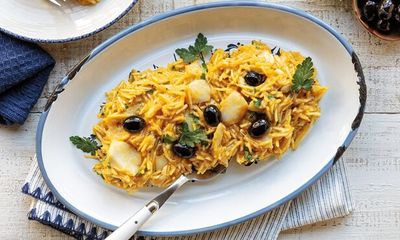
Bacalhau à Brás
Bacalhau à Brás is the dish Portugal turns to when the salt cod, the onions and the eggs all need to find their place in one pan: scrambled together with a tangle of fine matchstick chips so the whole thing reads as somewhere between a hash and a loose carbonara. The salt cod needs the usual day or two of cold soaks to draw the salt down, then a brief simmer to soften it; the onions take their time in olive oil with a few smashed garlic cloves until almost jam-like; the matchstick chips (palha) are fried separately so they stay crisp. Everything comes together in a wide pan, the eggs are whisked in over a low heat, and you stop the moment the eggs coat the cod and potato like a sauce. Never let them set firm. Olives, parsley and a wedge of lemon at the table.
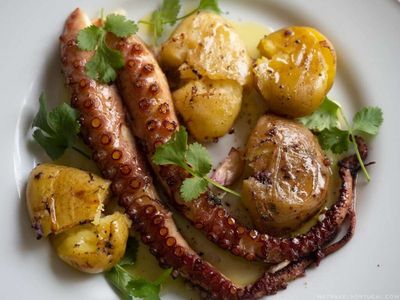
Polvo à Lagareiro
Polvo à Lagareiro is the dish the olive-press workers (the lagareiros) ate at the press during the harvest, and it is still glorious: tender octopus and small smashed potatoes baked together under a generous slick of olive oil. You simmer a whole octopus for an hour with onion and bay until you can pierce a thick part of the tentacle with a knife and feel no resistance. The potatoes parboil, then get punched gently with a wooden spoon so they crack but stay whole. Octopus and potatoes go into a wide oven dish, doused with olive oil, garlic, paprika and bay, and roast hard for 25 minutes so the edges char. The olive oil at the end is not a garnish but the dish itself, and it wants to be the best you have.
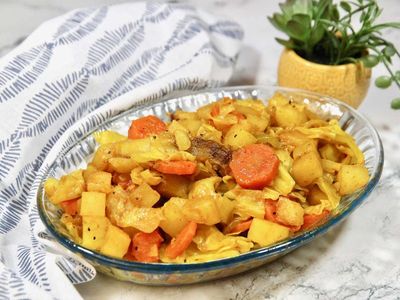
Atakilt Wat
Ethiopia's spiced cabbage stew, the gentle vegetable side that sits between the fiercer berbere-loaded curries on a shared platter and cools whoever's eating against the heat. You soften onions in oil with turmeric until they're pale gold, then bloom garlic, ginger and a small amount of berbere in the same fat - small because this is the mellow dish, not the fierce one. Carrots and potatoes go in first to soften; cabbage joins later. Cover, drop the heat, and let the lot steam-cook for forty minutes until the volume has halved, the vegetables have melted into each other, and the cabbage has almost disappeared into the sauce. Eaten with injera and a few spoonfuls of doro wat or misir wat alongside for contrast.
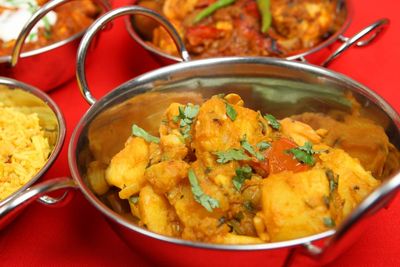
Easy Ugandan Curry Potatoes
Ugandan curry potatoes are one of those everyday dishes that say more about a country's cooking than the showpiece feast plates do. Curry powder reached Uganda via the Indian and Goan communities of the East African coast and the railway-building era, and was quickly absorbed into the local repertoire as a flavour for stews rather than as a separate cuisine. The result here is mild, fragrant and unmistakably Ugandan: small chunks of waxy potato cooked through in a sauce built on onions sweated until soft, fresh tomato simmered down, and a generous spoon of mild yellow curry powder bloomed in the oil. Garlic and ginger run quietly underneath; a single chopped chilli does the heat work if you want it. It is a vegetarian dish in most homes, though it sits happily alongside fried fish or chicken stew on a fuller plate. The difficulty for a home cook is low, it is almost foolproof, but watch the potatoes; the dish is best when they hold their shape and the sauce just hugs them rather than dissolving everything into a mash. Eat with chapati to mop up the gravy, or with steamed rice, posho, or matooke.