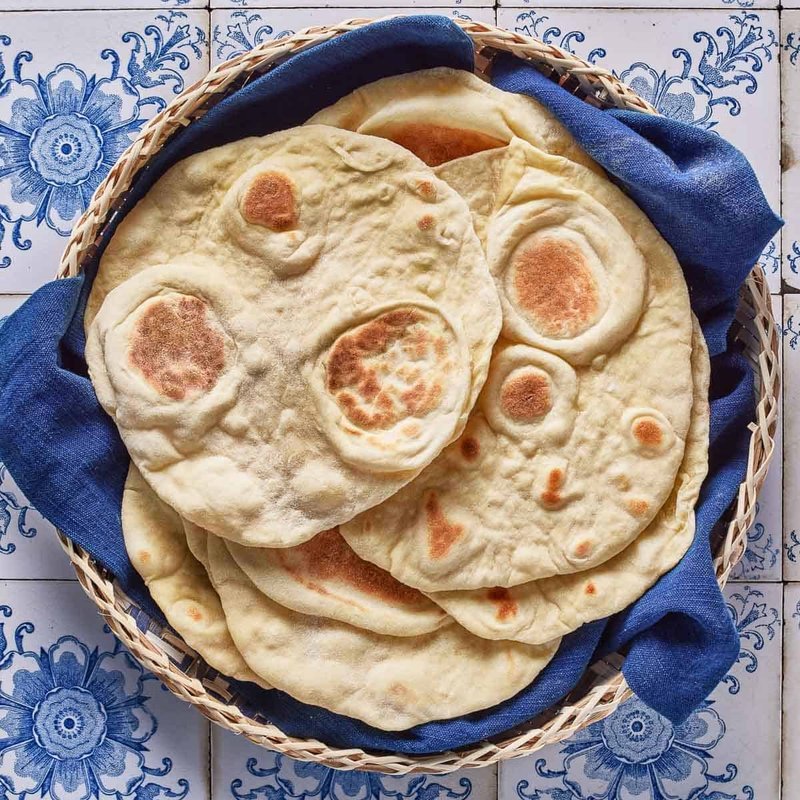
Lavash
The Caucasus' paper-thin flatbread: just flour, water and salt rolled obsessively thin and cooked seconds on a hot stone. Wraps grilled meat.
Overview
The paper-thin flatbread of the Caucasus, on UNESCO's Intangible Cultural Heritage list since 2014, and the bread that wraps every grilled meat from Yerevan to Baku. You make a dough from just three things (flour, water and salt) that is firmer than a pasta dough and smoother than a bread dough. Thirty minutes' rest under a damp cloth lets the gluten relax enough to roll. The dough divides into eight balls, each rolled paper-thin (you should be able to read newsprint through the sheet before it goes in the pan). Onto a heavy dry skillet over high heat for sixty to ninety seconds per side, just long enough to puff and blister. Stack the cooked sheets under a clean tea towel as you go so they stay pliable. Eaten the same day, torn around grilled meat, wrapped around kebabs, used as a plate, used as a napkin.
Ingredients
- 500 g plain flour (plus extra for dusting)
- 280 ml warm water
- 1 teaspoon salt
Method
Stage 1 - Dough
- In a wide bowl, whisk the flour and salt.
- Pour in the warm water all at once.
- Mix with a wooden spoon until shaggy, then turn out onto a lightly floured surface.
- Knead 8-10 minutes until smooth and elastic; the dough should be firm (not sticky) but still pliable.
- Form into a ball, place in a lightly oiled bowl, cover with a damp tea towel.
- Rest 30 minutes.
Stage 2 - Divide
- Tip the rested dough onto the work surface.
- Divide into 8 equal portions (about 95 g each).
- Roll each into a smooth ball; cover with the damp cloth so they don't dry out.
Stage 3 - Roll
- Heat a heavy dry skillet or cast-iron pan over medium-high heat (no oil, no butter).
- Take one ball at a time; press flat with the heel of your hand.
- Roll on a floured surface to a rectangle about 35 × 25 cm. The dough should be so thin you can see the work surface through it (1 mm or less).
Stage 4 - Cook
- Lift the rolled sheet carefully (a long rolling pin helps; drape the dough over it).
- Lay onto the hot dry pan.
- Cook 45-60 seconds: the dough bubbles, pale gold patches appear on the underside.
- Flip with tongs; cook 30-45 seconds on the second side.
- Lift onto a clean tea towel; cover.
- Repeat for the remaining balls.
Stage 5 - Stack and serve
- Stack the cooked sheets under the tea towel; the residual steam keeps them flexible.
- Serve warm, or at room temperature.
Notes
- Roll thinner than you think: lavash should be almost translucent. Thicker dough cooks unevenly and goes leathery.
- Dry pan, high heat: no oil. The bread needs to puff from steam, not fry.
- Cover the cooked stack: lavash dries within minutes if left uncovered. The tea towel traps just enough steam.
- Reviving stale lavash: mist with water from a spray bottle, wrap in foil, warm in a 150°C oven 5 minutes.
Storage
- Keeps 2 days in a sealed bag at room temperature.
- Freezes well: stack with parchment between sheets, double-bag, freeze 2 months. Thaw 10 minutes at room temperature.
- Dried-out sheets can be crisped further in the oven and crumbled over salads as a substitute for croutons.
More like this
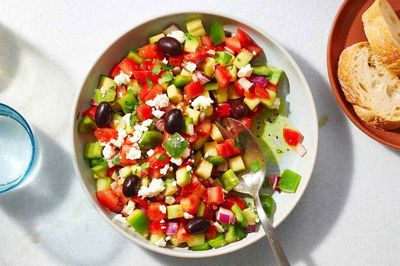
Choban Salata (Azerbaijani Shepherd's Salad)
The Azerbaijani version of the shepherd's salad that turns up in some form on every table from the Balkans to Persia, the bright herby counter to anything rich coming out of the kitchen. You dice tomatoes, cucumber and red onion to five-millimetre cubes (smaller than a typical chopped salad, almost a relish) and chop the herbs fine: dill, mint and tarragon, the tarragon being the move that distinguishes the Azeri version from its neighbours. Everything tosses together with olive oil, lemon juice and salt about fifteen minutes before serving, so the salt draws the tomato juice out and the salad relaxes into itself. Best the same day; the salad weeps if held overnight. Eat with grilled meat, with plov, with lavash, with whatever the main is.
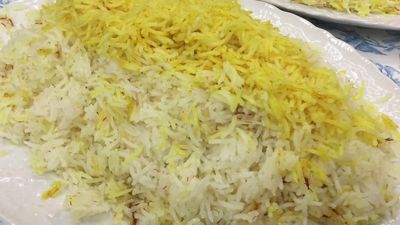
Saffron Rice (Azerbaijani Style)
The everyday cousin of plov: the rice you cook on a Tuesday when there's no wedding to feed but you still want the saffron-stained, butter-glossy crust that defines Azerbaijani rice cookery. You soak basmati for an hour in salted water, par-boil in heavily salted water for five minutes, drain. The empty pot films with butter, the rice mounds back in, more butter dots on top, and saffron-infused water drizzles over the peak so the colour stains down through the grains. A tea-towel-wrapped lid traps the steam, and forty minutes on low heat does the rest. Lift the rice gently with a slotted spoon so the amber-gold crust at the bottom stays intact for the table. Eats with anything braised, grilled or stewed; the rice is the dish.
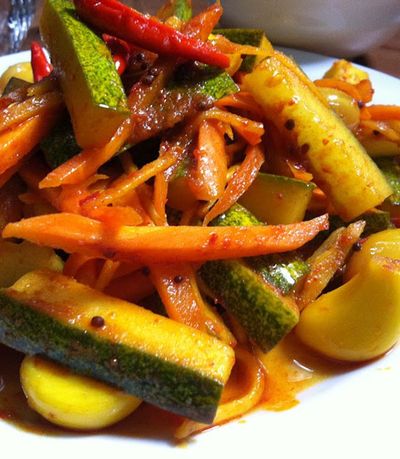
Acar Timun
Cucumber, carrot, shallot, chilli prep into thin slices or matchsticks. Salt rests for 10 minutes to draw moisture, drains. A simple dressing of vinegar, sugar, water and ginger whisks together. Vegetables toss with the dressing; rest for 1 hour at room temperature. Eats cool, never refrigerated cold; the texture suffers.
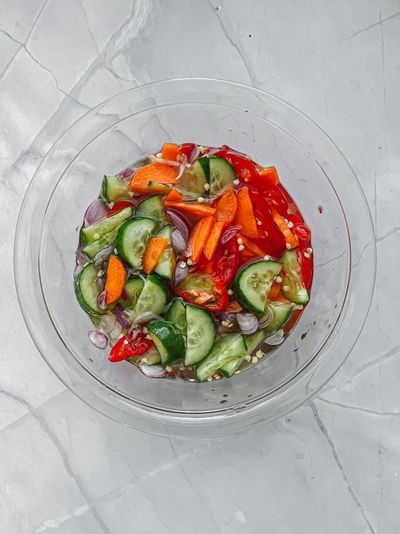
Ajad
A simple syrup of rice vinegar, palm sugar, water and salt is brought to a gentle simmer to dissolve the sugar, then cooled. Cucumber, shallot and chilli are sliced thin and combined in a small bowl. The cooled syrup is poured over. Rested for 10-15 minutes for the vegetables to wilt slightly into the dressing. Served in small individual ramekins as a dip, OR in a larger bowl as a side, with peanuts sprinkled on top.