Zereshk Polo Ba Morgh
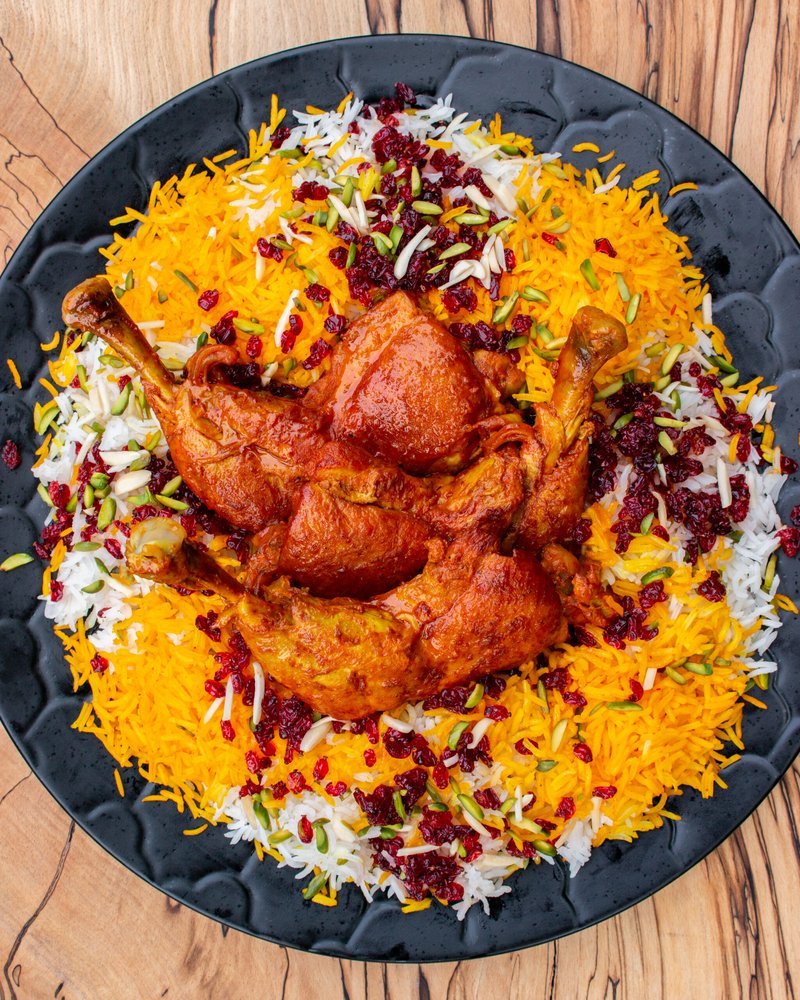
The Persian wedding rice: basmati with a saffron tahdig, golden chicken on top, scattered with barberries, almonds and pistachios.
Overview
Basmati rice rinses thoroughly; soaks for 1 hour in salted water. Bone-in chicken (thighs and drumsticks) browns; cooks for 45 minutes with onion, turmeric, tomato paste, cinnamon, saffron and a splash of water until tender and the sauce thick. Rice parboils for 6 minutes in heavily salted water; drains. The Persian rice technique: a layer of yogurt-rice (or just oil and rice) goes in the bottom of the pot to form tahdig; remaining rice mounds on top in a cone; a cloth-wrapped lid clamps on; cooks for 40 minutes over low heat. Meanwhile, zereshk berries are rinsed (they're salty), sautéed in butter with a touch of sugar and saffron. Plated with the rice spread out, chicken nestled on top, and zereshk-and-nuts scattered across.
Ingredients
Chicken
- 4 bone-in skin-on chicken thighs and 4 drumsticks (or 6 thighs)
- 2 tablespoons sunflower oil
- 1 onion (large, sliced)
- 4 garlic cloves (crushed)
- 1 ½ teaspoons ground turmeric
- 2 tablespoons tomato paste
- 1 teaspoon ground cinnamon
- 1 ½ teaspoons salt
- ½ teaspoon black pepper
- 1 large pinch saffron threads (soaked in 3 tablespoons hot water)
- 250 ml water
- ½ lemon (juice)
Rice
- 500 g long-grain basmati rice
- 3 litres water (for parboiling)
- 3 tablespoons salt (for the boil - Persian rice cooking is heavily salted)
- 3 tablespoons sunflower oil
- 50 g unsalted butter
- 1 large pinch saffron threads (soaked in 4 tablespoons hot water)
Zereshk topping
- 80 g zereshk (dried barberries)
- 2 tablespoons unsalted butter
- 1 tablespoon caster sugar
- 1 small pinch saffron (extra)
- 2 tablespoons slivered almonds (toasted)
- 2 tablespoons slivered pistachios (unsalted, toasted)
Method
Stage 1 - Rinse and soak rice
- Rinse basmati under cold water until the water runs clear (about 5 minute of rinsing).
- Cover with cold water + 1 tablespoon salt; soak 1 hour minimum.
Stage 2 - Chicken
- Heat oil in a wide pot over medium-high.
- Add chicken pieces; brown 4 minutes per side. Lift to a plate.
- Reduce to medium; add sliced onion; cook 8 minutes until soft and gold.
- Add garlic, turmeric, tomato paste, cinnamon, salt and pepper; cook 1 minute.
- Pour in 250 ml water; add lemon juice; stir.
- Return chicken to the pot; spoon sauce over.
- Cover; simmer 35-40 minutes until tender.
- Stir in saffron-water; cook 5 more minutes uncovered to thicken the sauce slightly.
- Keep warm.
Stage 3 - Parboil rice
- Bring 3 litres of water with 3 tablespoons salt to a hard boil in a wide pot.
- Drain the soaked rice; tip in.
- Cook 5-6 minutes - taste a grain; the outside should be cooked but the centre still firm (70% done).
- Drain into a sieve; rinse briefly with lukewarm water to stop cooking.
Stage 4 - Tahdig and steam
- Wash and dry the pot.
- Add 3 tablespoons oil and 30 g butter to the bottom; heat over medium until just bubbling.
- Add about 2 large spoons of the parboiled rice to the bottom in an even layer (this becomes the tahdig).
- Sprinkle 1 tablespoon of the saffron-water over this layer.
- Add the remaining rice in a heap, spooning gently so you build a cone shape rather than pressing it down.
- With the handle of a wooden spoon, poke 4-5 holes in the rice cone all the way to the bottom (this allows steam to circulate).
- Dot the remaining 20 g butter around the top.
- Drizzle 1 more tablespoon of saffron-water across.
- Wrap the pot lid in a tea towel (the towel absorbs condensation, keeping the rice fluffy).
- Place lid on; reduce heat to low.
- Cook 35-40 minutes - the bottom forms a crispy golden tahdig; the rice steams to fluffy perfection.
Stage 5 - Zereshk
- Rinse zereshk under cold water (they're often salty/dusty); drain.
- Heat 2 tablespoons butter in a small pan over medium-low.
- Add zereshk and sugar; sauté 1-2 minutes (they plump and gleam - DO NOT brown; they burn fast).
- Stir in a small pinch of saffron.
Stage 6 - Plate
- Lift the lid; spoon most of the rice onto a wide platter.
- Spoon some saffron-rice (from the top of the rice cone, the most yellow part) into a small bowl, then sprinkle it over the white rice for the golden contrast.
- Lift the tahdig out as a single golden disc with a wide flat spoon; place to one side of the platter (or break into shards).
- Top the rice with the saffron chicken pieces and their sauce.
- Sprinkle the zereshk over.
- Scatter slivered almonds and pistachios.
Stage 7 - Serve
- Eat with the chicken sauce drizzled, the tahdig broken into pieces for each plate.
Notes
- Rinse the zereshk: Iranian dried barberries are often sandy / dusty / salty. Rinse before sautéing or you get gritty grainy berries.
- Don't burn the zereshk: They go from gleaming to charred in 60 seconds. Watch closely; pull off the heat at the first sign of darkening.
- Cloth-wrapped lid: The towel between the lid and the pot is what makes Persian rice fluffy rather than wet. Condensation absorbs into the cloth rather than dripping back onto the rice.
Storage
- Best fresh. Refrigerate components separately 3 days.
- Tahdig is best the day of; the rest reheats well.
More like this
Kabsa
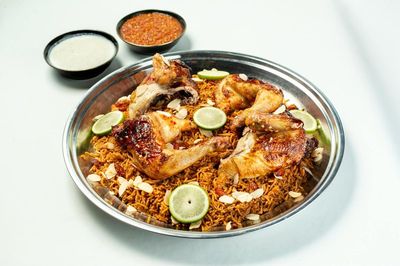
Saudi Arabia's national dish, the one platter you'll meet at almost every gathering from family lunch through wedding banquet. You brown chicken pieces or lamb shoulder hard in a heavy pot, then build a base of onion, garlic and ginger softened in the same fat, with tomato and a spoonful of baharat (or a dedicated kabsa spice mix) blooming until the kitchen fills with cardamom and cinnamon. The protein simmers in tomato and stock until it's tender and pulling away from the bone, then long-grain rice goes in to cook absorption-style in the same liquid, drinking up every layer of flavour the broth carries. You finish with almonds toasted in butter, raisins plumped briefly, and a fresh salsa of tomato, onion, chilli and parsley spooned on the side to cut the richness. Eaten communally from the centre platter, with hands or a long spoon.
Domoda
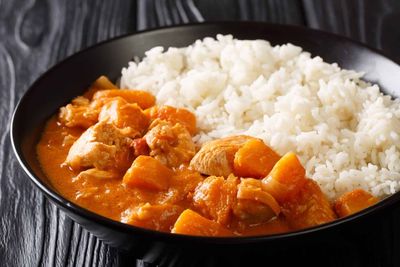
Chicken thighs (or lamb) are browned, onions and tomato cooked down with garlic and a single whole chilli, then the meat simmers in stock until tender. A loose peanut paste is stirred in for the final 20 minutes, kept thin enough to ladle. Sweet potato or pumpkin softens in the sauce. A spoon of lime juice at the end balances the richness.
Mathloutha
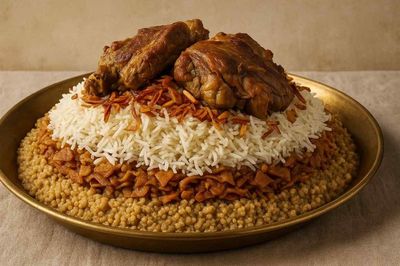
The Saudi gathering platter built for the night when one cut of meat isn't enough. Three proteins share the same pot: lamb shoulder and beef chunks go in first with a kabsa-spiced tomato base for ninety minutes of slow simmer until they're meltingly tender, then chicken pieces drop in for the last thirty-five minutes (their cook time is shorter, so they go in later). The strained meat broth, deeply spiced from everything that has braised in it, becomes the cooking liquid for basmati scented with saffron and dried lime. At the end you arrange all three meats on top of the rice in the same platter and bring the whole thing to the centre of the table. The kind of dish you make for a wedding lunch, an Eid gathering, or the night the extended family arrives unannounced.
Quzi
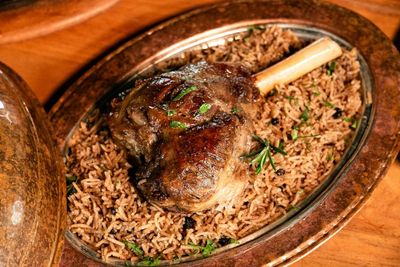
A bone-in lamb shoulder rubs with baharat, dried lime, garlic and yogurt; sits overnight; roasts long and slow until the meat falls from the bone. Saffron rice cooks separately with onion, raisins and toasted nuts. Everything assembles on a wide platter, rice mounded under the lamb, sauce spooned over, almonds and pine nuts scattered.