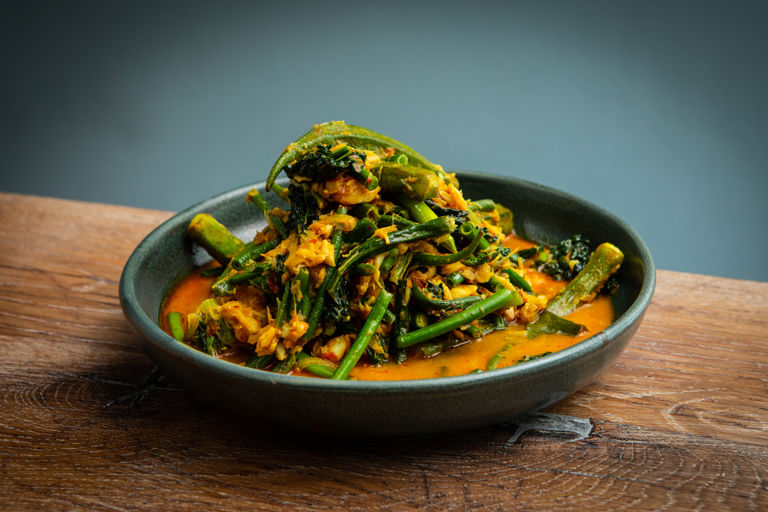
Sayur Masak Lemak
Malaysian vegetables in coconut milk: a yellow-tinged, turmeric-bright broth with squash, beans, and a fragrant rempah base. "Masak lemak" means "cooked rich" - and the dish is exactly that, mild and creamy without being heavy. Eaten with rice, every day across Malaysia.
Overview
A spice paste of shallots, garlic, ginger, lemongrass and turmeric is fried in oil. Coconut milk and water simmer with the paste; pumpkin or squash goes in first to soften, beans and aubergine follow, and tofu joins last. The broth thickens lightly; salt and a squeeze of lime finish.
Ingredients
Spice paste (rempah)
- 6 shallots
- 4 garlic cloves
- 3 cm fresh ginger
- 3 cm fresh turmeric (or 1 teaspoon ground)
- 2 stalks lemongrass (white parts only, sliced)
- 2 dried red chillies (soaked in hot water 10 min, deseeded)
Stew
- 3 tablespoons vegetable oil
- 4 kaffir lime leaves
- 1 stalk lemongrass (bashed)
- 400 ml coconut milk
- 400 ml water (or vegetable stock)
- 500 g pumpkin (or butternut squash, peeled and cubed)
- 200 g long beans (or green beans, in 5 cm lengths)
- 1 aubergine (small, cubed)
- 200 g firm tofu (cubed)
- 1 teaspoon salt
- 2 teaspoons sugar
- ½ lime (juice)
Method
Stage 1 - Paste
- Blend all the spice-paste ingredients with a splash of water to a smooth paste.
Stage 2 - Fry
- Heat the oil in a heavy pan over medium heat.
- Cook the paste 5-6 minutes, stirring, until darker, oily and aromatic.
Stage 3 - Liquid
- Add the lime leaves and lemongrass; stir 30 seconds.
- Pour in the coconut milk and water; bring to a steady simmer.
Stage 4 - Vegetables
- Add the pumpkin; cook 10 minutes until starting to soften.
- Add the beans, aubergine and tofu; simmer 8 minutes more until everything is tender.
- Stir in the salt and sugar.
Stage 5 - Finish
- Off the heat, stir in the lime juice.
- Taste; adjust salt and sugar.
- Serve hot with rice.
Notes
- Fresh turmeric: Fresh root gives a brighter, more floral flavour than ground. If using ground, halve to ½ teaspoon - it can taste musty in larger amounts.
- Don't boil the coconut milk hard: It can split. Steady simmer; never a rolling boil.
- Vegetable choice: Sweet potato, snake gourd, choko, kabocha all work - anything that holds shape in coconut sauce.
Storage
- Keeps 3 days refrigerated; flavour deepens.
- Freezes 2 months but the aubergine softens.
More like this
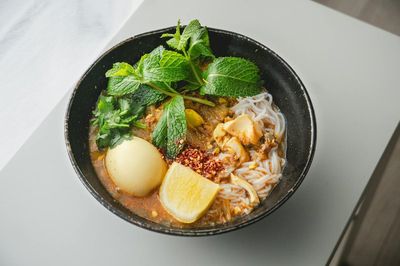
Malaysian Curry Laksa (Laksa Lemak)
A two-part dish: a deeply concentrated prawn-and-chicken stock built from roasted prawn shells, layered with a freshly pounded laksa paste of dried chilli, galangal, lemongrass and candlenuts. The two are joined with coconut cream to create a glossy, fragrant broth that bathes rice vermicelli, tofu puffs and prawns. Finished at the table with sambal, lime, fresh coriander and bean sprouts.

Malaysian Dhal Curry
Yellow split peas (chana dal) simmer with onion, turmeric and tomato until very soft. The lentils break down into a thick soup. Right at the end, a tempering of mustard seeds, curry leaves, dried red chillies, garlic and shallots is poured sizzling-hot over the surface. The aromatic oil seeps through; the dish transforms.
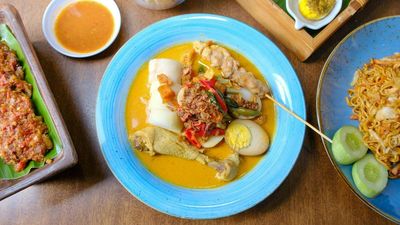
Sayur Lodeh
A spice paste of shallots, garlic, candlenuts (or cashews), turmeric and chilli is fried in oil until fragrant. Lemongrass, kaffir lime leaves and galangal infuse the coconut milk. Vegetables go in by cooking time, firmer first, leafier last. Tofu joins; everything simmers gently. The broth should be thin, the vegetables tender but not collapsed.
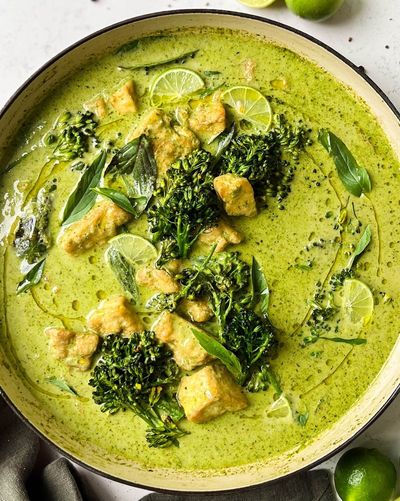
Thai Green Curry (Vegetarian)
A spice paste of green chillies and aromatics blends fresh (or starts from a good Thai paste with fresh additions). Coconut cream from the top of the can is cracked in the wok until oil splits out; paste fries; coconut milk loosens; vegetables, Thai aubergine, pea aubergine, bamboo shoots, broccoli, baby corn, go in by cook time. Tofu joins; the curry simmers briefly. Soy sauce (instead of fish sauce), palm sugar, lime leaves, Thai basil to finish.