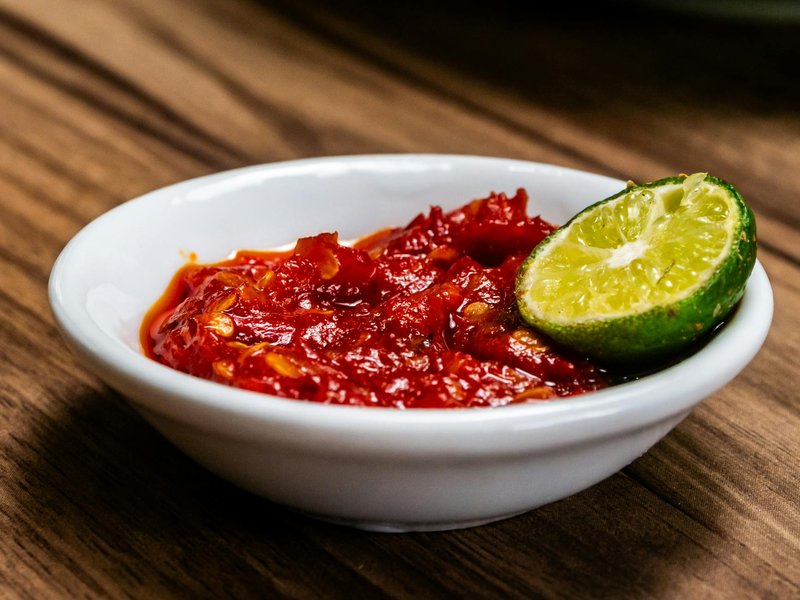
Sambal Terung
Malaysian stir-fried aubergine in sambal: charred, deep-fried aubergine wedges glazed with a sweet-spicy chilli paste of shallots, garlic, dried chillies and tamarind. The aubergine collapses to silky; the sambal coats every piece. Better than the sum of its parts.
Overview
Aubergines are deep-fried in batches until soft and lightly charred. The sambal is built fresh: shallot-garlic-chilli paste fried slowly in oil until darker and aromatic, then balanced with tamarind, sugar and salt. The aubergine returns to the wok and tosses through.
Ingredients
- 3 aubergines (medium, around 750 g; cut into 4 cm wedges)
- 4 tablespoons vegetable oil (plus more for deep-frying)
- 1 onion (small, sliced; for the finish)
- Salt to taste
Sambal paste
- 6 shallots
- 5 garlic cloves
- 6 dried red chillies (soaked in hot water 15 min, deseeded; reduce for milder)
- 2 long red chillies (deseeded)
- 1 cm fresh ginger
Sambal seasoning
- 3 tablespoons tamarind paste
- 2 tablespoons palm sugar (or brown sugar)
- 2 teaspoons light soy sauce (or salt to taste)
- 100 ml water
Method
Stage 1 - Aubergines
- Heat 4 cm of oil in a wok or deep pan to 180°C.
- Fry the aubergine wedges in 2-3 batches for 3-4 minutes until soft, golden and lightly blistered. Drain on kitchen paper.
Stage 2 - Paste
- Blend the sambal-paste ingredients to a smooth red paste.
Stage 3 - Cook the sambal
- Heat the 4 tablespoons of oil in a wide pan or wok over medium heat.
- Add the paste; cook 6-8 minutes, stirring often, until much darker, the oil separates and it smells deeply aromatic - not raw.
- Stir in the tamarind, sugar, soy and water; cook 2-3 minutes more to a glossy thick sauce.
Stage 4 - Combine
- Add the fried aubergines and the sliced onion; toss gently to coat - try not to break the aubergines apart.
- Cook 2 minutes more so the aubergines absorb the sambal.
- Taste; adjust salt or sugar.
Stage 5 - Serve
- Serve hot with steamed rice.
Notes
- Cook the paste long enough: Underdone sambal tastes raw and one-dimensional. The paste must darken; the oil must split out around the edges.
- Tamarind concentrate vs paste: If using concentrate, halve the quantity. Authentic Malaysian asam jawa (block tamarind) gives the truest flavour.
- Heat is adjustable: Six dried chillies give moderate heat. Cut to three for mild; add more bird's-eye chillies for a fierier version.
Storage
- Keeps 4 days refrigerated; reheats well.
- Freezes 2 months.
More like this
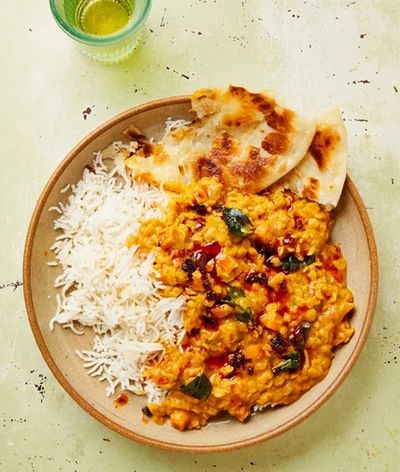
Malaysian Dhal Curry
Yellow split peas (chana dal) simmer with onion, turmeric and tomato until very soft. The lentils break down into a thick soup. Right at the end, a tempering of mustard seeds, curry leaves, dried red chillies, garlic and shallots is poured sizzling-hot over the surface. The aromatic oil seeps through; the dish transforms.
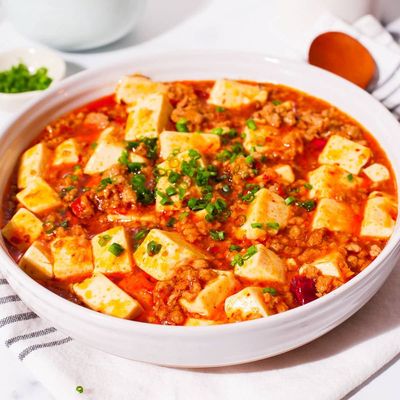
Mapo Tofu (Vegetarian)
Silken tofu poaches briefly in salted water (firms it up so it doesn't break). Dried shiitake mushrooms rehydrate and chop fine. Doubanjiang fries in oil until the oil reddens; mushrooms, garlic, ginger and chilli flakes follow. Stock loosens; tofu joins gently; cornflour slurry thickens. Sichuan peppercorn dust at the table.
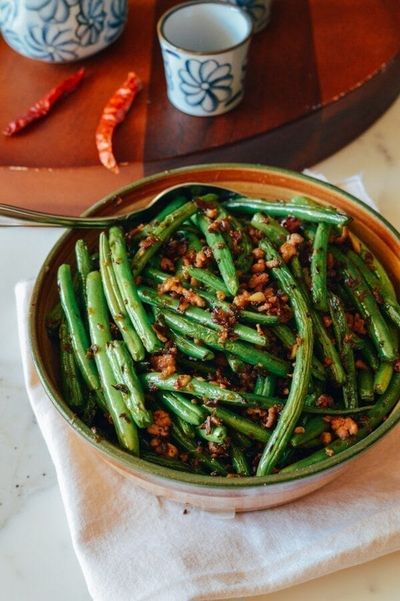
Sichuan Dry-Fried Green Beans
Beans dry-fry in just a thin slick of oil over high heat for 6-8 minutes, they need to blister and wrinkle, not stay green and snappy. Aromatics, garlic, ginger, dried chillies, Sichuan peppercorns and zhacai (Sichuan preserved mustard tuber), flash-cook. Beans return; soy and rice wine glaze; sesame oil to finish.
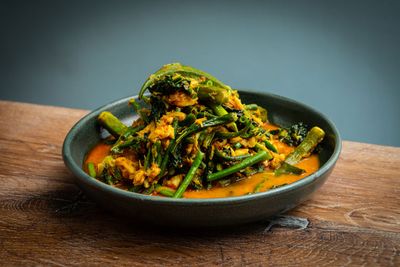
Sayur Masak Lemak
A spice paste of shallots, garlic, ginger, lemongrass and turmeric is fried in oil. Coconut milk and water simmer with the paste; pumpkin or squash goes in first to soften, beans and aubergine follow, and tofu joins last. The broth thickens lightly; salt and a squeeze of lime finish.