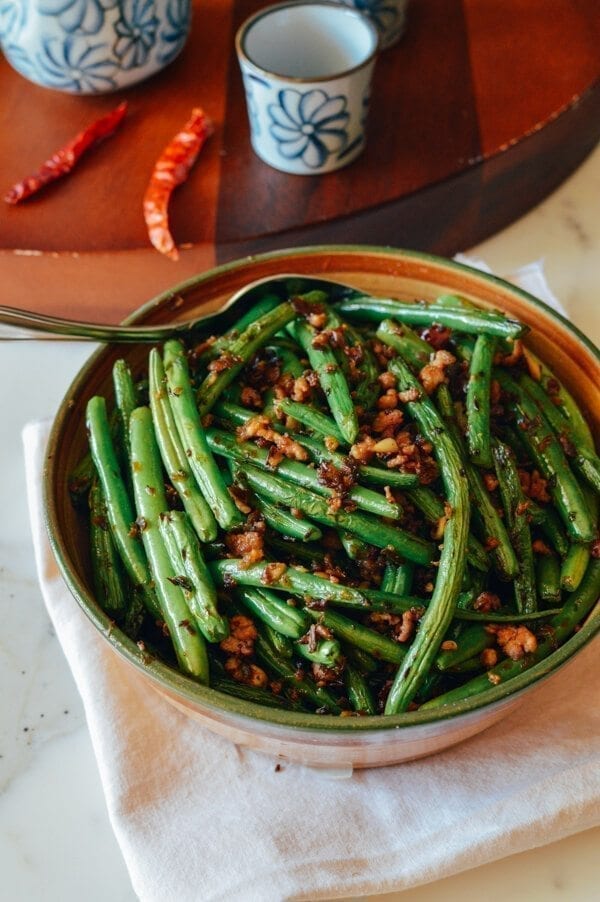
Sichuan Dry-Fried Green Beans
A Sichuan dry-fried bean dish: long beans blistered black-spotted in hot oil, tossed with garlic, ginger, dried chillies and Sichuan peppercorns.
Overview
Beans dry-fry in just a thin slick of oil over high heat for 6-8 minutes, they need to blister and wrinkle, not stay green and snappy. Aromatics, garlic, ginger, dried chillies, Sichuan peppercorns and zhacai (Sichuan preserved mustard tuber), flash-cook. Beans return; soy and rice wine glaze; sesame oil to finish.
Ingredients
- 500 g long beans (or green beans; trimmed and cut into 8 cm lengths)
- 4 tablespoons vegetable oil
- 4 garlic cloves (finely chopped)
- 2 cm fresh ginger (finely chopped)
- 6 dried red chillies (left whole)
- 1 teaspoon Sichuan peppercorns
- 50 g zhacai (Sichuan preserved mustard tuber; rinsed and chopped)
- 1 tablespoon Shaoxing rice wine (or dry sherry)
- 1 tablespoon light soy sauce
- 1 teaspoon dark soy sauce
- 1 teaspoon sugar
- 1 teaspoon toasted sesame oil
- 4 spring onions (sliced)
Method
Stage 1 - Dry-fry the beans
- Heat 3 tablespoons of oil in a wok or wide heavy pan over high heat.
- Add the beans; stir-fry 6-8 minutes - they should blister, wrinkle and develop dark spots. Don't lower the heat; don't stir too often.
- Lift out onto a plate.
Stage 2 - Aromatics
- Reduce the heat to medium; add the remaining tablespoon of oil to the wok.
- Add the dried chillies and Sichuan peppercorns; cook 30 seconds until fragrant - don't burn the chillies.
- Add the garlic, ginger and zhacai (if using); cook 30 seconds.
Stage 3 - Combine
- Return the beans to the wok; toss to coat.
- Pour in the Shaoxing wine, soy sauces and sugar; toss for 1 minute until everything is glazed.
Stage 4 - Finish
- Off the heat, drizzle the sesame oil and scatter the spring onions.
- Toss once more.
Stage 5 - Serve
- Pile onto a plate; eat hot with rice.
Notes
- Blistered, not just cooked: The dry-fry stage is what defines this dish. Beans that stay green and snappy are stir-fried; the proper version is wrinkled and chewy at the edges.
- High heat: Lower heat = steamed beans, not blistered ones. Preheat the wok properly; cook in a single layer if your pan is small.
- Zhacai: Adds a sharp, fermented note. Available at Asian grocers (sold in packets, looking like chopped pickled vegetable). Skip if you can't find it; the dish is still great.
Storage
- Best eaten right away. Leftovers refrigerate 2 days; reheat in a hot dry pan to crisp.
More like this
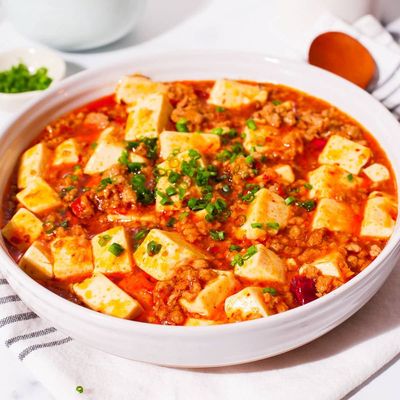
Mapo Tofu (Vegetarian)
Silken tofu poaches briefly in salted water (firms it up so it doesn't break). Dried shiitake mushrooms rehydrate and chop fine. Doubanjiang fries in oil until the oil reddens; mushrooms, garlic, ginger and chilli flakes follow. Stock loosens; tofu joins gently; cornflour slurry thickens. Sichuan peppercorn dust at the table.
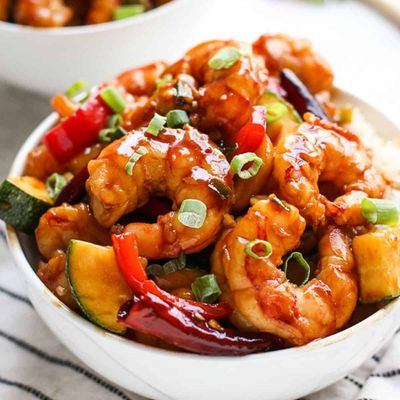
Kung Pao Shrimp
Kung pao (gongbao) shrimp is the seafood cousin of the classic Sichuan gongbao jiding, named for the 19th-century governor-general Ding Baozhen whose title was Gong Bao. Where the chicken version uses diced meat, the shrimp version keeps the prawns whole or halved so they curl into bright pink commas around the chillies and peanuts. The flavour profile is the signature Sichuan "lychee" balance: a touch of sweetness from sugar, sourness from black vinegar, salt and umami from soy, and the warm tingle (ma la) of toasted Sichuan peppercorn paired with the smoky bite of dried er jing tiao chillies. This is a fast dish, fundamentally a wok exercise: every ingredient must be prepped and lined up before the heat goes on, because once the chillies hit the oil you have maybe ninety seconds before everything is overcooked. Difficulty is moderate for a home cook with a working wok and high burner; the trick is keeping the chillies dark red and fragrant without scorching them black, and pulling the shrimp out the moment they curl. Served over plain rice it is one of the most rewarding ten-minute meals in the repertoire.
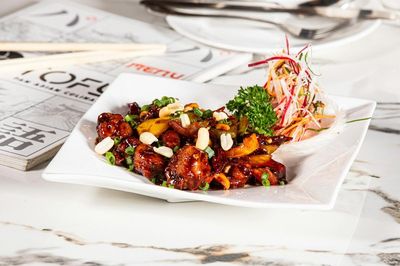
Spicy Chicken with Peanuts
This is a classic western Chinese dish better known in China as Gongbao chicken (or Kung Pao chicken). Named after Chinese official Ding Baozhen, Governor of Sichuan province in the nineteenth century, it represents the region's bold approach to flavour: spicy, slightly sour, sweet, and savoury all at once. The combination of roasted peanuts and dried chilli creates an unforgettable sauce.
General Tso’s Chicken
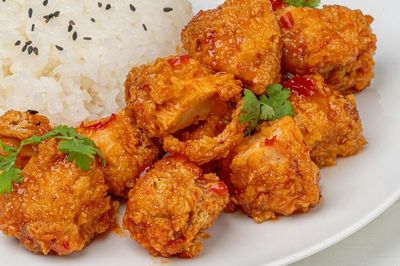
This iconic American-Chinese dish combines deep-fried chicken with a sweet, spicy, and slightly tangy sauce. General Tso's chicken exemplifies the bold flavours of outside China Chinese cooking, where heat from dried chillies, sweetness from sugar, and complexity from vinegar create a sauce that is bold yet balanced. Restaurant-quality results require proper oil temperature and crispy, well-coated chicken.