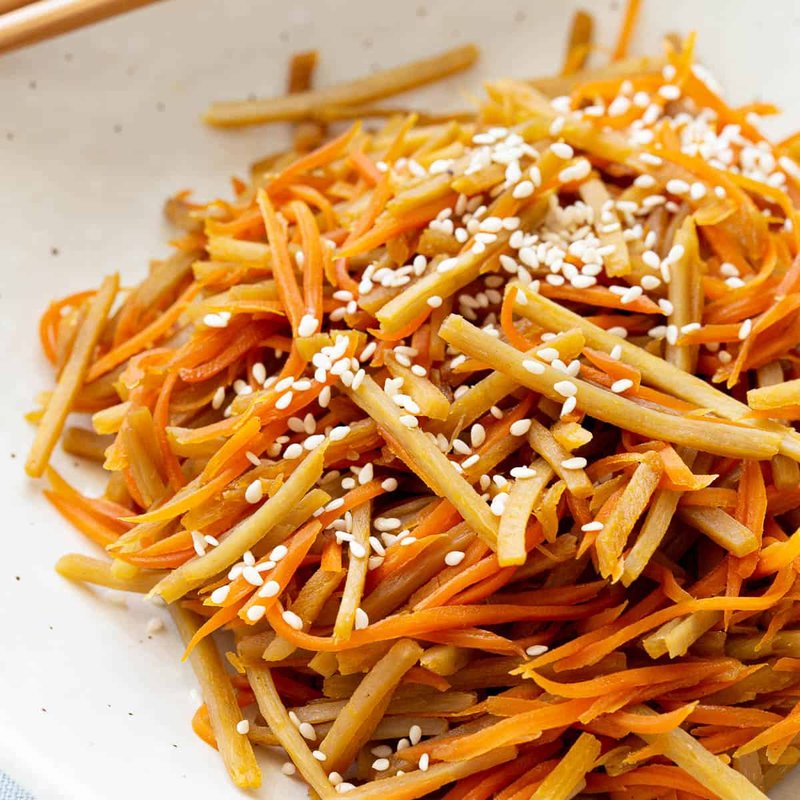
Kinpira Gobo
Japan's root-vegetable side: julienned burdock and carrot stir-fried with chilli, then glazed with soy, mirin and sugar till glossy.
Overview
Burdock root (gobo, long thin brown root sold at Japanese / Korean / well-stocked Asian shops; if unavailable, substitute with parsnip + an extra dash of dashi for the earthy depth) is scrubbed clean, julienned into matchsticks, then soaked briefly in vinegared water to prevent oxidation. Carrots julienne to similar matchsticks. Sesame oil heats; dried red chilli flakes (or one small chilli sliced) infuses 30 seconds; the drained gobo goes in and stir-fries for 3 minutes; carrot joins; everything tosses 2 more minutes. A sauce of soy, mirin, sugar and a splash of sake pours in; reduces for 4-5 minutes until the liquid is gone and the vegetables are glazed. Finished with sesame seeds and a drizzle of sesame oil.
Ingredients
Vegetables
- 200 g fresh burdock root (or 200 g parsnip)
- 200 g carrots (peeled)
- 2 tablespoons rice vinegar (for the soaking water, gobo only)
Sauce
- 2 tablespoons light soy sauce (Japanese / shoyu)
- 1 tablespoon mirin
- 1 tablespoon sake (or substitute extra mirin + 1 teaspoon water)
- 1 tablespoon caster sugar
- 1 tablespoon dashi (optional, for extra depth - use instant dashi powder dissolved in 1 tablespoon hot water)
Stir-fry
- 1 tablespoon sesame oil
- 1 teaspoon dried red chilli flakes (or 1 small dried red chilli, sliced)
To finish
- 1 teaspoon toasted white sesame seeds
- 1 teaspoon toasted black sesame seeds (optional, for visual contrast)
- 1 teaspoon sesame oil (drizzle)
- 1 spring onion (very thinly sliced, optional)
Method
Stage 1 - Prep the gobo
- Scrub the burdock root under running water with the back of a knife or a stiff brush - gobo has a thin brown skin that's edible and flavourful (don't peel away the skin like a carrot; just scrub clean).
- Slice the root into 4-5 cm lengths.
- Cut each length into 3 mm thick slabs.
- Stack the slabs and cut into 3 mm matchsticks.
- Place the matchsticks immediately into a bowl of cold water + rice vinegar (the vinegared water prevents the gobo from turning brown).
- Soak 10 minutes; drain just before cooking.
Stage 2 - Carrot
- Peel the carrots; cut into matchsticks of the same size as the gobo (3 mm × 3 mm × 5 cm).
Stage 3 - Sauce
- In a small bowl, whisk soy sauce, mirin, sake, sugar and dashi (if using).
Stage 4 - Stir-fry start
- Heat 1 tablespoon sesame oil in a wide non-stick pan or wok over medium-high heat.
- Add the chilli flakes; sizzle 20 seconds (don't burn).
Stage 5 - Gobo first
- Add the drained gobo matchsticks.
- Stir-fry 3-4 minutes, tossing - the gobo softens slightly but should retain a crisp bite.
Stage 6 - Carrot
- Add the carrot matchsticks.
- Stir-fry 2 more minutes.
Stage 7 - Sauce
- Pour in the sauce mixture; toss to coat.
- Cook 4-5 minutes over medium-high heat - the sauce reduces and clings to the vegetables. Stir frequently to prevent burning.
- The vegetables should be tender-crisp and the pan should be nearly dry of liquid.
Stage 8 - Finish
- Off heat; sprinkle with sesame seeds; drizzle a final teaspoon of sesame oil.
- Toss once.
Stage 9 - Serve
- Pile into 4 small bowls.
- Scatter sliced spring onion (if using).
- Serve at room temperature OR cold from the fridge (Japanese serve both ways).
- Pairs well with rice, miso soup and any Japanese main.
Notes
- Gobo is the right ingredient: Burdock root has a unique earthy-nutty flavour that defines kinpira. If you can't find it (try Asian markets), parsnip is the closest substitute. Skip carrot if substituting; just do parsnip-only kinpira.
- Soak gobo in vinegared water: Burdock browns quickly on contact with air. The 10-minute soak in vinegared water prevents discolouration and also removes the slight bitterness of raw gobo.
- Matchsticks of equal size: All the vegetable matchsticks should be roughly the same size (3 mm) so they cook at the same rate. Uneven cuts give a mix of crunchy and overcooked.
Storage
- Refrigerate 5 days; bring to room temperature before serving.
- Doesn't freeze well (texture suffers).
- Improves slightly with 1-2 days' rest as the flavours deepen.
More like this
Nhom Trav
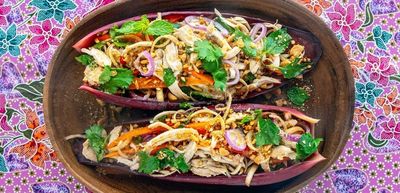
A Cambodian banana flower salad, the kind of bright herby starter that opens a Khmer meal. You slice banana flower thin and submerge it immediately in lemon water to stop the browning (banana flower oxidises within seconds of cutting, going from pale ivory to brown). Tofu cubes (or shredded chicken in the non-vegetarian version) join for substance. Peanuts toast in a dry pan; shallots fry crisp in oil. The dressing is lime, palm sugar, soy and chilli pounded together in a mortar, and everything tosses with fresh herbs at the last minute - mint, coriander, Thai basil, whatever is around. Eaten as a starter or alongside grilled meat, the bitter floral note of the banana flower balanced by the salty-sweet dressing and the crunch of peanuts.
Phở Chay
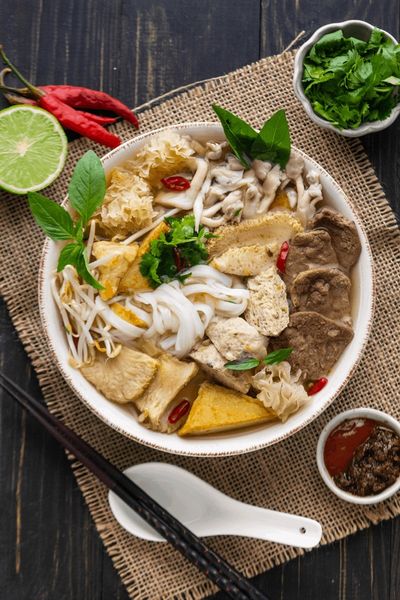
Onion and ginger char black on a flame to give the broth its signature smoky depth. They go into water with toasted spices, dried mushrooms, kombu (kelp) and a few aromatics, simmering for an hour to extract flavour. The broth strains clear; tofu poaches in it briefly. Rice noodles cook separately; everything assembles in bowls with a pile of fresh herbs and chillies.

Tahu Isi (Stuffed Fried Tofu)
Firm tofu blocks halve crossways into triangles. A small slit cuts into each triangle to make a pocket. Vegetable filling stir-fries quickly with shallot, garlic, soy sauce and a pinch of sugar; cools. Pockets stuff with filling. Stuffed tofu dips into a thin rice-flour batter; fries in moderately hot oil 3-4 minutes till crisp gold all over. Eats hot with whole fresh chillies on the side and a saucer of sweet-soy dip.
Chilli con Carne
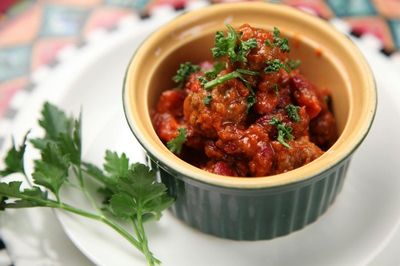
Chilli con carne is a hearty, flavour-packed stew that celebrates bold Mexican spicing combined with slow-cooked beef, beans, and tomatoes. This version builds deep, complex flavours through toasted whole spices, umami ingredients (marmite and soy sauce), and slow simmering. The result is a comforting, warming dish that improves with time and is perfect for feeding a crowd.