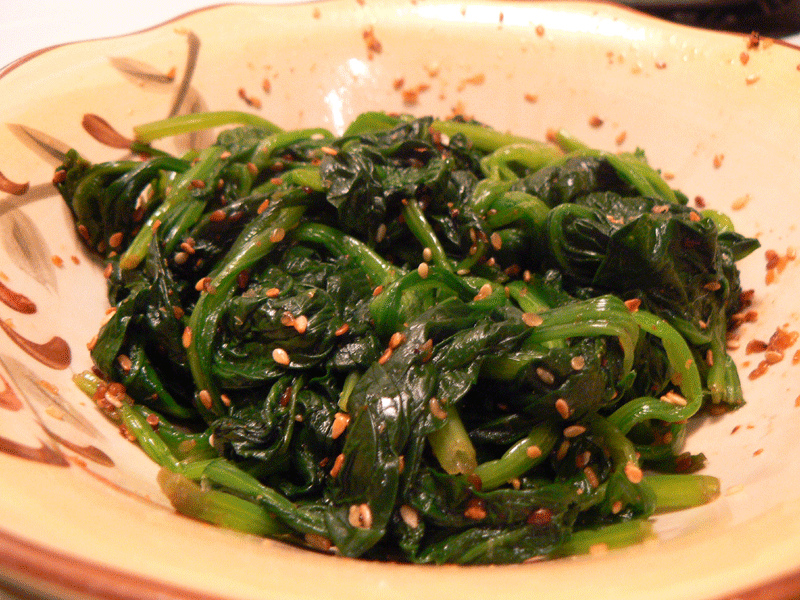
Goma-Ae
Japan's sesame side: blanched spinach tossed in a paste of ground toasted sesame, soy, sugar and mirin. Bento-box mainstay.
Overview
Spinach (or green beans, asparagus, kale) blanches briefly in salted boiling water; refreshes in cold water; squeezes hard to remove all excess water; cuts into 4 cm pieces. Sesame seeds toast in a dry pan until fragrant and slightly darker. The toasted seeds grind in a suribachi (Japanese mortar) or a small food processor to a coarse paste, not to butter consistency; some texture is wanted. The paste mixes with soy sauce, sugar, mirin and a teaspoon of sake (optional) into a thick dressing. The blanched, squeezed vegetable tosses with the dressing; rests briefly to integrate; served at room temperature.
Ingredients
Vegetable (pick one)
- 400 g fresh spinach (washed)
- 400 g fresh green beans (trimmed)
- 500 g fresh asparagus (woody ends snapped off)
- 500 g broccoli (cut into florets)
Blanching
- 2 teaspoons salt (for the boiling water)
Sesame dressing
- 4 tablespoons white sesame seeds (or a mix of white and black)
- 1 ½ tablespoons soy sauce (light Japanese soy / shoyu)
- 1 tablespoon sugar
- 1 tablespoon mirin
- 1 teaspoon rice vinegar (optional, brightens)
- 1 teaspoon sake (optional)
To finish
- 1 teaspoon extra toasted sesame seeds (for scattering on top)
- 1 teaspoon sesame oil (optional drizzle)
Method
Stage 1 - Blanch
- Bring a wide pot of water with 2 teaspoons salt to a boil.
- Spinach: drop in; cook 30-60 seconds until just wilted, still bright green.
- Green beans / asparagus: blanch 3 minutes (beans), 2 minutes (asparagus) until tender-crisp.
- Broccoli: blanch 3-4 minutes.
- Drain immediately; refresh in ice water 30 seconds; drain.
Stage 2 - Squeeze and cut
- For spinach: gather in handfuls; squeeze hard between your palms to remove ALL excess water (Japanese cooks squeeze in a sushi-rolling-bamboo or in a clean tea towel for maximum dryness). Wet spinach dilutes the dressing.
- Cut into 4 cm pieces.
- For other vegetables: pat dry; cut into bite-size pieces if needed.
Stage 3 - Toast the sesame
- Place sesame seeds in a small dry frying pan.
- Toast over medium heat 2-3 minutes, shaking constantly, until the seeds are slightly darker and very fragrant (some may pop).
- Tip onto a plate to cool - they go from gold to burnt very quickly.
Stage 4 - Grind the dressing
- Place 3 tablespoons of the toasted seeds (reserve 1 tablespoon for garnish) in a suribachi or mini food processor.
- Grind until you have a coarse-paste consistency - most seeds are crushed and oily, but some intact seeds for texture are good. Don't over-grind to butter.
- Stir in soy sauce, sugar, mirin, rice vinegar (if using) and sake (if using).
- The dressing should be thick but spoonable - like a thick tahini.
Stage 5 - Toss
- Tip the squeezed vegetable into a wide bowl.
- Add the sesame dressing.
- Toss thoroughly with chopsticks or tongs until every piece is coated.
Stage 6 - Rest
- Let stand 5 minutes at room temperature for the dressing to integrate.
- (Or refrigerate up to 4 hours; bring back to room temperature before serving.)
Stage 7 - Serve
- Pile into 4 small bowls (Japanese side dishes are served in their own small bowl, not on a plate).
- Scatter with the reserved toasted sesame seeds.
- Drizzle a few drops of sesame oil over (if using).
- Eat at room temperature, alongside rice and other dishes.
Notes
- Squeeze the spinach hard: This is the single most common goma-ae failure. Wet spinach dilutes the dressing and makes the dish soggy. After draining, take handfuls and squeeze with both hands - you should see a noticeable amount of water come out.
- Coarse paste, not butter: The texture is part of the dish. Grinding to butter consistency gives a smooth dressing that lacks character. Aim for "mostly crushed with some seeds intact".
- Variations: Goma-ae works with all green vegetables. Spinach is the most common in Japanese homes; green beans (sayaingen no goma-ae) is the most common in restaurants; asparagus and broccoli are Western adaptations that work just as well.
Storage
- Best within 4 hours of dressing.
- Refrigerate 2 days; the dressing thickens further and the colour darkens but the flavour holds.
- The dressing alone (without vegetable) keeps refrigerated 1 week - use as a salad dressing, drizzle on grilled fish, or stir into rice.
More like this
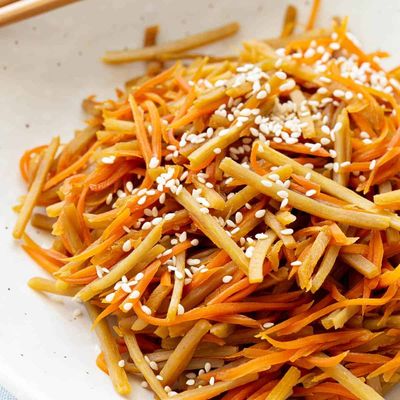
Kinpira Gobo
Burdock root (gobo, long thin brown root sold at Japanese / Korean / well-stocked Asian shops; if unavailable, substitute with parsnip + an extra dash of dashi for the earthy depth) is scrubbed clean, julienned into matchsticks, then soaked briefly in vinegared water to prevent oxidation. Carrots julienne to similar matchsticks. Sesame oil heats; dried red chilli flakes (or one small chilli sliced) infuses 30 seconds; the drained gobo goes in and stir-fries for 3 minutes; carrot joins; everything tosses 2 more minutes. A sauce of soy, mirin, sugar and a splash of sake pours in; reduces for 4-5 minutes until the liquid is gone and the vegetables are glazed. Finished with sesame seeds and a drizzle of sesame oil.
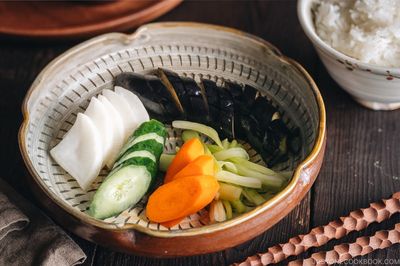
Tsukemono
Three asazuke pickles in one batch. Cucumber: salted heavily, weighted for 1 hour, water squeezed out, dressed with rice vinegar, kombu and sesame seeds. Daikon: thinly sliced, salted briefly, then bathed in a sweet rice-vinegar pickle for an hour. Cabbage: salted with shiso (or substitute basil + a pinch of fennel), pressed under a plate weight to wilt for 30 minutes. Served in three small individual bowls.
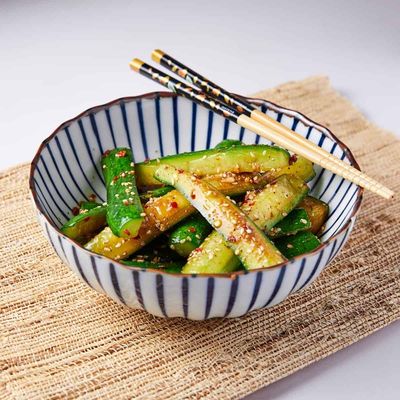
Chinese Pickled Cucumber
Cucumbers are cut into spears (or smashed-and-torn for a rougher texture), salted heavily in a colander 30 minutes to weep, then patted dry. A brine of rice vinegar, sugar, light soy, water, sliced ginger, Sichuan peppercorns and dried red chillies brings to a gentle simmer just to dissolve the sugar; cools to room temperature. The drained cucumber goes into a jar; the cooled brine pours over to submerge; refrigerated for 1 hour minimum (overnight ideal). Eats cold straight from the jar.
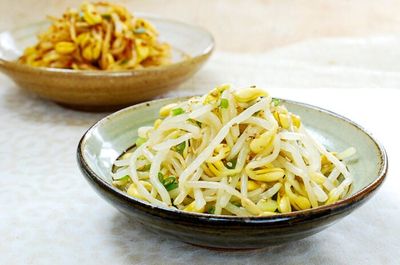
Kongnamul Muchim (Soybean Sprout Side Dish)
Soybean sprouts blanch in salted water 5-6 minutes (longer than mung sprouts because of the harder bean head). Drain immediately and rinse cold to stop cooking and preserve snap. Dressing: 2 minced garlic cloves, soy sauce, sesame oil, salt, sesame seeds, spring onion. Toss; chill for 15 minutes; serve cool. Some versions get a pinch of gochugaru for the spicy variant.