Tsukemono
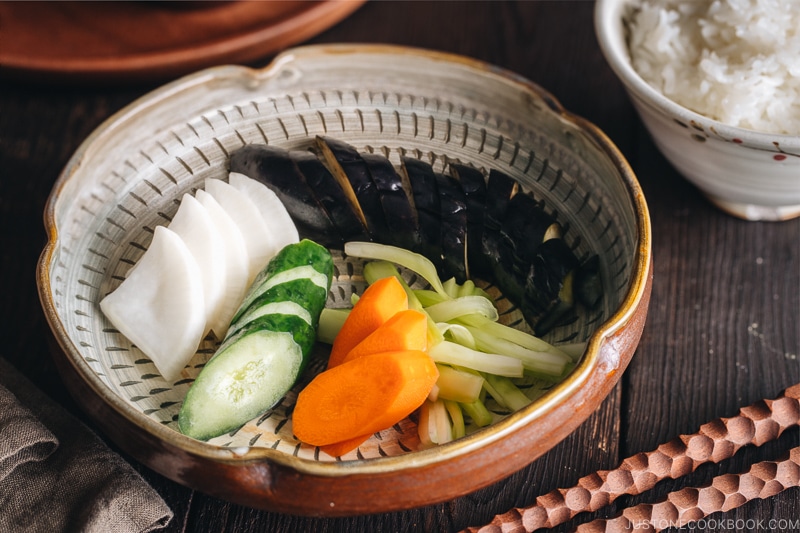
Japan's quick pickles: cucumber, daikon and cabbage briefly salted and dressed in rice vinegar. The companion to every meal.
Overview
Three asazuke pickles in one batch. Cucumber: salted heavily, weighted for 1 hour, water squeezed out, dressed with rice vinegar, kombu and sesame seeds. Daikon: thinly sliced, salted briefly, then bathed in a sweet rice-vinegar pickle for an hour. Cabbage: salted with shiso (or substitute basil + a pinch of fennel), pressed under a plate weight to wilt for 30 minutes. Served in three small individual bowls.
Ingredients
Pickle 1 - Cucumber (kyuri no asazuke)
- 2 Japanese (or Persian cucumbers, small, or ½ English cucumber, deseeded)
- 1 teaspoon fine salt
- 1 tablespoon rice vinegar
- 1 teaspoon caster sugar
- 1 strip kombu (about 5 cm - sold dried at Japanese / Asian shops; soaked in 1 tablespoon water for 5 minutes)
- 1 teaspoon toasted sesame seeds
- 1 red chilli (small, sliced thin, optional)
Pickle 2 - Daikon (daikon no amazu-zuke)
- 200 g daikon radish (peeled, sliced into 3 mm rounds or julienned)
- ½ teaspoon fine salt
- 3 tablespoons rice vinegar
- 1 tablespoon sugar
- 1 strip lemon zest (yellow part only)
Pickle 3 - Chinese cabbage with shiso (hakusai no asazuke)
- 200 g Chinese cabbage (or napa cabbage, sliced 5 mm crosswise)
- ½ teaspoon fine salt
- 4 shiso leaves (sold at Japanese / Asian shops - or substitute fresh basil leaves + a pinch of fennel seed)
- 1 small piece kombu (3 cm, optional)
- 1 teaspoon mirin
Method
Stage 1 - Cucumber pickle
- Trim and quarter cucumbers lengthwise; scoop out the very seedy core if any; cut into 5 cm batons.
- Toss in a bowl with 1 teaspoon salt; massage for 30 seconds.
- Place a small bowl on top to weight; let stand 1 hour.
- Drain off the water that's released.
- In a clean bowl, combine the squeezed cucumber with rice vinegar, sugar, the soaked kombu (chopped into small strips), sesame seeds and (optional) sliced chilli.
- Toss; refrigerate at least 30 minutes before serving.
Stage 2 - Daikon pickle
- Place the sliced daikon in a colander; toss with ½ teaspoon salt; rest 15 minutes.
- Rinse briefly; squeeze gently to remove excess water.
- In a small bowl, whisk rice vinegar with sugar until dissolved.
- Add the daikon and the strip of lemon zest.
- Toss; refrigerate at least 1 hour.
Stage 3 - Cabbage pickle
- In a wide bowl, sprinkle the sliced cabbage with ½ teaspoon salt; massage with hands for 1 minute (the cabbage softens and weeps).
- Add the shiso leaves (torn into small pieces) and the optional kombu piece.
- Add the mirin.
- Place a small plate on top to weight; rest 30 minutes.
- Drain off excess water; remove the kombu.
Stage 4 - Serve
- Tip each pickle into its own small bowl (Japanese tsukemono are served in tiny individual portions).
- Garnish each as needed.
- Serve cold alongside rice, miso soup, grilled fish, or as a small side at any Japanese meal.
Notes
- Asazuke = shallow pickle: These are quick same-day pickles, not preserved-for-months sauerkrauts or kimchis. The Japanese tradition has many longer-fermented pickles too (takuan, umeboshi), but asazuke is the everyday-table pickle.
- Salt-and-weight technique: Tsukemono depends on salting + weighting + draining. The salt draws out water; the weight pressure compresses; the drain removes the liquid; what's left is concentrated vegetable flavour with the seasonings clinging.
- Shiso vs substitutes: Shiso (perilla) has a distinctive minty-basil-citrus flavour that's the heart of Japanese pickling. The closest substitute is basil + a pinch of fennel or mint; neither is the same, but both produce acceptable pickles.
Storage
- All three pickles refrigerate 3-5 days.
- Asazuke generally taste best on day 1-2; longer keeps shift them toward saltier and more sour.
- Don't freeze - texture suffers.
More like this
Bombay Potatoes
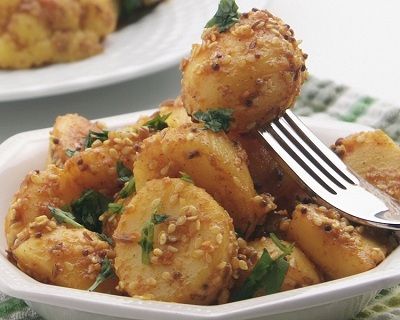
Bombay Potatoes is comfort food at its finest. Small potatoes are partially cooked, then coated in a richly spiced oil infused with seeds and aromatics. Some potatoes are mashed to create a creamy base, while others remain whole for texture. The result is a warm, golden, deeply spiced side dish that's utterly satisfying. This is a vegetarian staple of Indian home cooking.

Chana Chaat
Cooked chickpeas (tinned for speed, OR overnight-soaked and home-cooked for the best texture) toss with diced red onion, finely chopped tomato, small-diced boiled potato and chopped fresh coriander. The dressing: lemon juice, chaat masala (a salty-sour spice mix sold at Pakistani shops), roasted ground cumin, Kashmiri chilli powder and a pinch of salt. Hot chilli sauce and tamarind chutney drizzle on; the chaat tosses; crushed papri tops; eat immediately.
Nhom Trav
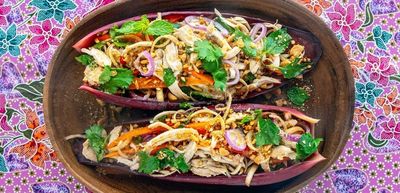
A Cambodian banana flower salad, the kind of bright herby starter that opens a Khmer meal. You slice banana flower thin and submerge it immediately in lemon water to stop the browning (banana flower oxidises within seconds of cutting, going from pale ivory to brown). Tofu cubes (or shredded chicken in the non-vegetarian version) join for substance. Peanuts toast in a dry pan; shallots fry crisp in oil. The dressing is lime, palm sugar, soy and chilli pounded together in a mortar, and everything tosses with fresh herbs at the last minute - mint, coriander, Thai basil, whatever is around. Eaten as a starter or alongside grilled meat, the bitter floral note of the banana flower balanced by the salty-sweet dressing and the crunch of peanuts.

Tandoori Chicken Tikka
Tandoori Chicken Tikka is restaurant-quality barbecue, sophisticated yet accessible. The chicken undergoes a two-stage marinade: first, a quick acid and spice bath to begin tenderizing; second, a rich yoghurt-based marinade infused with warming spices, fresh herbs, and umami-rich Parmesan. The extended marination (up to 48 hours) allows deep flavor penetration and tenderness. The result is succulent, fragrant, lightly charred chicken with a burnished exterior and a creamy, spiced crust. Serve with lemon and fresh coriander.