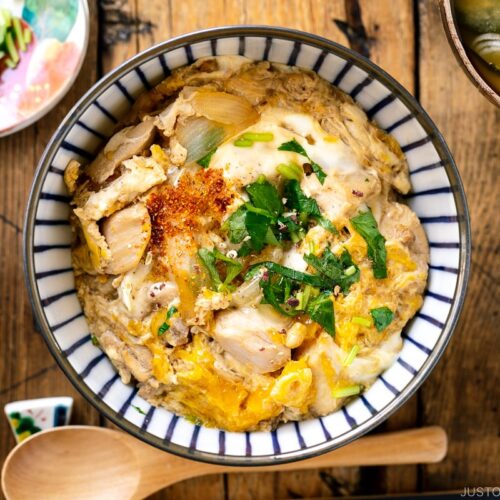
Oyakodon
"Parent and child" rice bowl: chicken and egg simmered together in dashi-soy broth, set just barely soft, slid onto rice. Sentimental name; comforting dish; ready in fifteen minutes.
Overview
Chicken thigh chunks simmer in dashi-mirin-soy broth with sliced onion until tender, beaten egg is poured in and sets in soft curds, and the lot slides over rice. The egg should still be slightly runny when the heat is turned off.
Ingredients
Broth
- 200 ml dashi
- 3 tablespoons soy sauce
- 3 tablespoons mirin
- 1 tablespoon caster sugar
To simmer
- 300 g chicken thigh (boneless, skinless, cut into 2 cm pieces)
- 1 onion (thinly sliced)
- 4 eggs (large, lightly beaten, leaving streaks)
To serve
- rice
- 1 spring onion (sliced)
- A pinch of shichimi togarashi (optional)
Method
Stage 1 - Simmer the chicken
- Combine the broth ingredients in a small frying pan and bring to a simmer.
- Add the onion and chicken. Simmer for 5-6 minutes until the chicken is cooked through.
Stage 2 - Add the egg
- Pour the beaten egg in a slow circular pour over the chicken; don't stir.
- Cover the pan and cook for 30-45 seconds until the egg is just set on top but still glossy.
- Turn off the heat; the residual heat finishes it.
Stage 3 - Plate
- Slide the chicken-egg mixture (with its broth) over a bowl of hot rice.
- Top with spring onion and a pinch of shichimi.
Notes
- Don't beat the egg too much: Streaks of yolk and white give the classic marbled finish; fully blended egg looks like scrambled.
- Pull the egg early: It keeps cooking from residual heat. If it looks fully set in the pan, it'll be hard by the time you eat it.
- Thigh, not breast: Breast goes dry in the simmer; thigh stays juicy.
Storage
- Eat immediately; egg doesn't hold.
More like this
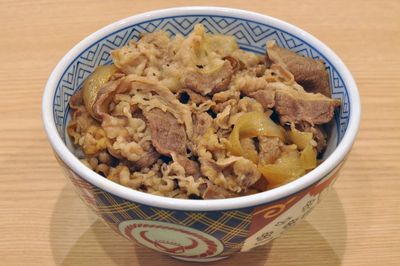
Gyudon
Thinly sliced beef simmered briefly in dashi with mirin, sake, soy and sugar, alongside sliced onion. The whole pile spooned over rice with the broth. Topped with pickled ginger and a soft-boiled egg if you like.
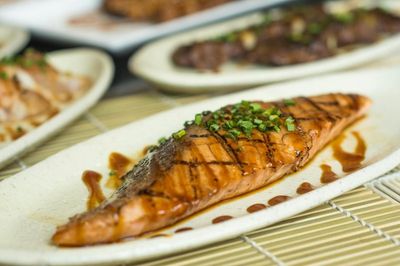
Honey Soy Salmon (One-Pan)
Salmon fillets sear skin-side down for crisp skin, then bathe in a quick honey-soy-mirin-ginger reduction that lacquers them. Broccoli or bok choy steams in the same pan with a splash of stock. Twenty minutes; one pan; serve over rice.
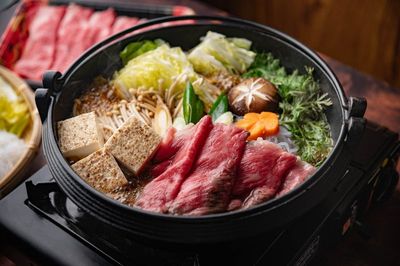
Beef Sukiyaki
A wide shallow pot is brushed with beef fat, the warishita sauce (soy-mirin-sake-sugar) is poured in, then thinly sliced beef and a colourful array of vegetables, tofu and shirataki noodles are added in batches as people eat. Each piece dips in raw egg yolk before going in the mouth. A portable hob at the table is traditional but not required.
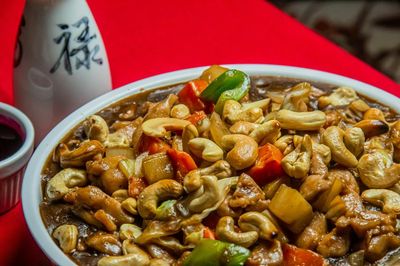
Cashew Chicken
This dish exemplifies the Chinese penchant for contrasting textures. Tender succulent pieces of chicken are paired with sweet, crunchy cashew nuts and a delicate sauce. While the original Chinese version would have used peanuts (as cashews were not traditionally featured in Chinese cookery), this adaptation showcases how the cuisine evolves while maintaining its core philosophy of textural harmony.