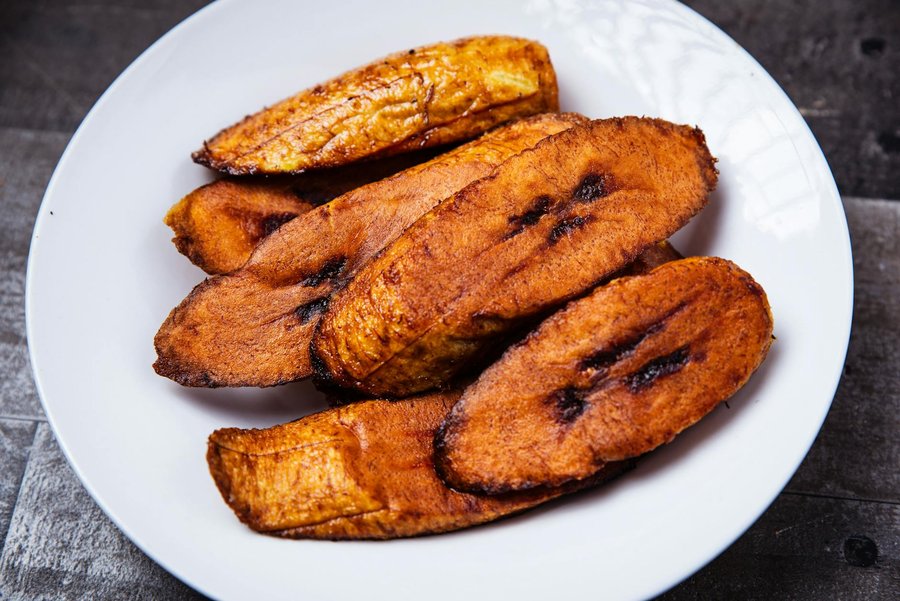
Fried Plantains
Jamaica's non-negotiable side: sweet ripe plantains sliced and slow-fried till the edges caramelise to deep mahogany and the centres turn meltingly soft.
Overview
Ripe plantains (not the green ones used for tostones) are peeled, sliced thick on the bias, and fried gently in vegetable oil so the natural sugars caramelise without the outsides burning. The result is sweet, slightly chewy, with a soft interior. A light dusting of salt at the end lifts the sweetness. Don't rush the heat: medium-low is the rule.
Ingredients
Plantains
- 3 ripe plantains (large, skins mostly black, soft to the touch)
- 4 tablespoons vegetable oil (or coconut oil for a richer flavour)
- ¼ teaspoon fine salt (to finish)
Method
Stage 1 - Prepare the plantains
- Cut the tops and tails off each plantain.
- Score the skin lengthways with a sharp knife, just deep enough to cut the skin without slicing the flesh.
- Peel the skin away in strips (it should come off in 2 or 3 pieces).
- Slice each plantain on a diagonal into ovals about 1 cm thick.
Stage 2 - Fry
- Heat the oil in a wide frying pan over medium-low heat (around 160°C if measuring).
- Lay the plantain slices flat in a single layer; do not crowd the pan.
- Fry 3-4 minutes on the first side until deeply golden brown.
- Turn once with a spatula or tongs; fry 2-3 minutes on the second side.
- Lift onto a plate lined with kitchen paper.
- Sprinkle lightly with fine salt while still hot.
- Serve immediately.
Notes
- Ripeness is everything: Yellow plantains with no black spots will be starchy and bland. Wait until the skin is mostly black and the fruit gives gently when squeezed. Up to a week on the counter from a yellow plantain.
- Don't fry too hot: High heat scorches the sugars before the inside softens. Medium-low gives time for caramelisation and a tender middle.
- Coconut oil option: Frying in coconut oil adds a subtle island sweetness that complements jerk and curry plates.
Variations
Pressed plantains (tostones): Use green plantains, fry once, smash flat, fry again. A different dish - savoury, crisp, served with garlic-lime dipping sauce. Glazed: Drizzle with a little dark rum and brown sugar in the last 30 seconds of frying for a dessert-leaning version.
Serving
Serve with: Jerk chicken, brown stew chicken, rice and peas, curry goat, or as part of a Jamaican breakfast with ackee and saltfish.
Storage
- Best eaten immediately - they soften and lose their edge-crispness within an hour.
- Refrigerates 1 day in an airtight container; reheat in a hot dry pan to revive.
- Does not freeze well.
Recipes mentioned here
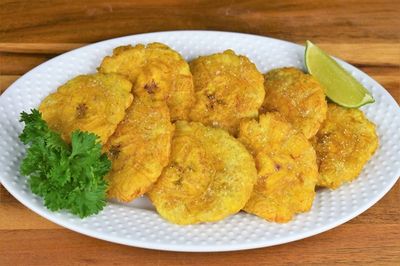
Tostones
Green (unripe) plantains are peeled, sliced into thick rounds and fried gently in oil at moderate heat to par-cook them through. Each round is smashed flat to roughly twice its original diameter, then fried a second time at higher heat until deep gold and crisp. Salted immediately. Served with a garlic-citrus mojo for dunking.
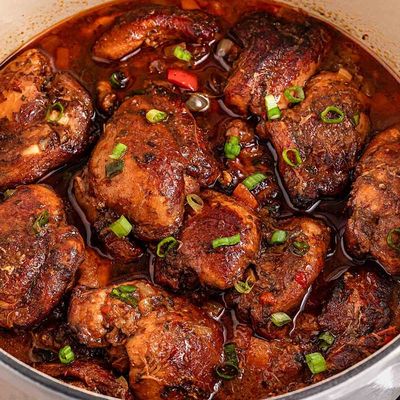
Brown Stew Chicken
The Sunday-lunch counterpart to goat curry across Jamaica; not curry-driven but built on a deep mahogany gravy that gets its colour from caramelised brown sugar and a few teaspoons of bottled "browning sauce" (Grace is the canonical brand, a concentrated burnt-sugar syrup that's a kitchen staple in every Jamaican household). The chicken is bone-in, marinated overnight in a wet rub of onion, bell pepper, scallions, allspice, ginger and thyme, then browned hard and slow-braised until the meat slips off the bone. Flavour is savoury and slightly sweet with a deep thyme back-note and a whisper of Scotch bonnet heat from the whole pierced fruit in the pot. The gravy is what you actually want; thick, dark, sweet-savoury, glossy with rendered chicken fat, the kind of gravy you'd happily eat over plain rice as its own meal. Smell is browning sugar, thyme, and the unmistakable allspice signature. Patient cooking but easy: marinate the day before, then 30 minutes of active prep and 2 hours of unattended braise. The pairing with [[rice-and-peas]] is non-negotiable across Jamaican households.
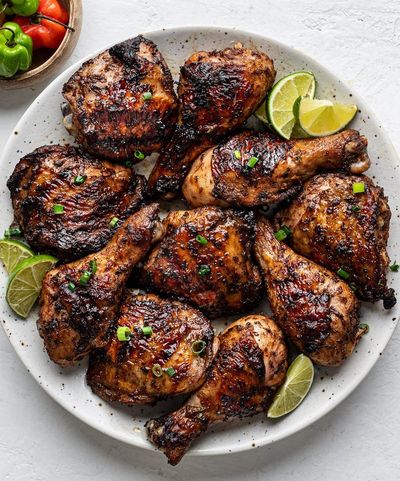
Jerk Chicken
A wet jerk paste: scotch bonnet chillies, garlic, ginger, spring onions, thyme, allspice (whole or ground), brown sugar, soy sauce, lime, oil, salt and pepper, pureed in a blender. The chicken (bone-in skin-on thighs and drumsticks, or spatchcocked whole bird) marinates for 12 hours minimum. Slow-grilled over indirect heat with a pile of pimento wood chips or allspice berries on the coals for the signature smoke; alternatively, an oven-bake at 180°C with a final blast under the grill, supplemented with allspice in the marinade.
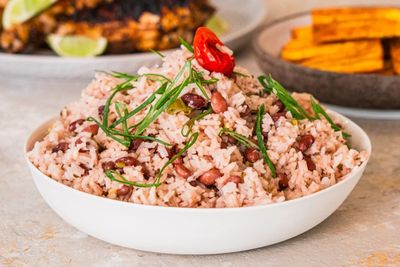
Rice and Peas
Soaked kidney beans simmer with coconut milk, scallion, thyme, garlic, allspice and a whole scotch bonnet (left whole, never pierced). Once tender, rice goes in with stock to top up. The pot is covered; the rice steam-absorbs the bean broth; the scotch bonnet stays whole and is removed before serving.
More like this
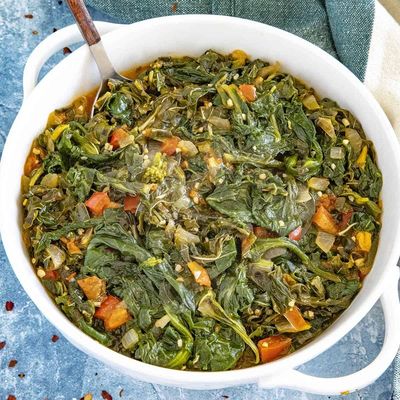
Callaloo
Onion, garlic and tomato cook in oil until softened. Callaloo (or spinach) goes in by the handful; thyme and scotch bonnet add. Everything covers and steam-cooks until the greens are tender. Salt, pepper, a splash of water if needed; finish quickly so the colour stays vivid.
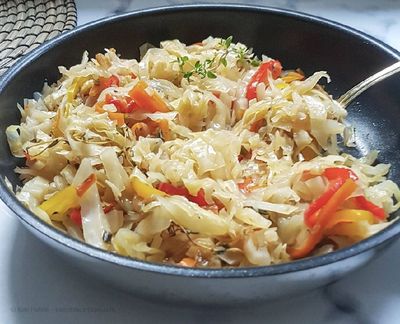
Steamed Cabbage with Carrot, Thyme and Scotch Bonnet
Vegetable oil bloomed with onion, garlic and a fresh thyme stripping. Shredded white or savoy cabbage and julienned carrot piled in, with a whole (unpierced) scotch bonnet on top for aromatic heat. A splash of water creates steam; the pot is covered and the cabbage softens in about 8 minutes. The scotch bonnet is removed before serving. Black pepper and salt to finish.
Rice and Peas
Soaked kidney beans simmer with coconut milk, scallion, thyme, garlic, allspice and a whole scotch bonnet (left whole, never pierced). Once tender, rice goes in with stock to top up. The pot is covered; the rice steam-absorbs the bean broth; the scotch bonnet stays whole and is removed before serving.
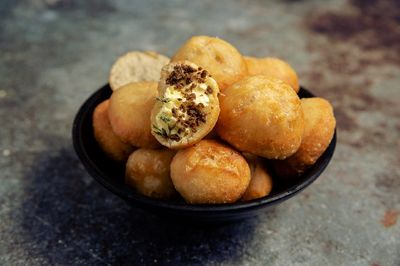
Fried Dumplings / Johnny Cakes
A no-yeast quick dough: plain flour, baking powder, a touch of sugar, salt, and just enough water (or milk for richness) to bring it together. Rested briefly so the gluten relaxes, divided into balls, flattened slightly, and shallow-fried in hot oil until each side is deeply golden. The exterior crisps; the interior steams to a soft, pillowy crumb. Eaten with every Jamaican breakfast.