Latkes (Potato Pancakes)
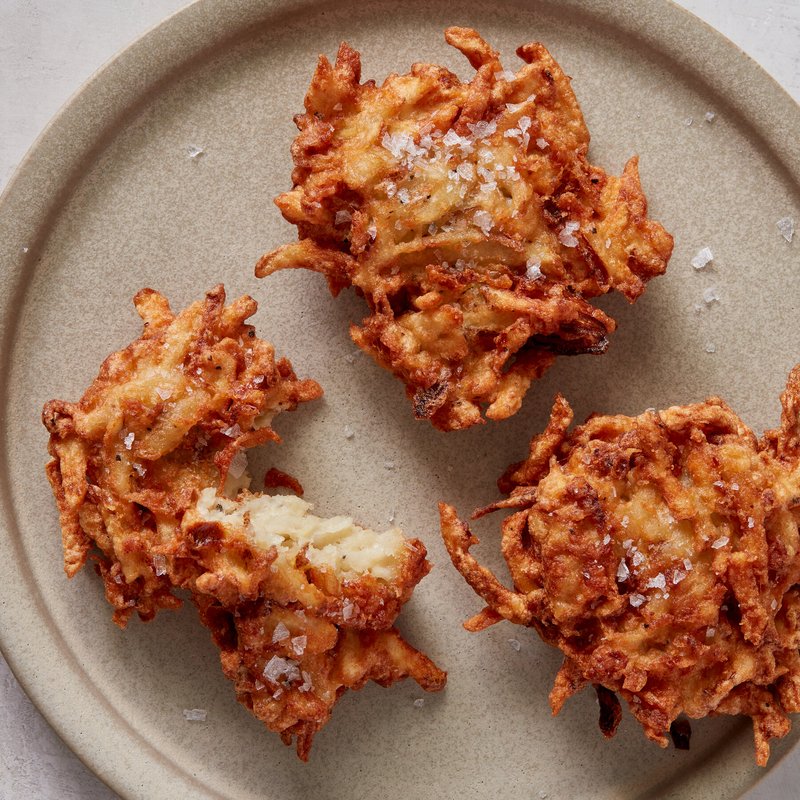
The Hanukkah pancake: shredded potato and onion bound with egg, fried lacy-crisp in hot oil. Served with sour cream and apple sauce.
Overview
Floury potatoes grate fine; onion grates fine; both squeeze in a tea towel to remove water (the water-squeeze is what gives crisp latkes). Mixed with egg, matzo meal (or flour), salt and pepper. Dropped by spoonfuls into hot oil; flattened with a spatula; fried for 3-4 minutes per side till deep gold. Drained on a rack. Served hot with sour cream and applesauce.
Ingredients
Latkes
- 1 kg floury potatoes (Maris Piper, Russet, Idaho)
- 1 onion (large)
- 2 eggs (large, beaten)
- 4 tablespoons matzo meal (or fine breadcrumbs / plain flour)
- 1 ½ teaspoons salt
- 1 teaspoon ground black pepper
- 200 ml neutral oil (generous for shallow frying)
To serve
- 200 g sour cream
- 200 g applesauce (unsweetened or lightly sweetened)
- Snipped chives (or chopped parsley)
Method
Stage 1 - Grate
- Peel the potatoes.
- Grate on the LARGE side of a box grater (or use a food processor with a coarse grating disc).
- Grate the onion the same way.
Stage 2 - Squeeze
- Tip the grated potato and onion into a clean tea towel.
- Gather the corners; squeeze HARD over the sink to extract as much water as possible.
- You should be amazed how much liquid comes out.
- Tip the squeezed mixture into a wide bowl.
Stage 3 - Mix
- Add the beaten eggs, matzo meal, salt and pepper.
- Mix with a fork until uniform.
Stage 4 - Fry
- Heat the oil in a wide heavy pan (cast-iron is ideal) over medium-high heat - the oil should be 1 cm deep.
- Test with a small bit of mixture; it should sizzle vigorously.
- Scoop a heaped tablespoon of the potato mixture; drop into the oil; flatten gently with the back of the spoon or a spatula to a 1 cm thick disc, about 8 cm across.
- Fry 3-4 latkes at a time (don't crowd).
- Cook 3-4 minutes; flip; cook another 2-3 minutes.
- The exterior should be deep gold and lacy-crisp; the interior just-tender.
- Lift onto a wire rack lined with kitchen paper.
- Salt lightly while hot.
Stage 5 - Keep warm
- Hold latkes warm in a 90°C oven on the wire rack while you cook the rest.
Stage 6 - Serve
- Pile on a warm platter.
- Serve with bowls of sour cream and applesauce on the side.
- Garnish with chives or parsley.
Notes
- Squeeze the potato HARD: this is the entire secret. Undrained potato latkes are soggy and steam in the oil instead of frying. The drier the mixture going into the pan, the crisper the latkes.
- Floury potatoes, not waxy: waxy varieties (Charlotte, Anya, baby new) have too much moisture and not enough starch. Maris Piper or Russet give the right texture.
- Don't make the latkes too thick: 1 cm thick max. Thicker and the inside steams while the outside burns.
- Fresh oil is best: clean oil gives clean latkes. The first few latkes will dirty the oil with potato bits; you can skim or change the oil halfway through.
- Hold warm in the oven, not on the stove: stacking latkes on a plate steams them and they lose their crisp. A wire rack in a low oven keeps them crisp until service.
Storage
- Best within 15 minutes of frying.
- Reheats well in a 200°C oven on a wire rack 6 minutes; never microwave.
- Cooked latkes freeze 2 months on a tray then bagged; reheat from frozen in a 200°C oven 12 minutes.
Recipes mentioned here
Latkes
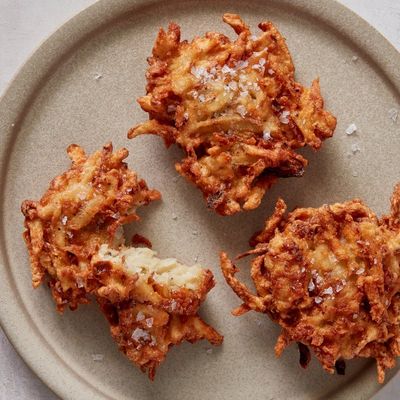
Potatoes and onion are coarsely grated; the mixture is squeezed bone-dry in a cloth (this is the difference between great latkes and soggy ones). Egg and matzo meal (or flour) bind; the lot fries in shallow oil over medium-high heat until each side is crisp and deeply golden. Drain and salt; eat hot.
Apple Sauce
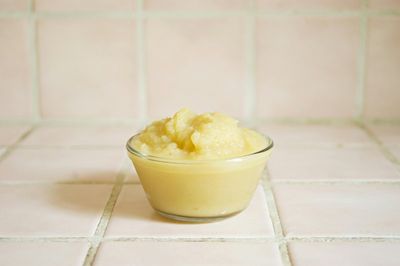
A smooth, silky apple compote with warm spice notes from cinnamon. This classic sauce brings bright acidity and natural sweetness to game, pork, and duck, while the tender texture makes it perfect for serving alongside both hot and cold meats.
More like this
Bourekas
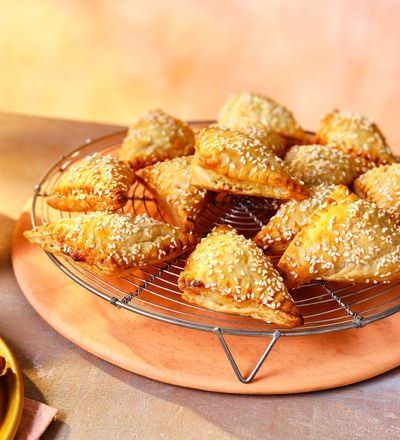
Ready-rolled all-butter puff pastry cuts into 12 squares (about 12 × 12 cm). Cheese filling: feta + ricotta + egg + parsley + nutmeg + pepper, mashed to a thick paste. Filling spoons onto each square; corners fold across to a triangle; edges crimp with a fork. Brushes with egg wash; sprinkles with sesame and nigella seeds. Bakes for 25 minutes at 200°C till deep gold and puffed.
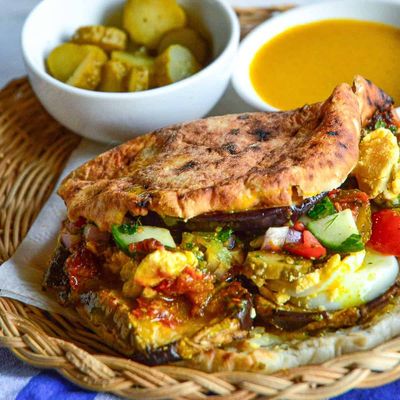
Sabich
Aubergine slices salt, drain 30 min, pat dry, fry crispy in olive oil. Eggs hard-boil (or for the traditional Iraqi-Jewish version, slow-cook overnight in a hamin pot, the brown eggs become beigene). Israeli salad: cucumber, tomato, red onion, parsley, lemon, olive oil. Tahini whisks with lemon juice and water to a pourable sauce. Pita warms briefly. Build: hummus smears inside; aubergine slices layer; egg quarters; salad; tahini drizzle; amba spoon; parsley.
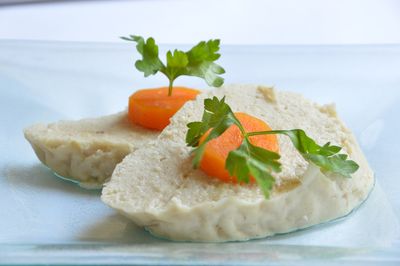
Gefilte Fish
A mix of white-fleshed fish (carp, pike, whitefish, or a more modern blend of cod and haddock) is ground with grated onion, eggs, matzo meal and a little sugar, then formed into quenelles. The quenelles poach gently in a broth made from the fish skin, heads and bones with onion and carrot. After an hour they are lifted out and chilled overnight in the strained broth; some of the broth jellies as it cools, which is the point. Served cold, on a leaf of lettuce, with a generous spoon of horseradish.
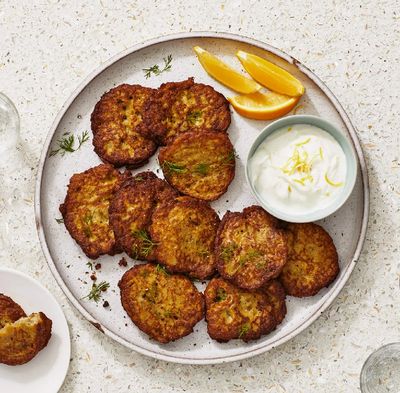
Kuku Sib Zamini
Potatoes are boiled in their skins until tender (about 25 minutes); cooled slightly, peeled, grated on the coarse side. Onion is sautéed in oil with a pinch of turmeric until soft. Eggs are beaten with salt, pepper, saffron-water, baking powder and a tablespoon of flour. The grated potato and softened onion are folded through. The mixture is tipped into a buttered 24 cm round or square tin; baked at 180°C for 25-30 minutes until the top is gold and the centre is just set. Cooled slightly; cut into squares. Excellent with Greek yogurt or as part of a sabzi-khordan (Persian herb-and-cheese plate).