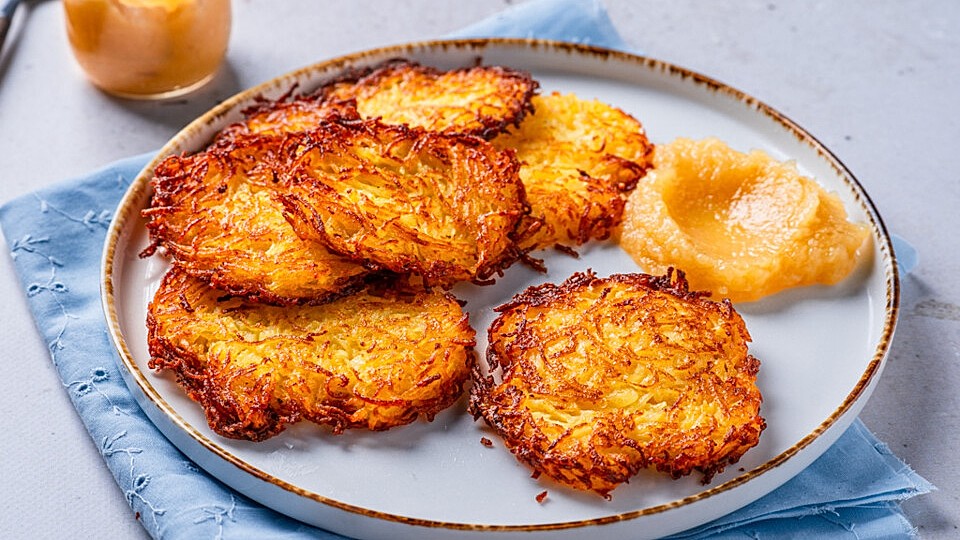
Kartoffelpuffer with Tahini
The Ashkenazi-Sephardi crossover patty. German potato pancakes (kartoffelpuffer) reworked with tahini binding instead of egg and flour, spiced with cumin, turmeric, garlic and herbs. Vegan, baked rather than fried, crisp at the edges. The cooking that says: two food cultures, one tray.
Overview
The classic German kartoffelpuffer - grated potato fritter - meets the Middle Eastern tahini drawer. Tahini does the work that egg and flour usually do: it binds the grated potato, and brings richness without dairy. The mixture is spiced confidently with cumin, turmeric, garlic, parsley and coriander, formed into patties, and baked on a tray rather than fried in oil. The result is crisp at the edges, tender in the middle, deeply savoury - a halfway dish between latke and falafel, owing both.
Ingredients
- 1.8 kg russet (or large floury) potatoes (about 5)
- 5 garlic cloves (crushed)
- 1 small bunch flat-leaf parsley (finely chopped, about 4 tablespoons)
- ½ small bunch coriander leaves (finely chopped, about 2 tablespoons)
- 240 ml tahini (well-stirred)
- 4 teaspoons ground cumin
- 2 teaspoons ground turmeric
- ½ teaspoon fine sea salt (plus more to taste)
- ¼ teaspoon black pepper
- Olive oil (for the trays)
To serve
- 200 g plain yogurt (or vegan yogurt)
- 1 lemon (cut into wedges)
- A handful of fresh herbs (parsley, dill)
- A pinch of sumac (optional)
Method
Stage 1 - Heat the oven, prepare the trays
- Heat the oven to 220°C fan / 240°C / 425°F. Line two large baking trays with baking paper and drizzle each with a tablespoon of olive oil, spreading it across with a brush.
Stage 2 - Grate the potatoes
- Peel the potatoes. Grate on the large holes of a box grater (or use a food processor grating disc) into a wide bowl. You should have about 10-11 cups of grated potato.
- Don't pre-soak or rinse - the starch is the secondary binder and you need it.
Stage 3 - Mix
- Add the crushed garlic, parsley, coriander, tahini, cumin, turmeric, salt and pepper to the grated potatoes.
- Mix thoroughly with clean hands - the tahini is thick and needs proper distribution. Squeeze the mixture as you mix so the tahini coats every shred. You should end up with a sticky, uniformly beige-yellow mass.
- Pinch a small piece and taste a raw potato shred - adjust salt and cumin to your preference now.
Stage 4 - Shape the patties
- Take a scant ½-cup measure of the mixture and squeeze firmly to press out excess liquid (it will weep into your hand - pour off into the sink).
- Pat into a flat patty about 1 cm thick and 8 cm across. Place on a prepared tray.
- Repeat, spacing the patties 3 cm apart on the trays.
Stage 5 - Bake
- Bake for 20 minutes - the patties should be set on top and the undersides starting to crisp where they touch the oiled paper.
- Take the trays out. Flip each patty with a thin spatula and press down lightly to flatten further (this exposes the now-crisp side and pressed contact with the paper crisps the new face).
- Return to the oven for 10-15 minutes more, until both sides are golden and the edges are deeply crisp. Swap the trays' positions halfway for even colour.
Stage 6 - Serve
- Lift onto a warm plate. Drizzle with a little extra olive oil if you like.
- Serve with bowls of yogurt, lemon wedges, fresh herbs and a pinch of sumac for sprinkling.
Notes
- The traditional German kartoffelpuffer is fried in a generous pool of oil for a deep-crisp surface; this baked tahini version trades some of that crunch for a healthier, vegan-friendly result. To go nearer the German original, fry instead - 2 tablespoons oil in a non-stick pan, 3 minutes per side.
- Sour cream and apple sauce is the classic German pairing; this Middle-Eastern-tilted version sits better with yogurt and herbs, or with a smoky baba ganoush.
- For a less herby version, drop the coriander and double the parsley. The cumin and turmeric carry the spice profile.
Serving
At brunch on a wide platter, with yogurt and lemon wedges. As a starter before a falafel or hummus board. On a Hanukkah table as a contemporary alternative to latkes.
Storage
Best fresh and crisp. Reheat leftovers on a baking tray at 200°C for 8-10 minutes to recover the crisp - microwaving them turns the patties soft.
Recipes mentioned here
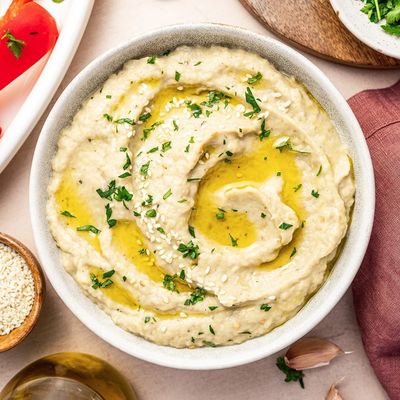
Baba Ganoush
Aubergines char directly on a gas flame or under a hot grill until the skin is uniformly black and the flesh is collapsed inside. Steamed briefly under foil; peeled. Flesh chops, then mashes (don't blend, the texture is the point) with tahini, lemon, garlic, salt. Plate; pool olive oil; scatter pomegranate seeds and parsley.
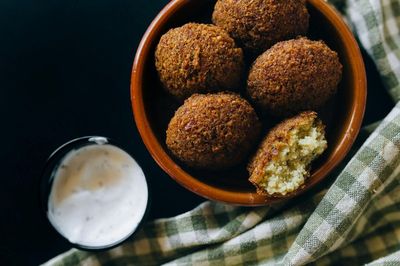
Falafel
Dried chickpeas soak overnight, do not cook them. Blitz with onion, garlic, herbs and spices to a coarse green paste. Rest for 1 hour. A pinch of baking powder mixes in just before frying. Shape into balls; deep-fry at 175°C 4 minutes until darkly crusted. Stuffed into pita with hummus, tahina, salata, pickles.
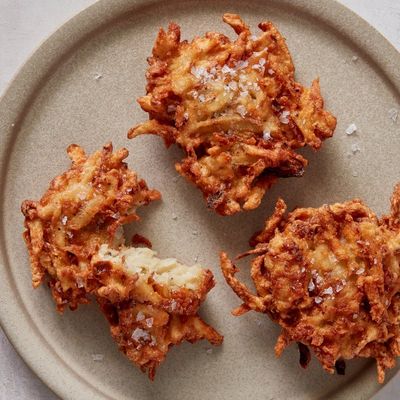
Latkes
Potatoes and onion are coarsely grated; the mixture is squeezed bone-dry in a cloth (this is the difference between great latkes and soggy ones). Egg and matzo meal (or flour) bind; the lot fries in shallow oil over medium-high heat until each side is crisp and deeply golden. Drain and salt; eat hot.
More like this
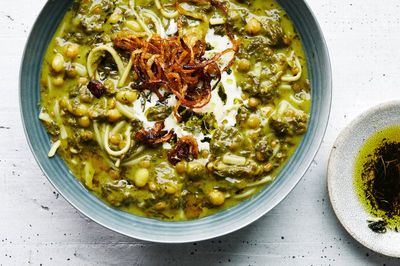
Ash Reshteh
Dried beans (chickpeas + kidney beans + green lentils, OR the popular cheat of mixing all dried into one pot) soak overnight. Onion fries in oil; turmeric, salt and the soaked-and-drained beans go in with stock; simmers for 1 hour 15 minutes until tender. A heaping double handful of finely chopped fresh herbs (parsley, coriander, dill plus blanched spinach) goes in. Reshteh noodles (Persian flat egg noodles, sold at Iranian shops) add for the last 10 minutes. The bowl finishes with a sour-fermented kashk drizzle, dried-mint-and-garlic-in-oil sizzle, deep-fried golden onion, and a swirl of yogurt. Garnishes are not optional.
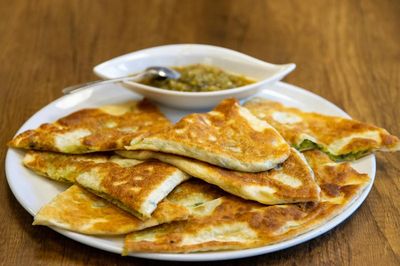
Bolani
Bolani are the stuffed Afghan flatbreads sold at every roadside stall and bus station, fried golden in a thin film of oil and served folded around a coriander chutney for dipping. A plain flour-and-water dough rests for half an hour, then divides into balls and rolls thin. The classic filling is boiled mashed potato with sautéed leek, onion, garlic, fresh coriander and chillies, though pumpkin and spinach versions are common too. Spread the filling over half of each round, fold the other half over and seal the edges (a fork-press works, or pinch by hand). Each bolani fries in a shallow pan in a film of oil until both sides are freckled gold. Cut into wedges, eat warm with a green chutney.
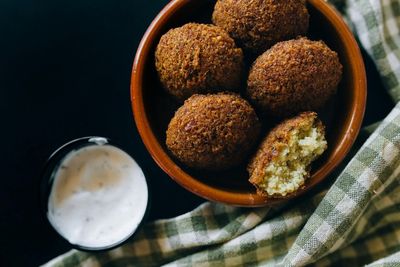
Iraqi Falafel
Dried chickpeas soak in cold water 24 hours, the long soak hydrates them fully without cooking. Once drained, they are ground with onion, garlic, fresh coriander, parsley, dill, green chilli, cumin, coriander seed and ground cardamom to a coarse pale-green crumb. Bicarbonate of soda adds at the last minute for the open, fluffy interior. The mix chills for 30 minutes; small patties form; deep-fry at 175°C for 3 minutes until deep gold outside, fluffy and bright green inside. Eaten in warm samoon with the trimmings.
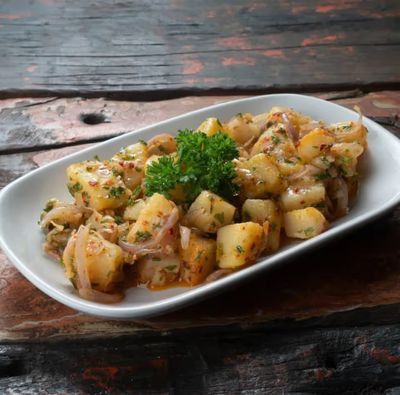
Kachalou Pakora
Kachalou pakora are Afghan-style battered potato slices, fried crisp and dusted with chaat masala while they are still hot from the oil. The batter is chickpea flour (besan) with a touch of rice flour for crispness, water, salt, turmeric, ground coriander, chilli powder, ajwain seeds, crushed garlic and a pinch of baking soda. Ten minutes to rest so the chickpea flour hydrates and the batter clings properly. Potatoes slice into 3 mm rounds and salt briefly to draw out a little moisture. Each slice dips in the batter, lifts with chopsticks, drops into oil at 175°C, fries three minutes a side until amber. Drained, dusted with chaat masala, served with a quick mint-and-coriander chutney. Eat hot. Cold pakora are a different food entirely, and not in a good way.