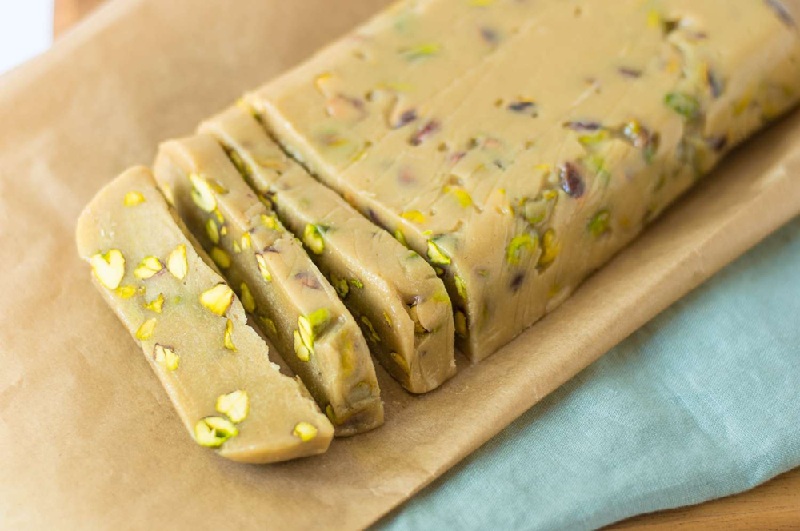
Halwa Tahini
The Iraqi tahini halva: sesame paste set with hot sugar syrup, perfumed with cardamom and rose water, studded with whole pistachios. Eaten in small slabs.
Overview
Sugar and water dissolve, then boil to the soft-ball stage (118°C). Off the heat, the syrup is whisked into well-stirred tahini with cardamom and rose water; pistachios fold in. The mix pours into a lined tin; sets in the fridge overnight. The crystallisation of the sugar against the sesame fat gives halva its signature flaky-melting bite. Slabs cut into thick squares or fingers. Eat with strong coffee; never warm (it goes oily).
Ingredients
- 400 g good-quality tahini (well-stirred; the oil should be fully incorporated, not separated)
- 350 g caster sugar
- 100 ml water
- 1 teaspoon ground cardamom
- 1 ½ teaspoons rose water
- 80 g shelled pistachios (lightly toasted, roughly chopped; a handful kept whole for the top)
- A pinch of salt
- 1 tablespoon glucose syrup (or honey, optional; helps prevent crystallisation)
To garnish
- 2 tablespoons whole pistachios
- A few dried rose petals (optional)
Method
Stage 1 - Prep tin
- Line a 20 cm square tin with greaseproof paper, leaving overhang on two sides (for lifting out).
- Place the tahini, cardamom, salt and 60 g of the chopped pistachios in a wide heatproof bowl.
- Whisk briefly to combine and make sure the tahini is smooth and well-stirred (separated tahini gives an oily halva).
Stage 2 - Make syrup
- Combine the sugar, water and glucose (if using) in a heavy small pan.
- Stir gently over medium heat until the sugar fully dissolves.
- Stop stirring; clip on a sugar thermometer.
- Boil steadily 6-8 minutes until the syrup reaches 118°C (the soft-ball stage; a drop of syrup in cold water forms a soft pliable ball).
- Don't go above 122°C; the halva will set too hard.
Stage 3 - Combine
- Pour the hot syrup in a slow steady stream onto the tahini, whisking constantly with a sturdy wooden spoon or spatula.
- Add the rose water.
- Mix vigorously 30-60 seconds; the mixture will thicken and start to look slightly grainy as the sugar begins to crystallise - this is correct.
- Don't overmix. The moment the mix turns from glossy to matte and starts pulling away from the sides of the bowl, stop.
Stage 4 - Set
- Scrape the mixture into the lined tin.
- Press flat with a spatula or the back of a damp spoon.
- Press the remaining chopped pistachios and the whole pistachios into the surface.
- Scatter rose petals (if using).
- Cover loosely; chill at least 8 hours, ideally overnight.
Stage 5 - Serve
- Lift the block out of the tin using the paper overhang.
- Cut into 12 thick squares or fingers with a sharp knife (a serrated knife sawing gently works best).
- The cut surface should show the characteristic flaky striations of crystallised halva.
- Serve at cool room temperature with strong coffee.
Notes
- Tahini quality: This recipe lives or dies on the tahini. Use a good Middle Eastern or Lebanese tahini, well-stirred. Industrial mass-market tahini is too watery or too bitter.
- Thermometer is essential: Halva is a sugar-syrup recipe and the temperature window is tight. Under 116°C and the halva is soft and oily; over 122°C and it sets glass-hard.
- Don't overmix: The flaky texture comes from controlled crystallisation. Overmixing destroys the structure and the result is dense and rubbery.
- Cool serving: Halva at room temperature is right. Warm halva goes oily; fridge-cold halva is too dense to bite cleanly.
Variations
Pistachio halva: Double the pistachios and skip the rose water for a deeper nutty version. Chocolate marbled: Drizzle 50 g melted dark chocolate over the pressed halva and swirl with a skewer before chilling. Almond halva: Replace pistachios with toasted blanched almonds; add ½ teaspoon almond extract instead of rose water.
Serving
Serve with: strong Iraqi cardamom coffee, sweetened black tea, or simply a glass of cold water. As a snack: a small square is plenty; halva is dense and very sweet. Occasion: Eid, Ramadan iftar, after a heavy meal, with afternoon tea.
Storage
- Keeps 1 month in an airtight tin at cool room temperature; do not refrigerate (the texture goes dry and dense).
- Freezes 6 months wrapped tightly; defrost at room temperature for 2 hours.
- The flavour deepens over the first week.
More like this
Halva
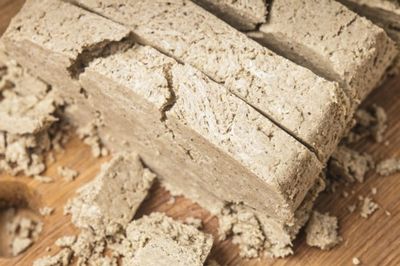
A sugar syrup is cooked to soft-ball stage (118°C). Tahini is warmed slightly. The hot syrup is poured into the tahini and mixed with a wooden spoon just until ribbons form, this is the critical moment. Over-mix and halva turns to crumbs; under-mix and it stays soft. Poured into a lined tin; pistachios are sprinkled on top; set at room temp 4 hours.
Honey Cake
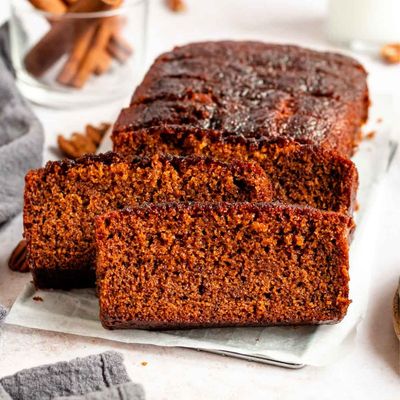
A simple oil-based cake built around a generous pour of dark honey, brewed coffee for moisture and depth, and a quartet of spices (cinnamon, ginger, clove, allspice). Mixed in one bowl, baked low and slow. The crumb is dark and dense without being heavy; the flavour deepens overnight, which is why most Jewish households bake it a day or two ahead of the meal.
Bienenstich
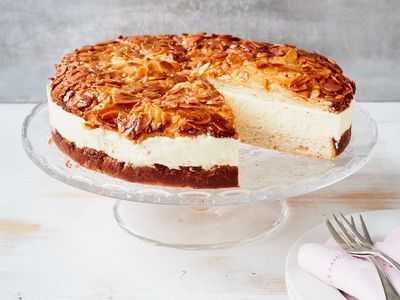
A milk-and-butter enriched yeast dough proves to soft and pillowy. A honey-almond topping (butter, honey, sugar, cream, flaked almonds) cooks on the stovetop until thickly bubbling, then spreads on the proved dough and bakes together: the dough rises, the topping caramelises golden and chewy. Once cooled, the cake splits horizontally and fills with thick vanilla pastry cream (Konditorcreme) lightened with whipped cream.
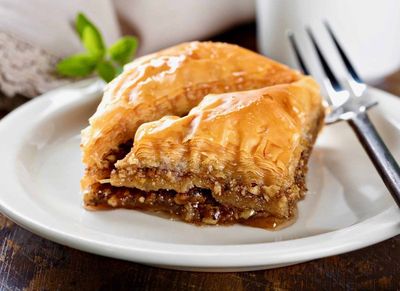
Greek Baklava
A 30 × 22 cm tin is built in layers: 8 buttered filo sheets on the bottom; walnut-cinnamon filling; 4 buttered filo sheets; more walnut; 4 more filo; walnut; finally 8 more buttered filo on top. The top is scored into squares; a clove is pressed into the centre of each. Baked for 45 minutes at 180°C till amber. Syrup of honey, sugar, water, lemon and cinnamon stick simmers separately. The COOL syrup is poured over the HOT baklava. Rested overnight, non-negotiable.