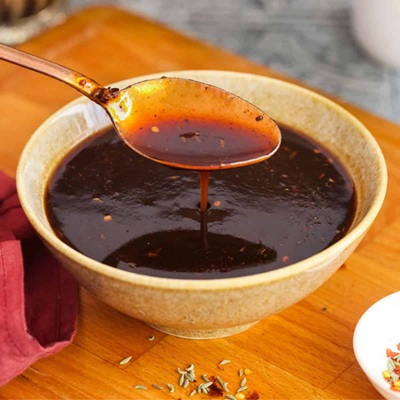
Tamarind Chutney
India's sweet-sour tamarind chutney: tamarind pulp simmered with jaggery.
Overview
This is the most complex of Indian chutneys. Tamarind provides deep, fruity sourness; sugar brings balance; fresh vegetables add texture; various spices and herbs create depth. It's simultaneously sweet, sour, spicy, and savory. This is served alongside pakora, samosa, and other fried appetizers, and as a seasoning for chaat (Indian street food snacks).
Ingredients
Base & Balance
- 1-2 tablespoons tamarind concentrate (paste)
- 2 tablespoons water
- 3 tablespoons sugar
- 4 tablespoons tomato ketchup
- 1 fresh lemon (juice)
Fresh Elements
- 3 fresh green chillies (finely chopped)
- ½ medium onion (finely chopped)
- 3 spring onions (finely chopped greens and whites)
- 4 tablespoons fresh coriander (finely chopped)
- 1 carrot (large, grated)
Spices
- 1 teaspoon Madras curry powder (or to taste)
- Salt to taste
Method
Stage 1 - Activate Tamarind
- Place the tamarind concentrate in a small bowl.
- Add 2 tablespoons warm water.
- Stir vigorously until the tamarind dissolves and becomes smooth and liquid.
- If very thick, add more water one tablespoon at a time.
- Set aside.
Stage 2 - Assemble Base
- In a larger mixing bowl, combine the dissolved tamarind with the sugar.
- Add the tomato ketchup.
- Add the fresh lemon juice.
- Stir everything together until well combined.
- This forms the base of your chutney.
Stage 3 - Add Fresh & Spiced Elements
- Add the finely chopped green chillies to the tamarind base.
- Add the finely chopped onion half.
- Add the finely chopped spring onions (both white and green parts).
- Add the fresh coriander.
- Add the grated carrot.
- Stir in the Madras curry powder.
- Mix everything thoroughly until well combined.
Stage 4 - Balance & Chill
- Season with salt to taste.
- Taste and adjust:
- Too sour? Add a touch more sugar.
- Not spicy enough? Add more curry powder.
- Not sour enough? Add more lemon juice or tamarind.
- Transfer to a serving bowl or sterilized jar.
- Refrigerate for at least 1 hour before serving to allow flavors to marry.
Notes
- Tamarind Quality: Use paste tamarind concentrate, not the dried pods. This ensures smooth, creamy texture.
- Fresh Vegetables: The freshness of vegetables is paramount; don't skip the carrot or onions.
- Curry Powder: Madras curry powder provides warmth and depth; adjust the amount to preference.
- Flavor Balance: This chutney should have all four flavors (sweet, sour, spicy, savory) in balance. Taste and adjust as needed.
- Chill Before Serving: Cold chutney is far more refreshing and allows flavors to develop.
Variations
Spicier Heat: Use 2 teaspoons Madras curry powder for more substantial spice. Add Mint: Include 1 tablespoon fresh mint leaves for cooling herbal notes. Extra Ginger: Add 1 teaspoon grated fresh ginger for warmth. With Pomegranate: Stir in 2 tablespoons pomegranate seeds for sweetness and texture.
Serving
Serve with: Pakora, samosas, chaat (Indian street food), rotis, curries Garnish: None needed; this is a condiment
Storage
- Refrigerate in a covered container for up to 1 week
- The high sugar, salt, and acid content preserve the chutney
- Once prepared, flavors are best within 2-3 days
- Do not freeze; texture and freshness suffer significantly
This sweet, sour, savory, and spicy chutney is a must for any curry party. Tangy tamarind forms the base, balanced with sugar and brightened with lemon. Fresh vegetables and coriander provide texture and herbal notes. A complex condiment that's more than just a dipping sauce.
Recipes mentioned here
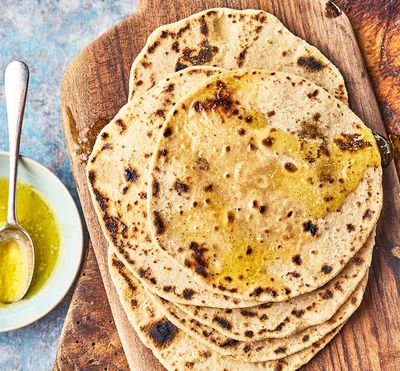
Rotis
A simple wholemeal flatbread that lives or dies on technique rather than ingredients. Rolled to even thinness and cooked first on a hot tawa, then puffed over a naked flame, a properly made roti separates into two thin sheets of soft bread. The right partner for almost any curry, dal or chutney.

Samosas
Samosas are the ultimate Indian snack: crispy, angular parcels of golden filo pastry enclosing spiced, fragrant filling. The technique is simple yet satisfying, triangular folding, egg wash sealing, and oven-baking creates a light, shattering crust. Unlike deep-fried versions, these are baked for a lighter result while maintaining crispness. Serve warm with chutney, raita, or lemon juice. These are elegant enough for entertaining, casual enough for snacking.

Samosa
A stiff oil-rich plain-flour dough (maida) rolls thin and crisps in the fryer with the characteristic blistered surface. The filling is dry: boiled potato, peas, ginger, green chilli, cumin, coriander seed, garam masala and amchur (dried mango powder) for sourness. The pastry is rolled into ovals, halved into semicircles, formed into cones, stuffed, sealed and fried in two stages: low-temperature first to set the pastry without browning, then a hot finish to blister and crisp.
More like this
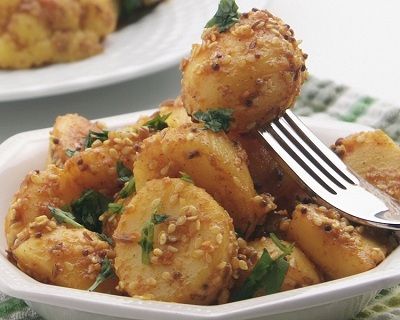
Bombay Potatoes
Bombay Potatoes is comfort food at its finest. Small potatoes are partially cooked, then coated in a richly spiced oil infused with seeds and aromatics. Some potatoes are mashed to create a creamy base, while others remain whole for texture. The result is a warm, golden, deeply spiced side dish that's utterly satisfying. This is a vegetarian staple of Indian home cooking.
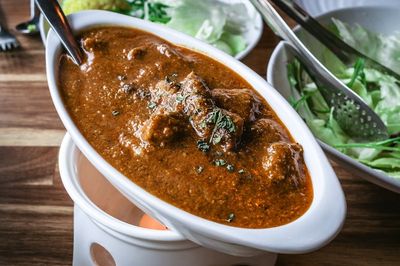
Lamb Achari
A Punjabi-inspired achari curry featuring pickle spices like panch poran and dried chillies, balanced with sweet mango chutney and tangy lime pickle. This dish captures the essence of Indian pickles in a rich, flavorful lamb curry.
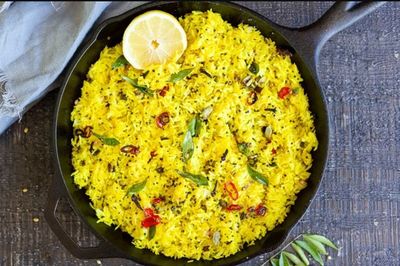
Lemon Rice
A temper of mustard seeds, chana dal, urad dal, peanuts, dried red chilli and curry leaves is bloomed in sesame oil. Turmeric is stirred in for colour. Cooked, cooled rice is tossed through off the heat, then lemon juice is added at the end so the heat doesn't dull the acidity. Bright lunchbox classic; the dish should taste fresh and tart, not muddled.
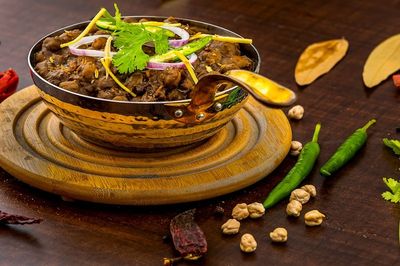
Lamb Naga Phall
An extremely hot British curry-house phall featuring Naga chillies and Mr Naga pickle for intense heat balanced with rich flavors. This dish is not for the faint-hearted; serve with cooling accompaniments like rice, naan, and cold lager.