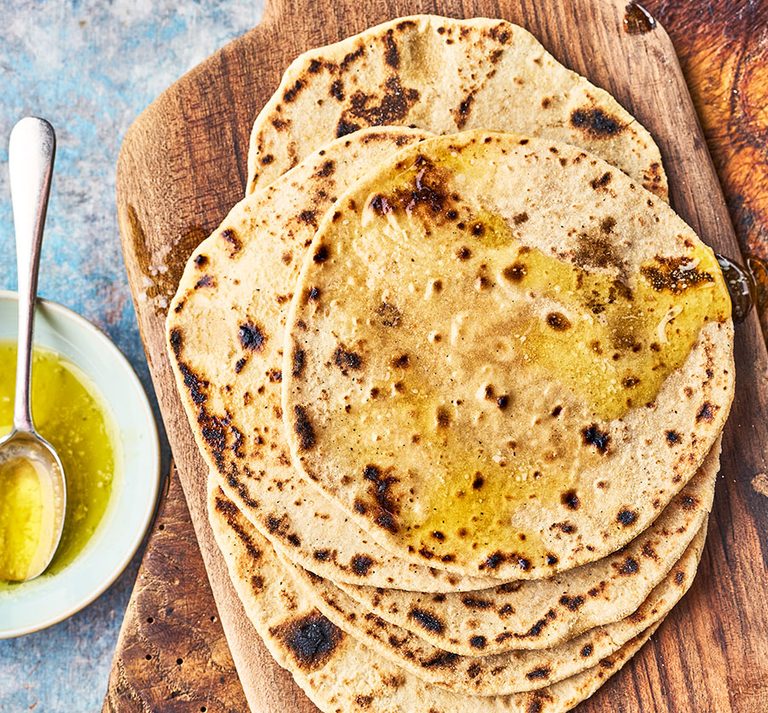
Rotis
Rotis are the daily bread of much of the Indian subcontinent: a plain, unleavened wholemeal flatbread cooked dry on a tawa and finished briefly over an open flame, where the trapped steam balloons the disc into the soft, layered round you tear pieces off at the table.
Overview
A simple wholemeal flatbread that lives or dies on technique rather than ingredients. Rolled to even thinness and cooked first on a hot tawa, then puffed over a naked flame, a properly made roti separates into two thin sheets of soft bread. The right partner for almost any curry, dal or chutney.
Ingredients
Dough
- 380 g (13 ½ oz / 2 ½ cups) wholemeal flour
- ½ teaspoon salt
- 1 tablespoon vegetable oil
- 240 ml (8 ½ fl oz / 1 cup) water, or as needed
Method
Stage 1 - Make the dough
- In a large bowl, combine the flour, salt and oil.
- Add the water gradually while mixing until a soft dough forms.
- Knead for 5 minutes, until smooth and elastic.
- Cover with a damp cloth and rest for 15 minutes.
Stage 2 - Shape
- Divide the rested dough into ping-pong-sized balls.
- Flatten each ball and dust with flour.
- Roll into even circles, about 1-2 mm thick.
Stage 3 - Cook
- Heat a tawa or non-stick pan over medium-high heat.
- Cook each roti for 30-45 seconds per side, until small light-brown spots appear.
- Transfer with tongs to an open flame and puff briefly on each side.
- Avoid burning; remove the moment the roti puffs and the flame catches.
Notes
- Even thickness: The single most important variable; a thick patch traps steam unevenly and the roti won't puff cleanly.
- Cast iron tawa: A heavy tawa holds heat through the cool patches when a fresh disc lands; thinner pans dip in temperature and the roti steams instead of toasting.
- Rest the dough: A short 15-minute rest relaxes the gluten so the dough rolls thin without springing back; without it, the rotis end up oval and uneven.
- Open-flame finish: The flame stage is what gives the puff; without it the roti is still edible but flat and slightly tough.
Serving
Serve with: Curries, dals or chutneys; brushed with ghee for extra richness. Garnish with: A small knob of butter or ghee melted onto the hot roti just before serving.
Storage
- Keep warm in a cloth-lined basket for up to an hour.
- Cooled rotis store in an airtight container for 1-2 days.
- Reheat on a hot pan for 30 seconds a side, or wrap and microwave briefly; the pan method preserves the texture better.
More like this
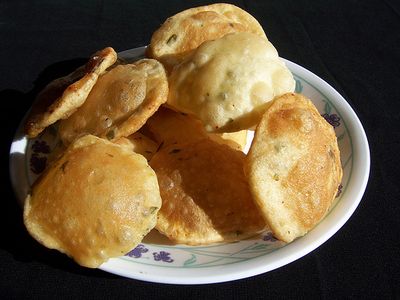
Chilli Pooris
Small deep-fried Indian flatbreads built on a half-and-half mix of plain and wholemeal flour, spiked with chilli powder and chopped fresh chilli. Each piece puffs in seconds in the hot oil and stays crisp for a few minutes off the heat. Best served straight from the pan alongside a north Indian curry or pickles and yoghurt.
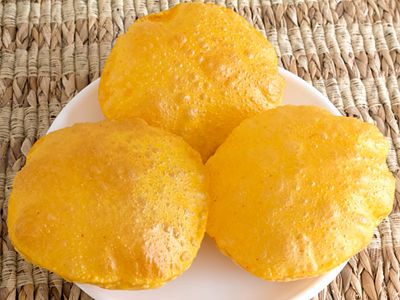
Puris
Deep-fried wholemeal flatbreads built on a tight, slightly drier dough than a roti so they hold their shape long enough to puff in the oil. Each disc puffs in seconds and stays crisp for a few minutes off the heat. Best served the moment they leave the pan, ideally with chole or another sauce-rich curry.
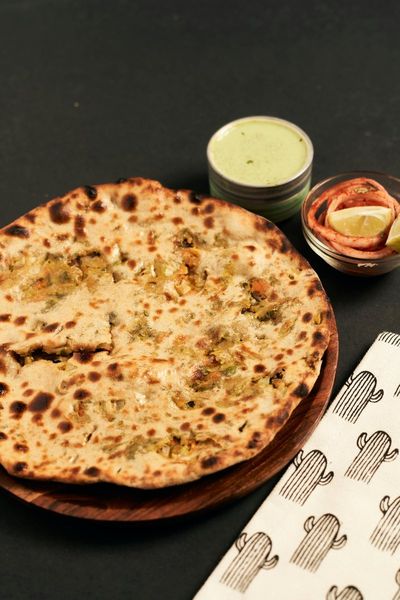
Bengali Paratha
A pleated, multi-layered Bengali flatbread laminated with ghee and studded with chillies, fresh herbs and freshly crushed black pepper. The dough is folded fan-style and rolled into a spiral coil so each paratha bakes into a stack of flaky leaves. Best eaten straight off the tawa with dal, a curry, or a bowl of yoghurt.
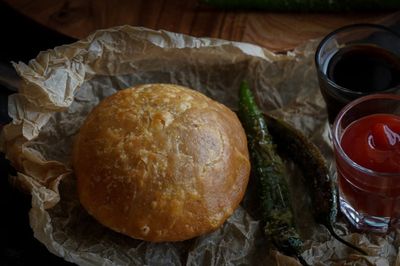
Bhatura
Soft, slightly leavened Indian flatbreads traditionally served with chole (chickpea curry). The addition of yoghurt gives bhatura weight and flavor, making them a street-food favorite.