
Missi Rotis
Missi rotis are flavour-packed unleavened breads from Northern India, made with gram flour milled from chana dhal. The pulse flour gives them a savoury, slightly nutty backbone that plain wheat rotis lack, and the chopped onion, chilli and turmeric pull them firmly into the territory of a meal in their own right.
Overview
A Punjabi-style flatbread built on a half-and-half mix of gram (chickpea) flour and wholemeal flour, kneaded with chopped chilli, onion, fresh coriander and turmeric. The result is a thicker, rougher roti than its plain wheat counterpart, with a savoury flavour that works as well alongside a curry as it does on its own with yoghurt.
Ingredients
Dough
- 115 g gram flour
- 115 g wholemeal flour
- 1 fresh green chilli (de-seeded and chopped)
- ½ onion (very finely chopped)
- 1 tablespoon coriander (freshly chopped)
- ½ teaspoon ground turmeric
- ½ teaspoon salt
- 1 tablespoon melted butter (for the dough)
- 120 ml lukewarm water (an extra 30 ml may be needed if the dough is firm)
To finish
- 2 tablespoons melted butter (for cooking)
Method
Stage 1 - Make the dough
- In a large bowl, combine the gram flour, wholemeal flour, chopped chilli, onion and coriander with the turmeric and salt.
- Stir in 1 tablespoon of the melted butter.
- Mix in enough lukewarm water to form a pliable, soft dough.
Stage 2 - Rest and divide
- Turn the dough onto a lightly floured surface and knead until smooth.
- Place in a lightly oiled bowl, cover with cling film and rest for 1 hour.
- Pre-heat the oven to a low 100°C.
- Transfer the rested dough to a lightly floured surface and divide into 4 equal pieces.
- Shape each piece into a ball, then roll out into a thick round about 15 cm in diameter.
Stage 3 - Cook
- Heat a griddle pan over medium heat for a few minutes.
- Brush both sides of one roti with a little melted butter and place on the griddle.
- Cook for about 2 minutes, turning after 1 minute.
- Brush again with melted butter, slide onto a plate and keep warm in the low oven.
- Cook the remaining rotis the same way.
Notes
- Gram flour matters: Real chana-dhal gram flour (besan) carries the savoury, slightly bitter note that defines missi roti; chickpea flour from larger chickpeas tastes blander.
- Onion fineness: The onion needs to be chopped almost to a paste; visible chunks tear the dough as it rolls and create holes that crack on the griddle.
- Resting the dough: A full hour gives the gram flour time to hydrate; rotis rolled too soon split and stay raw in the centre.
- Thicker than a roti: Missi rotis are deliberately rolled thicker than plain rotis so they hold up to the inclusions; don't try to roll them paper-thin.
Serving
Serve with: A simple dal, a yoghurt raita, or a sweet pickle to balance the savoury bread. Garnish with: An extra brush of melted butter or ghee just before serving.
Storage
- Best eaten straight off the griddle.
- Wrap leftovers in a tea towel and reheat briefly on a hot pan; microwaving turns them rubbery.
- The seasoned dough doesn't keep well, the onion weeps overnight and the texture suffers; mix only what you'll cook.
More like this
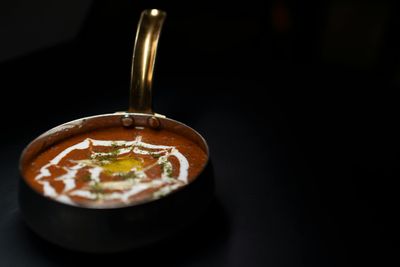
Dal Makhani
Whole black urad lentils and a small handful of red kidney beans are soaked overnight, then pressure-cooked or simmered until completely tender. A tomato-and-spice masala is built separately with onion, garlic, ginger and a careful hand with the spices. The lentils are folded into the masala and simmered, low and slow, for two hours, while butter and cream are stirred through in the final stage. The lentils break down into a glossy, almost-velvet finish.
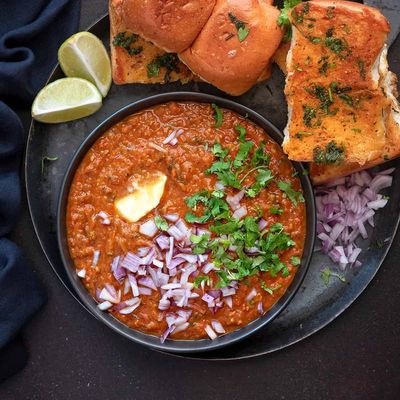
Pav Bhaji
Potatoes, cauliflower, peas boil until tender. A masala base softens onions and tomatoes in butter with ginger-garlic paste, then chilli powder, turmeric and pav bhaji masala. Capsicum joins. Boiled vegetables mash in roughly; everything cooks together 10-15 minutes, mashing as you go, until the bhaji turns a deep orange-red and the consistency is thick-spreadable. Finishes with extra butter, lemon juice, coriander. Pav rolls split horizontally, griddle-fry in butter with a sprinkle of pav bhaji masala till the cut sides char. Serve bhaji in shallow bowls topped with diced raw onion, lemon wedges, a coriander shower; pav on the side.
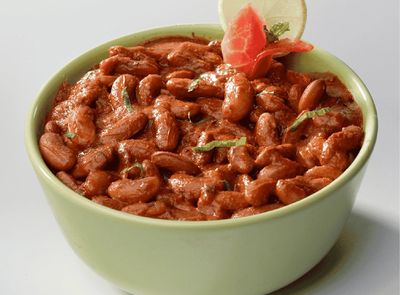
Rajma
Dried kidney beans are soaked overnight and pressure-cooked (or simmered for 2 hours) until completely tender. A separate pan builds a base of onion, ginger and garlic browned with whole spices, then a tomato puree is added and cooked down with the ground spices until the oil separates. The cooked beans and a portion of their cooking liquor are folded in and simmered for 30 minutes to thicken; a few are mashed against the pan to thicken the sauce. Finished with garam masala and butter.
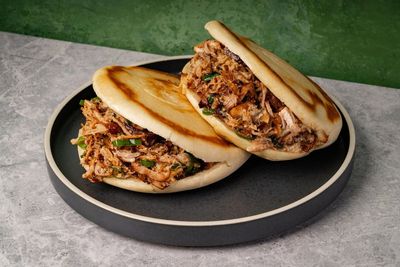
Roujiamo (Xi'an Chinese Hamburger)
Roujiamo is often, lazily, called the Chinese hamburger, but it is older than the burger by perhaps a thousand years and structurally quite different. The bread is a flat, lightly leavened, sometimes laminated wheat round, with the layered Tongguan style (flaky and croissant-like) considered superior to the softer baijimo. The filling is rich braised pork, shoulder or belly, simmered with rock sugar, soy and warming spice until it shreds under a knife, then chopped fine on a board with raw onion and cilantro and a spoonful of its own dark cooking liquid. The whole assembly is then crammed inside the freshly fried-and-baked bun while everything is still hot. Roujiamo is a quintessentially Xi'an dish, the product of a city that for centuries sat at the eastern terminus of the Silk Road; the bread tradition comes from the Hui and Uyghur Muslim communities of the northwest, while the braised pork belongs to the Han Chinese kitchen. Difficulty for a home cook is moderate to high, the lamination of the bread takes practice, and there are multiple components on timed tracks, but the result is one of the great street foods of China, and the buns and meat can both be made ahead.