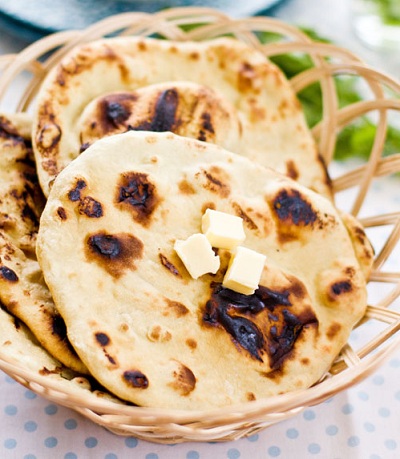
Naan
India's tandoor flatbread: a yeasted dough pressed onto the hot inside of a clay oven, pulled down by gravity into the iconic teardrop shape.
Overview
A grill-cooked version of the traditional tandoor naan: large, light and slightly sweet, with a chewy crumb and a sesame and onion-seed crust. Yoghurt and a touch of sugar in the dough give it the soft, almost briochey texture that the tandoor's blast of heat usually produces. It's the wrap that should hold a kebab, or sit alongside a Balti on the table.
Ingredients
Dough
- 450 g strong white flour
- 1 tablespoon baking powder
- 1 tablespoon granulated sugar
- 2 tablespoons Greek yoghurt
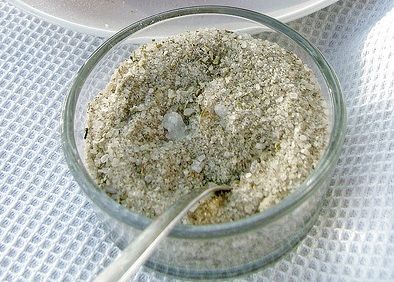
- 1 teaspoon Aromatic Salt (Two Versions)
- 2 teaspoons sesame seeds
- ½ teaspoon wild onion seed (kalonji / nigella)
- Lukewarm water (as needed)
To finish
- A little ghee (melted)
Method
Stage 1 - Mix the dough
- Choose a large ceramic or glass bowl and put in all the dough ingredients.
- Add warm water a little at a time, working it into the flour with your fingers until the mixture comes together as a single lump.
Stage 2 - Knead and prove
- Tip the dough onto a floured board and knead until well combined and smooth.
- Return the dough to the bowl and leave in a warm place for a couple of hours to prove.
- Knock the dough back by kneading it down to its original size.
Stage 3 - Shape
- Divide the dough into two equal lumps.
- Shape each lump into a ball, then on a floured work surface roll each ball into a disc about 25 cm in diameter, at least 5 mm thick.
Stage 4 - Grill
- Pre-heat the grill to three-quarters heat.
- Cover the rack with foil and place at the bottom of the grill so the bread has room to expand without burning.
- Place the first naan on the foil and grill, watching the bread closely.
- As soon as the upper side develops brown patches, remove from the grill and turn the bread over.
- Brush the now-uppermost (uncooked) side with a little melted ghee.
- Return to the grill and cook until sizzling, then serve at once.
Notes
- Yoghurt and baking powder: This is a quick-bread shortcut that mimics the tandoor lift without yeast; if you swap in plain water for yoghurt the bread tastes flat.
- Wild onion seed: Kalonji (also called nigella) is the small black seed pressed into traditional naans; cumin or fenugreek seeds are reasonable substitutes.
- Grill, not oven: The grill provides the localised top-heat that mimics the tandoor's wall; baking the naan in a conventional oven gives a flatter, drier loaf.
- Don't roll thin: Naan needs height to puff; rolling under 5 mm produces a cracker rather than a bread.
Variations
Peshwari naan: Knead a mixture of ground almonds, sultanas and desiccated coconut into the dough before proving for a sweet, fruity loaf. Garlic naan: Brush the uncooked side with garlic butter (melted ghee plus a crushed clove) instead of plain ghee before the second grill. Cheese naan: Roll the disc, place a tablespoon of grated mozzarella in the middle, fold the dough over and seal, then re-roll gently before grilling.
Serving
Serve with: Any rich Indian curry; particularly suited to sauces begging to be soaked up, like a korma or rogan josh. Garnish with: An extra brush of melted ghee and a final sprinkle of sesame seeds.
Storage
- Best torn straight off the grill while still warm.
- Cooled naans soften within an hour and turn leathery in two; reheat under a hot grill for 30 seconds a side to revive them.
- Naan freezes reasonably well wrapped tight; defrost and reheat under the grill rather than in a microwave.
More like this
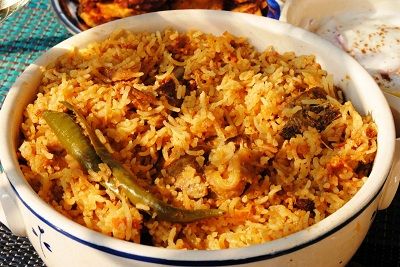
Biryani
Biryani represents the height of Indian culinary technique: multiple components prepared separately with precision, then assembled in layers where flavors permeate through steam cooking. This isn't a one-step rice dish; rather, it's an architectural construction where yogurt-marinated lamb develops tenderization and flavor, then cooks slowly with warm spices and tomato, while basmati rice is independently flavored with saffron infusion and whole spices. Upon assembly, the two elements marry through steam, creating a unified dish where lamb and rice are inseparable in flavor. Traditionally cooked during festivals and royal celebrations, biryani requires patience and multiple steps but rewards with sophistication.
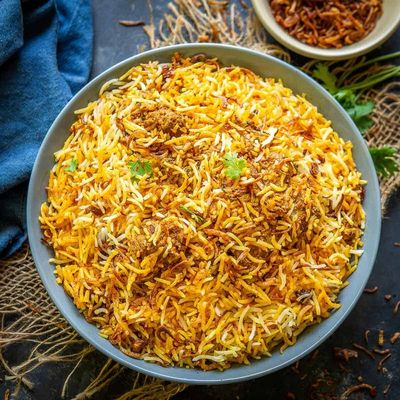
Hyderabadi Mutton Biryani
Bone-in mutton (or lamb) marinates for 4 hours in yogurt, ginger-garlic paste, deep-fried onion (birista), garam masala, chilli and saffron. Basmati rice par-boils for 4 minutes with whole spices to 70% done. Half the rice layers on top of the marinated mutton at the bottom of a heavy pot; saffron milk, mint, more birista and ghee drizzle on top; the rest of the rice on top of that. Sealed (cover + dough or foil tight), cooked on the lowest heat 1 hour. The meat cooks from raw inside the steaming rice. Opened at the table.
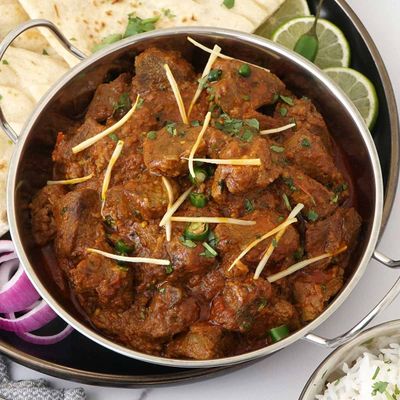
Lamb Karahi
Cooked in a karahi (two-handled wok-like pan) over high heat: lamb chunks simmer with tomatoes, fresh ginger matchsticks and green chillies, with cracked black pepper and ground cumin going in late. No onion in the sauce. Punjabi origin, fiercely fresh-tasting, the antithesis of long-cooked British curry-house style.

Samosa Pakistani
Pastry dough: plain flour, ghee, salt, ajwain seeds, and warm water are kneaded into a stiff oil-rich dough; rests for 30 min. Filling: ground beef (or lamb) sautées with onion, garlic, ginger, green chilli and a Pakistani spice blend (garam masala, cumin, coriander, chilli powder, turmeric). Frozen peas join; the mixture simmers dry; cooled fully. Dough divides into 10 balls; each rolls into a thin oval, cut in half to make 2 half-moons. Each half-moon forms a cone (one flat edge becomes the seam, sealed with flour paste). Cone fills with cooled filling. Top edge of cone seals with flour paste. Deep-fried 175°C 3-4 minutes per side until amber-crisp.