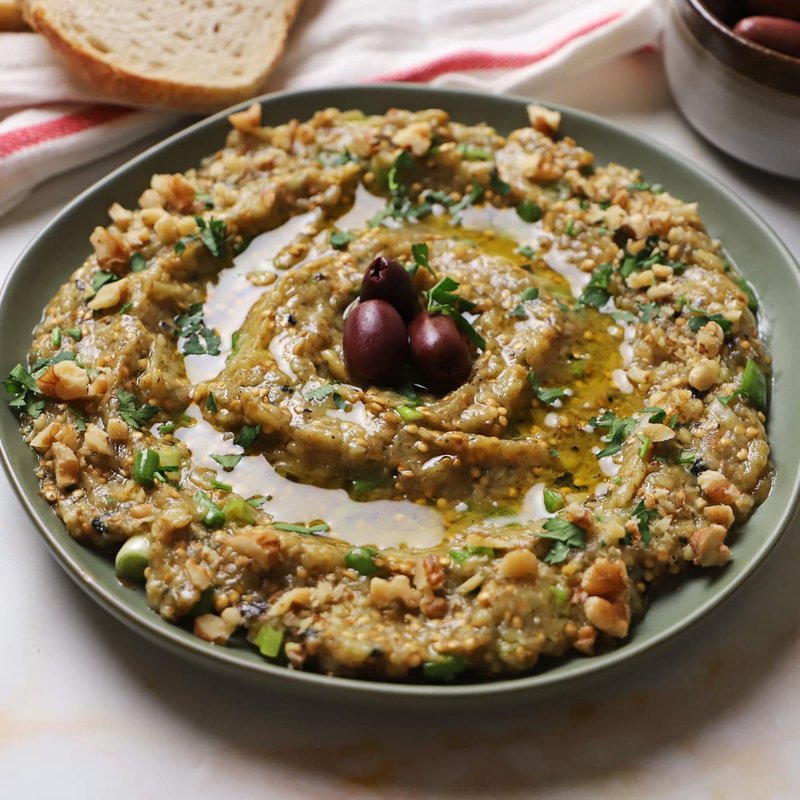
Melitzanosalata (Greek Aubergine Dip)
Greece's smoky aubergine dip: charred aubergine roughly mashed with garlic, lemon, olive oil and parsley. No tahini, no tomato.
Overview
Whole aubergines char directly over flame or under a hot grill until the skin blackens and the inside collapses to softness. Cool, peel, drain on a sieve 15 minutes to release excess water. Roughly chop the flesh; mix with crushed garlic, lemon juice, olive oil, red-wine vinegar, chopped parsley, salt and pepper. Taste and balance. Serve in a wide bowl with a generous drizzle of olive oil.
Ingredients
- 3 aubergines (medium, about 900 g total)
- 2 garlic cloves (very finely minced or grated)
- 3 tablespoons lemon juice (about 1 lemon)
- 4 tablespoons extra virgin olive oil (plus extra for drizzling)
- 1 tablespoon red-wine vinegar
- 30 g flat-leaf parsley (chopped, plus extra for garnish)
- 1 red onion (small, very finely diced, optional)
- 1 teaspoon salt
- ½ teaspoon ground black pepper
To serve
- Warm pita (or country-style bread)
- A pinch of smoked paprika
- A handful of kalamata olives
Method
Stage 1 - Char the aubergines
- Flame method (best): Place each aubergine directly on a gas burner over medium-high heat. Turn with tongs every 3-4 minutes. The skin should char black all over and the flesh inside collapse totally. Total time: 12-15 minutes per aubergine.
- Grill method: Heat the grill to maximum. Lay aubergines on the grate; cook 6-8 minutes per side, turning, until charred and softened throughout.
- Cool 10 minutes on a plate (they keep cooking).
Stage 2 - Drain
- Slice off the tops; halve lengthways; scoop the flesh into a sieve set over a bowl.
- Press lightly with the back of a wooden spoon to release excess liquid.
- Drain 15 minutes (this is non-negotiable - wet aubergine makes a watery dip).
Stage 3 - Chop
- Tip the drained flesh onto a chopping board.
- Chop roughly with a chef's knife - keep some texture, don't reduce to mush.
- Transfer to a bowl.
Stage 4 - Mix
- Stir in the minced garlic, lemon juice, olive oil, vinegar, chopped parsley and optional onion.
- Season with salt and pepper.
- Mash gently with a fork to incorporate (small lumps welcome).
Stage 5 - Taste and balance
- The salt should pop; the lemon should be brightly present; the olive oil should bind without dominating.
- Adjust: more lemon if flat; more salt if dull; more oil if dry.
- Rest 30 minutes at room temperature (the flavours fuse).
Stage 6 - Serve
- Spoon into a wide shallow bowl; smooth the surface with the back of a spoon.
- Drizzle generously with olive oil.
- Scatter extra parsley and a pinch of smoked paprika.
- Surround with kalamata olives.
- Serve with warm bread or pita.
Notes
- Char the aubergine fully: under-cooked aubergine is bitter and spongy. The skin must be entirely blackened and the flesh feel totally soft when pressed.
- Drain or fail: the difference between excellent melitzanosalata and a watery letdown is the 15-minute drain. Don't skip.
- Chop, don't blend: a food processor turns this into baby food. The dip is meant to have visible aubergine texture.
- No tahini, no yogurt: these are the markers that distinguish melitzanosalata from babaganoush and from Cypriot variants.
Storage
- Keeps 4 days refrigerated.
- Tastes better on day 2 (smoke flavour deepens, garlic mellows).
- Bring to room temperature 20 minutes before serving (cold dampens the aubergine flavour).
More like this
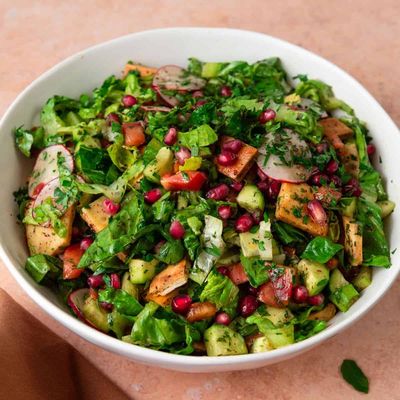
Fattoush
Pita breads are torn into pieces and toasted (or fried) until crisp and crunchy. Chopped vegetables, mint, parsley and a sumac-lemon-olive-oil dressing are tossed together; the toasted pita goes in last so it stays crunchy. Eaten immediately before the bread goes soft.
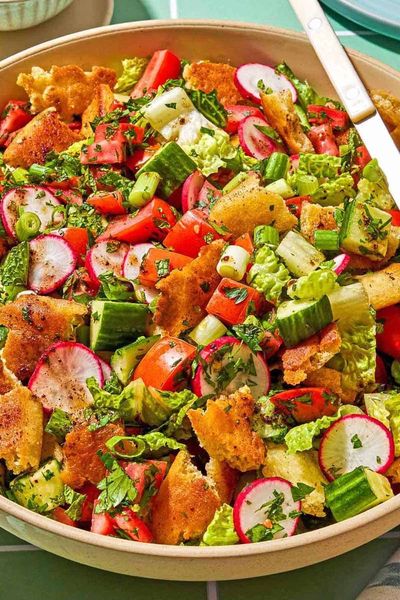
Fattoush
A torn pita is brushed with olive oil and grilled or fried until golden and crisp. Cucumber, tomato, radish, romaine, spring onion, parsley and mint are roughly chopped into a wide bowl. A dressing of lemon juice, pomegranate molasses, sumac, garlic, olive oil and salt is whisked. The salad is tossed with the dressing just before serving; the pita is scattered on top so it stays crisp.
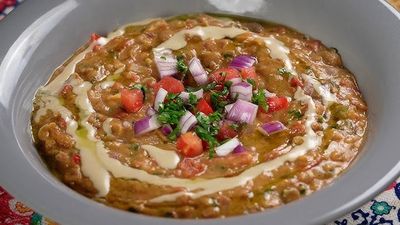
Foul Saudi
The Saudi take on foul medames, somewhere between the Egyptian original and the Yemeni daal-like versions. You soak dried fava beans overnight, then simmer them with a chickpea or two and a garlic clove for six hours low and slow (or pressure-cook for forty-five minutes if you don't have the day) until they're so soft they fall apart at a glance. Once drained, the beans go back into a hot pan with olive oil and garlic, cumin and a hit of chilli; you crush them roughly with a fork (chunky, not smooth) and finish with lemon and a handful of chopped parsley. Eaten warm for breakfast across the Gulf, scooped with flatbread, with a side of pickles or salata hara, and a glass of mint tea.
Msabaha
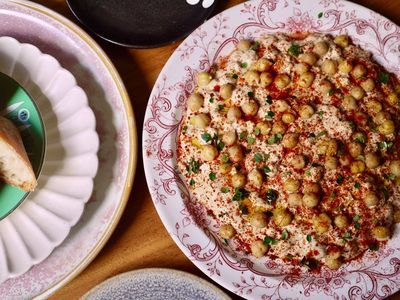
Dried chickpeas soak overnight with a pinch of bicarbonate of soda. The next morning, they simmer in fresh water with garlic, cumin and bay until very soft (about 1 hour, longer if the chickpeas are old). Some chickpeas (about a third) blitz with garlic, lemon juice, tahini and ice water into a smooth purée. The remaining whole chickpeas keep warm in their cooking liquid. To plate: smooth purée on the bottom of the bowl, hot whole chickpeas piled in the centre, more tahini-lemon-garlic sauce poured over, drizzle of olive oil, sprinkle of cumin, scatter of parsley. Eaten with hot bread.