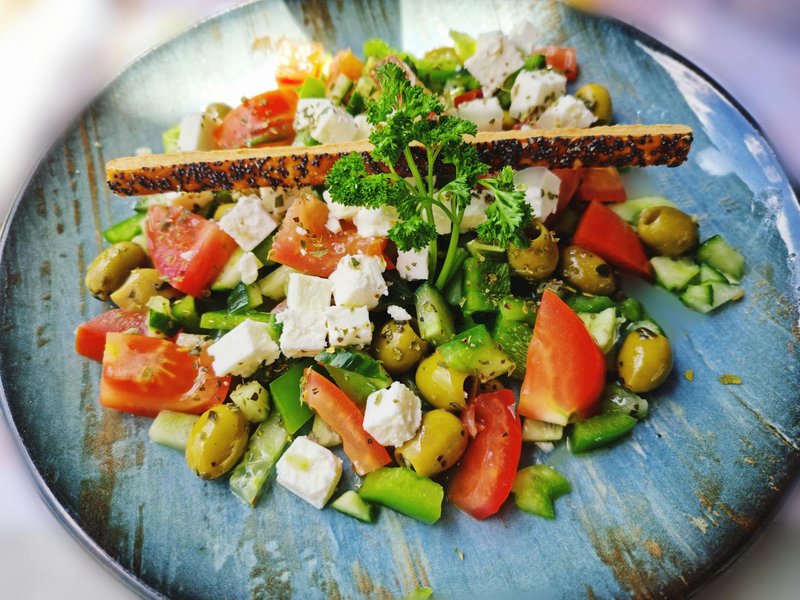
Horiatiki (Greek Village Salad)
The proper Greek village salad: chunks of tomato, cucumber, pepper and onion under a whole slab of feta, dressed with oil and oregano.
Overview
Tomatoes cut into thick wedges, cucumber peeled in stripes and cut into chunky rounds, red onion sliced thin and soaked in cold water 5 minutes (mellows the bite), green bell pepper sliced into rings, kalamata olives stoned or whole at the cook's discretion. Pile in a shallow bowl. A whole slab of feta sits on top, uncrumbled, dignified. Olive oil pours over, red-wine vinegar splashes, oregano sprinkles. Rest for 10 minutes before serving so the tomato juices mix with the oil.
Ingredients
- 4 ripe medium tomatoes (about 600 g)
- 2 cucumbers (small, about 300 g)
- 1 green bell pepper
- 1 red onion (small)
- 16 kalamata olives (pitted or whole, your call)
- 2 tablespoons capers in brine (drained)
- 200 g feta cheese (one slab, NOT pre-crumbled)
- 6 tablespoons extra virgin olive oil (good quality - this is the dressing)
- 1 ½ tablespoons red-wine vinegar
- 1 tablespoon dried Greek oregano (rigani)
- salt
- pepper
Method
Stage 1 - Prep
- Cut the tomatoes into thick wedges (each tomato into 6-8 pieces).
- Peel the cucumbers in stripes (alternating skin-on / skin-off strips, decorative); slice into thick rounds.
- Deseed the bell pepper; slice into rings 5 mm thick.
- Peel the red onion; slice into thin rings; soak in cold water 5 minutes; drain (this mellows the raw bite).
- Pit the olives if preferred (Greeks often serve them whole).
Stage 2 - Compose
- In a shallow wide bowl, pile the tomatoes, cucumber, pepper rings and drained onion.
- Scatter the olives and capers over.
- Place the slab of feta on top - DO NOT crumble.
Stage 3 - Dress
- Drizzle the olive oil generously over the whole assembly (don't be shy - Greeks use a lot of oil).
- Splash the red-wine vinegar over the vegetables (not the feta).
- Sprinkle the oregano over everything - including the feta, which should look dusted.
- Crack pepper over. A small pinch of salt over the vegetables (the feta is salty enough on its own).
Stage 4 - Rest and serve
- Rest 10 minutes at room temperature (tomato juices and olive oil emulsify; the feta absorbs a little dressing).
- Serve with crusty bread to mop the bottom of the bowl.
Notes
- No lettuce. No lemon. No balsamic: these are dead giveaways of an inauthentic Greek salad. The recipe is what it is.
- Feta in a slab, never crumbled: the crumb structure of feta is broken by crumbling and the cheese disappears into the salad. The slab keeps its identity and gets cut at the table.
- Greek oregano (rigani) is different from Italian: drier, sharper, more aromatic. Worth seeking out at a Greek grocer.
- Big chunks, not bistro-fine dice: the salad is rustic on purpose. Thick wedges hold more juice.
- Buy the best olive oil you can afford: with so few ingredients, it carries the dish.
Storage
- Best eaten immediately.
- The salad weeps and the vegetables soften within an hour; not a make-ahead dish.
- Bread soaked in the bottom-of-the-bowl juices keeps 30 minutes and is excellent.
More like this
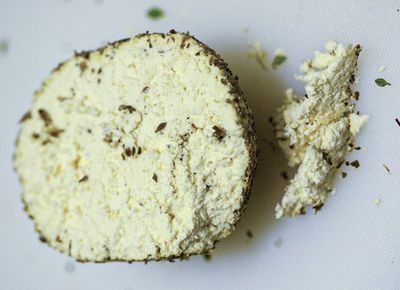
Shanklish
Authentic shanklish is aged 3-6 weeks. A practical home version uses pre-made shanklish balls (sold at Middle Eastern shops) or a substitute made from labneh, feta, za'atar and dried mint. For the plate: crumble shanklish onto a wide shallow dish; top with diced tomato, finely chopped red onion, olive oil, a sprinkle of za'atar. Eaten with pita.
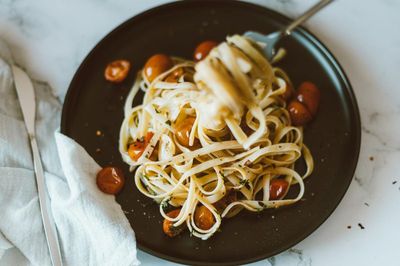
Linguine with Cherry Tomatoes, Pancetta, and White Wine
This Roman classic showcases the magic of combining quality ingredients in the right proportions. Crispy pancetta, yielding its fat to the pan, mingles with soft onions and fierce chilli. A splash of white wine adds acidity and complexity. The result is a robust, warming sauce that transforms simple pasta into something memorable. Pecorino Romano provides a sharp finish.
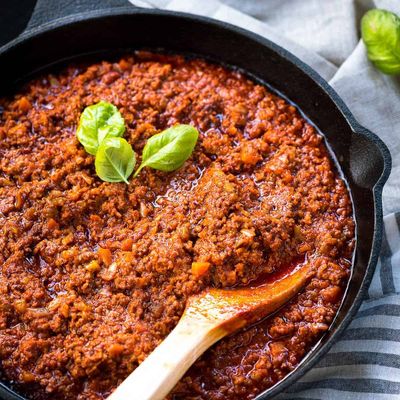
Restaurant-Style Ragù
True ragu demands patience, precision, and respect for the process. Ground beef (or a beef and pork mix) browns deeply in batches to build caramelization without steaming. Aromatic vegetables soften slowly until sweet. Tomato paste darkens and concentrates its flavor through caramelization. Red wine deglazes and cooks off. Then comes the long, gentle simmer, 1 hour 45 minutes to 2 hours, where flavors meld and deepen into something far greater than the sum of its parts. This is not a quick sauce; it is an investment in excellence.

Fasolada
Soaked beans simmer slow with chopped vegetables, tomato and herbs in a generous pour of olive oil. Lemon juice goes in at the end to brighten. Served with a final drizzle of oil, maybe a sprinkle of feta and a heel of bread.