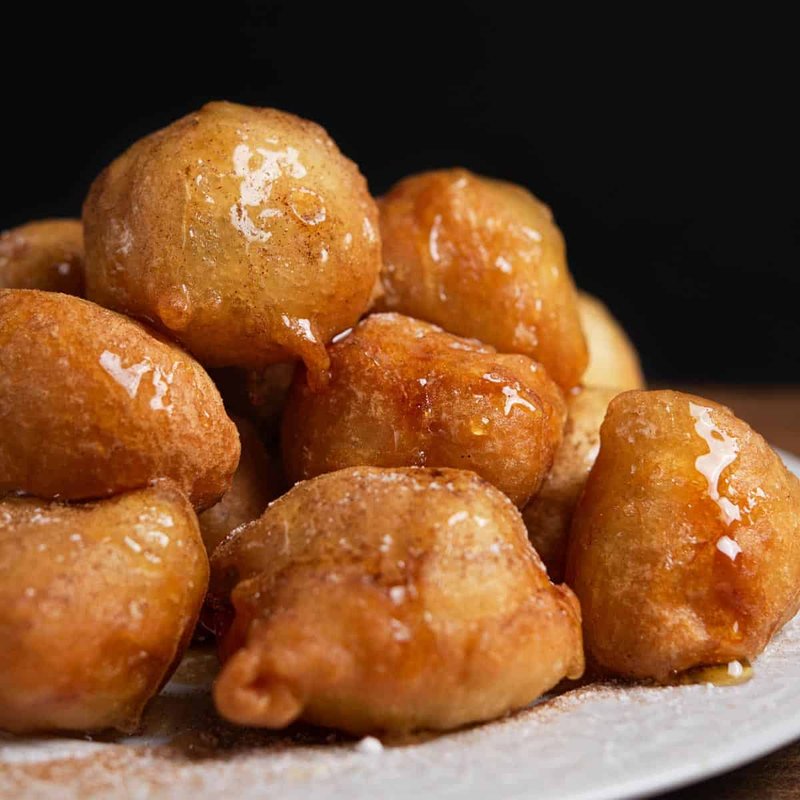
Loukoumades
Greece's festival doughnut: golf-ball puffs of yeasted batter dropped from a wet hand into hot oil, drenched in warm honey syrup, scattered with walnut.
Overview
A wet yeasted batter, flour, warm water, yeast, salt, sugar, rests for 1 hour. A small syrup of honey, water, lemon and cinnamon stick simmers for 5 minutes. Oil heats to 175°C. The cook scoops a tablespoon of batter at a time from a wet hand, dropping into the oil, the puff is roughly walnut-sized. Fries for 2-3 minutes till deep gold, turning once. Drains briefly; tumbles into the warm syrup; lifts onto plates; showers with walnuts and cinnamon. Eats immediately.
Ingredients
Batter
- 500 g plain flour
- 7 g instant yeast
- 1 teaspoon salt
- 1 tablespoon caster sugar
- 600 ml warm water (this is a wet batter)
Syrup
- 200 g clear honey
- 100 ml water
- 1 strip lemon peel (yellow zest only)
- 1 cinnamon stick (small)
- 1 tablespoon lemon juice
Frying
- 1 litre neutral oil for deep frying (sunflower, rapeseed, or olive)
To finish
- 80 g walnuts (roughly chopped, lightly toasted)
- 1 teaspoon ground cinnamon
- 2 tablespoons sesame seeds (optional)
Method
Stage 1 - Batter
- In a wide bowl, whisk the flour, yeast, salt and sugar.
- Pour in the warm water all at once.
- Whisk vigorously for 1 minute - the batter should be smooth and sticky (it's much wetter than a bread dough; pourable from a spoon).
- Cover with cling film; rest in a warm spot 1 hour. The surface should be bubbly and the volume doubled.
Stage 2 - Syrup
- Combine the honey, water, lemon peel and cinnamon stick in a small saucepan.
- Bring to a simmer; cook 5 minutes.
- Stir in the lemon juice; remove from heat.
- Keep warm but not boiling.
Stage 3 - Heat the oil
- Heat the oil in a wide deep pan to 175°C.
- A small drop of batter should sizzle and rise immediately; if it browns in 20 seconds, you're good.
Stage 4 - Fry
- Dip your hand in a bowl of cold water (this is the key to working with sticky batter).
- Grab a small handful of batter; squeeze your fist gently - the batter pops out the top of your fist like toothpaste.
- With a wet teaspoon (or just your wet hand), scoop a walnut-sized piece off the top of your fist and drop into the hot oil.
- Continue until you have 6-8 loukoumades frying.
- Fry 2-3 minutes total, turning with a slotted spoon, until deep gold and puffed.
- The loukoumades will roll themselves over once their underside crisps.
Stage 5 - Syrup soak
- Lift the fried loukoumades with a slotted spoon; drain briefly on a wire rack (10 seconds).
- Tumble into the warm syrup; let soak 30 seconds while you start the next batch.
- Lift out with the slotted spoon onto a serving platter.
Stage 6 - Serve
- Pile the syrup-soaked loukoumades on a warm platter.
- Sprinkle with chopped walnuts, cinnamon and sesame seeds.
- Drizzle a little extra syrup over the top.
- Serve IMMEDIATELY - loukoumades cool fast and the crisp shell goes soft.
Notes
- Wet hand, wet spoon: working with sticky yeasted batter is impossible dry. Keep a bowl of cold water next to you and re-wet constantly.
- Squeeze-from-fist technique: Greek cooks shape loukoumades by squeezing batter through a fist and scraping the protrusion with a teaspoon. Practise the motion before frying; it's the difference between round puffs and irregular blobs.
- Hot syrup, hot loukoumades: the temperature drives absorption. Cold syrup on hot loukoumades sits on the surface; warm syrup soaks in.
- Eat immediately: the crisp-soaked contrast lasts about 10 minutes. After that you have a soggy honey ball - still good but the magic is gone.
Storage
- Best within 30 minutes of frying.
- Day-2 loukoumades soften and lose their crisp; warm gently in a 160°C oven 5 minutes (won't fully revive but acceptable).
- Don't refrigerate - the syrup crystallises and the texture suffers.
More like this
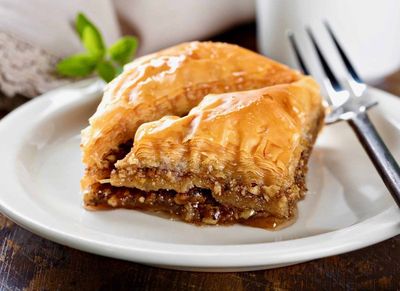
Greek Baklava
A 30 × 22 cm tin is built in layers: 8 buttered filo sheets on the bottom; walnut-cinnamon filling; 4 buttered filo sheets; more walnut; 4 more filo; walnut; finally 8 more buttered filo on top. The top is scored into squares; a clove is pressed into the centre of each. Baked for 45 minutes at 180°C till amber. Syrup of honey, sugar, water, lemon and cinnamon stick simmers separately. The COOL syrup is poured over the HOT baklava. Rested overnight, non-negotiable.
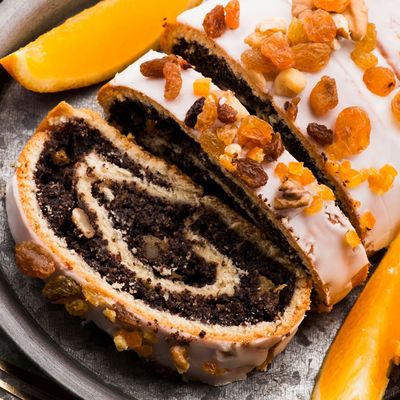
Makowiec
The filling starts the night before: poppy seeds soak then simmer in milk and cook to a thick paste with honey, butter, vanilla, raisins, walnuts and candied peel. The next day, an enriched yeast dough rolls into a thin rectangle, spreads thickly with the cold poppy filling, and rolls into a tight log. After a final prove, it bakes in a long tin until the dough is bronze. Once cool, a thin lemon glaze drizzles across the top and a scatter of candied peel finishes it.
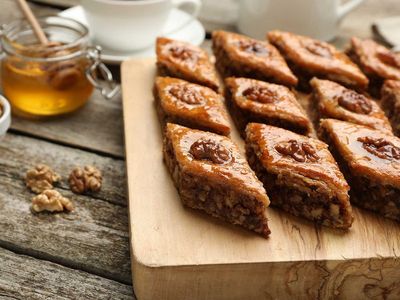
Pakhlava (Azerbaijani)
The Azerbaijani take on the pan-Caucasus pastry that goes by half a dozen names across the region. You make an enriched dough from flour, butter, milk, egg yolks and yeast, then roll it into eight layers stacked with a heavy filling of crushed walnuts spiced with cardamom and saffron between each one. The top gets scored in the traditional diamond pattern, brushed with saffron-tinted egg yolk so it bakes to a deep amber, and a single walnut pressed into the centre of each diamond as a marker. Forty-five minutes at 180°C, then a saffron-honey syrup poured generously over while it's still hot from the oven. The trick the recipe insists on is the overnight rest before slicing; that's when the syrup absorbs fully and the layers set so the diamonds cut cleanly. Eaten at Novruz, weddings and feast days, with strong black tea on the side.
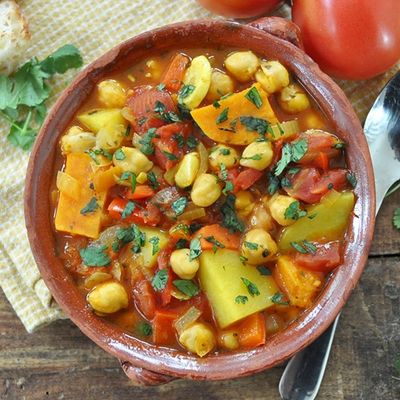
Vegetable Tagine
Onions are softened with garlic and ras el hanout. Carrots, parsnips, potato and squash join in stages, root first, fast-cooking last. Chickpeas, tomatoes, stock and apricots simmer everything together. At the end, preserved lemon, fresh coriander and toasted almonds finish; honey rounds out the spice if needed.