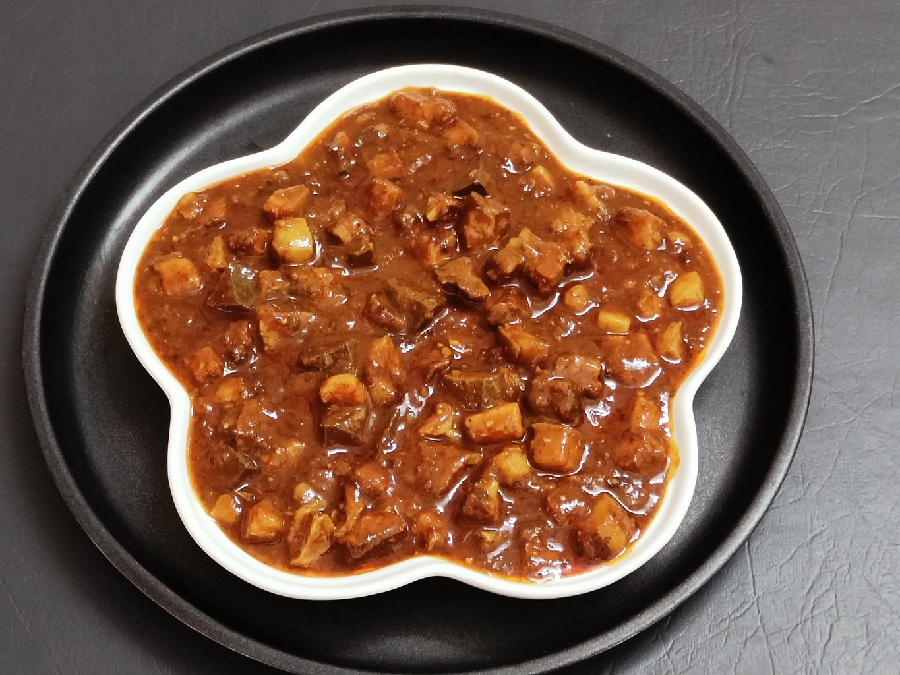
Pork Sorpotel
The Goan Catholic feast curry: pork, liver and heart cooked in a thick, vinegar-sharp masala of roasted chillies and warming spices. Made days ahead so the flavour can deepen.
Overview
Pork shoulder and liver are par-boiled with whole spices, then diced. A masala paste of roasted Kashmiri chillies, peppercorns, cinnamon, cloves and cumin is ground with garlic, ginger and a generous splash of palm vinegar. The diced meat is browned in pork fat, the paste fried until the oil separates, and the cooking stock added for a slow simmer. The dish improves dramatically after 24-48 hours in the fridge; Goans traditionally make it the day before serving.
Ingredients
Pork
- 800 g pork shoulder (with a good cap of fat, cut into 8 cm chunks)
- 200 g pork liver (cut into 4 cm chunks)
- 100 g pork heart (cut into 4 cm chunks, optional but traditional)
- 1 cinnamon stick (small)
- 4 cloves
- 6 black peppercorns
- 1 teaspoon salt
- 800 ml water
Masala paste
- 15 dried Kashmiri chillies (stems removed)
- 4 dried byadgi chillies (or 2 hotter chillies, for the heat)
- 1 tablespoon cumin seeds
- 1 tablespoon black peppercorns
- 8 cloves
- 1 cinnamon stick (small, broken)
- 1 teaspoon ground turmeric
- 30 g fresh ginger
- 12 garlic cloves
- 150 ml palm vinegar (or cider vinegar)
Curry
- 3 tablespoons rendered pork fat (or vegetable oil)
- 3 onions (finely chopped)
- 1 teaspoon salt (to adjust)
- 1 tablespoon palm vinegar (to finish)
Method
Stage 1 - Par-boil the meat
- Place the pork shoulder, liver and heart in a pot with the whole spices, salt and water.
- Bring to a boil; skim foam.
- Reduce to a low simmer and cook for 25-30 minutes, until the meat is just cooked.
- Lift the meat out with a slotted spoon and reserve the stock (about 500 ml).
- Cool the meat, then dice into 1 ½ cm cubes.
Stage 2 - Make the masala paste
- Soak the dried chillies in hot water for 15 minutes to soften.
- Drain.
- Toast the cumin, peppercorns, cloves and cinnamon in a dry pan for 30 seconds until fragrant.
- Grind the toasted spices, soaked chillies, turmeric, ginger, garlic and palm vinegar to a smooth paste in a blender; add a splash of the pork stock if needed.
Stage 3 - Brown the meat
- Heat the pork fat in a wide, heavy pan over medium heat.
- Add the chopped onions; cook for 8-10 minutes until golden.
- Push the onions to the side and add the diced pork in batches.
- Brown for 4-5 minutes a batch.
Stage 4 - Cook the masala
- Add the masala paste to the pan.
- Cook for 8-10 minutes, stirring often, until the oil separates from the paste at the edges (this is the moment the dish is built; cut it short and the curry tastes raw).
Stage 5 - Simmer
- Add the reserved pork stock and the salt.
- Bring to a gentle simmer.
- Cover and cook for 1 hour 15 minutes over the lowest heat, stirring every 15 minutes, until the sauce thickens and the fat starts to float at the edges.
- Add the diced liver and heart in the final 10 minutes (longer makes them rubbery).
Stage 6 - Rest
- Stir in the final tablespoon of palm vinegar.
- Cool to room temperature.
- Refrigerate for 24-48 hours before serving (this isn't optional; sorpotel is built to improve).
Stage 7 - Serve
- Reheat gently with a small splash of water if needed.
- Serve with sannas (steamed rice cakes) or plain rice.
Notes
- Vinegar matters: Palm vinegar is the Goan standard. Cider vinegar substitutes well. White malt is too sharp; balsamic too sweet.
- Make ahead: Sorpotel served the day it's cooked tastes harsh and undeveloped. The 24-48 hour rest is what makes it sorpotel.
- The liver question: Traditional sorpotel uses liver and heart; the dish without them is just spicy pork. If you want the easier version, the same recipe works with shoulder alone.
Storage
- Refrigerate up to 7 days; the flavour continues to improve.
- Freezes brilliantly for 3 months.
More like this
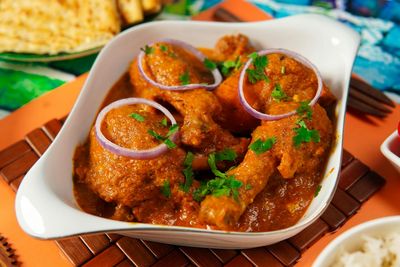
Chicken Xacuti
A xacuti masala is built by dry-roasting fresh coconut to a deep mahogany brown alongside a long list of whole spices (Kashmiri and byadgi chillies, coriander, cumin, fennel, peppercorns, cinnamon, cloves, star anise, mace) and grinding them with onion, garlic and ginger into a black-brown paste. The chicken is browned briefly, the paste added, water poured in to cook the chicken through, and tamarind stirred in to finish. The trick is in the roast: the coconut should be almost-burnt, with the bitterness offset by the tamarind.
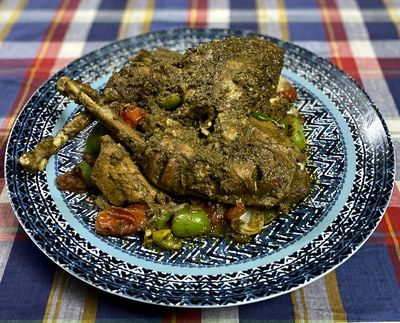
Chicken Cafreal
A vivid green masala is ground from coriander leaves, mint, green chilli, garlic, ginger, cumin, peppercorns and clove with palm vinegar. Chicken pieces are slashed and marinated for at least 4 hours (ideally overnight). The pieces are pan-fried in the marinade-paste over high heat until the herb crust dries out and chars at the edges, with a small splash of water added halfway through to keep the chicken juicy. Served with a wedge of lime and a salad of onion and tomato.
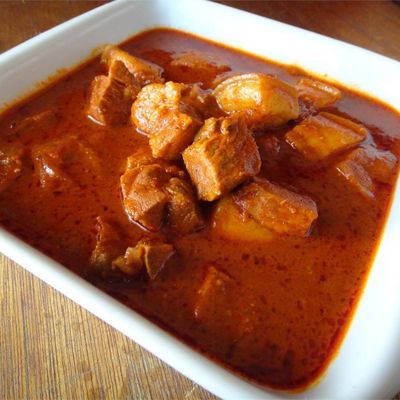
Goan Pork Vindaloo
Whole Kashmiri red chillies soak in white wine vinegar; ground with garlic, ginger, cumin, peppercorns, cinnamon, cloves and mustard into a thick wet paste. Pork shoulder cubes marinate overnight in the paste. Browned in oil; cooked with onions, tomato and reserved marinade until the pork is tender and the gravy is glossy. Salt last. A small spoonful of jaggery balances the vinegar.

Tantanmen
Three components assemble at service. (1) Niku miso: ground pork stir-fries with garlic, ginger, doubanjiang and miso, then sweetened with sugar and finished with sesame oil. (2) Tare (concentrated seasoning paste): white sesame paste (tahini), soy sauce, rice vinegar, chilli oil, miso paste, garlic, whisked together. (3) Hot soup: chicken stock with a touch more sesame paste and chilli oil swirled in. Ramen noodles cook separately. Bowls layered: tare in the bottom, hot soup ladled over, cooked noodles, mound of niku miso, blanched bok choy, soft-boiled marinated egg, scallions, extra chilli oil.