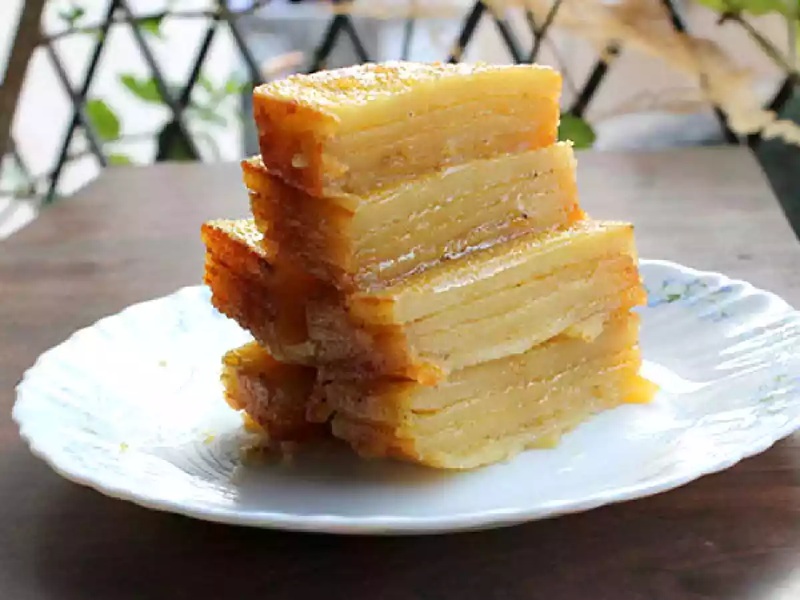
Doce de Grão
Goan chickpea-and-coconut fudge: cooked chickpeas blended smooth and cooked with coconut, sugar and ghee into a soft, pale-cream sweet. The Portuguese-inheritance dessert that surprises every first-time eater.
Overview
Chickpeas are soaked overnight, simmered until completely tender, then drained and pureed into a smooth paste. The paste is cooked over low heat with sugar, fresh coconut milk and grated coconut, stirred constantly as the mixture thickens. Ghee is added in stages; the fudge is ready when it pulls away from the sides of the pan and the ghee separates at the edges. Cardamom and a touch of rose water lift the chickpea flavour into something dessert-like. Tastes nothing like chickpeas.
Ingredients
- 200 g dried chickpeas (soaked overnight) (or 350 g cooked weight)
- 1 teaspoon salt (for cooking)
- 300 g caster sugar (or fine palm jaggery for a deeper colour)
- 200 ml coconut milk
- 100 g fresh grated coconut (or 80 g desiccated, rehydrated)
- 60 g ghee
- ½ teaspoon ground cardamom
- 1 teaspoon rose water (optional, traditional)
- A pinch of salt
- 20 g cashews (chopped, optional)
- 20 g pistachios (chopped, optional)
Method
Stage 1 - Cook the chickpeas
- Drain the soaked chickpeas and rinse.
- Place in a pot with the salt and water to cover.
- Boil hard for 10 minutes, then reduce to a simmer and cook for 1 hour to 1 hour 15 minutes, until completely tender.
- Drain and rinse.
Stage 2 - Puree
- Cool the chickpeas to lukewarm.
- Place in a blender or food processor with 4 tablespoons of water.
- Blend to a smooth, fine paste (no graininess).
- Pass through a sieve if you want the finest texture (traditional doce was sieved twice).
Stage 3 - Build the fudge
- Combine the chickpea paste, sugar and coconut milk in a heavy saucepan.
- Place over low heat.
- Stir continuously with a wooden spoon (essential; the paste catches the bottom quickly).
- After 15 minutes, the mixture will thin slightly as the sugar dissolves.
- Continue stirring; after 25 minutes total, it will start to thicken again.
- Add the grated coconut.
- Stir in 20 g of the ghee.
Stage 4 - The final cook
- Continue cooking and stirring over low heat for another 15-20 minutes.
- Add the remaining 40 g of ghee in two more additions, 5 minutes apart.
- The fudge is done when it pulls away from the sides of the pan in a single mass and the ghee starts to separate at the edges (about 50-55 minutes total).
- Stir in the cardamom, rose water (if using) and salt.
Stage 5 - Set
- Grease a 20 cm square tray with ghee.
- Tip the hot doce into the tray and smooth the top with the back of a greased spoon.
- Scatter the chopped cashews and pistachios over.
- Press the nuts gently into the surface.
Stage 6 - Cut and serve
- Cool at room temperature for 2 hours, then refrigerate for 4 hours to firm up.
- Cut into 4 cm squares with a greased knife.
- Serve at room temperature.
Notes
- Sieve the puree: A double sieve gives the silky, restaurant-style texture. One blend gets you 90% of the way; sieving finishes it.
- Don't stop stirring: Doce de grão burns quickly at the base. The low-heat, continuous-stir is the technique.
- Ghee in stages: Adding the ghee all at once causes it to puddle. Three additions space the absorption.
Storage
- Refrigerate up to 2 weeks; the flavour improves overnight.
- Freezes well for 3 months; defrost in the fridge.
More like this
Bolinhas de Coco
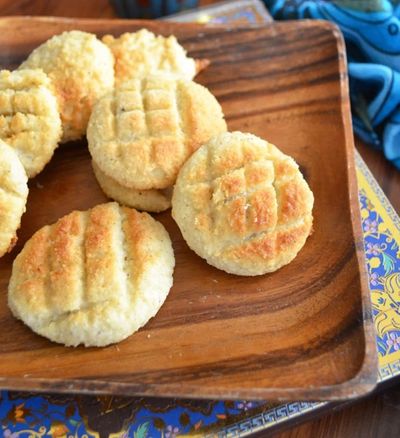
A wet dough is made from fresh grated coconut, sugar and water cooked together into a thick paste, then enriched with butter, semolina and egg yolks. The dough rests for several hours so the semolina can hydrate and the dough firms up. Small balls are shaped, pressed gently and baked low and slow until the bottoms turn golden and the tops set into pale-gold domes.

Chè Ba Màu
Three sweet components are prepared separately: red beans simmered until tender then mixed with sugar, split mung beans cooked until just holding shape and lightly sweetened, and pandan-flavoured agar jelly cut into small cubes. Each layer goes into a glass with crushed ice between them and a generous drizzle of sweetened coconut cream over the top.
Chicken Xacuti
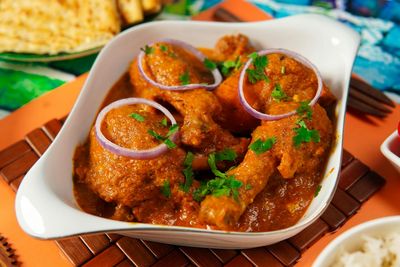
A xacuti masala is built by dry-roasting fresh coconut to a deep mahogany brown alongside a long list of whole spices (Kashmiri and byadgi chillies, coriander, cumin, fennel, peppercorns, cinnamon, cloves, star anise, mace) and grinding them with onion, garlic and ginger into a black-brown paste. The chicken is browned briefly, the paste added, water poured in to cook the chicken through, and tamarind stirred in to finish. The trick is in the roast: the coconut should be almost-burnt, with the bitterness offset by the tamarind.
Chuối Nướng
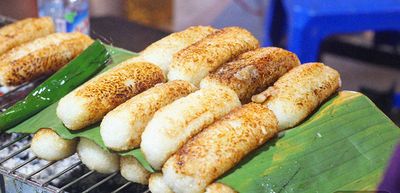
Sticky rice is soaked, steamed and pressed around small Asian bananas (Chuối sứ), wrapped in banana leaves and grilled until the rice forms a chewy crust. A coconut cream sauce thickened with a little cornflour and salt is spooned over the split-open bundles, and toasted peanuts and sesame finish the top. The contrast of crisp-burnt outside, soft hot banana, and cool coconut sauce is the whole point.