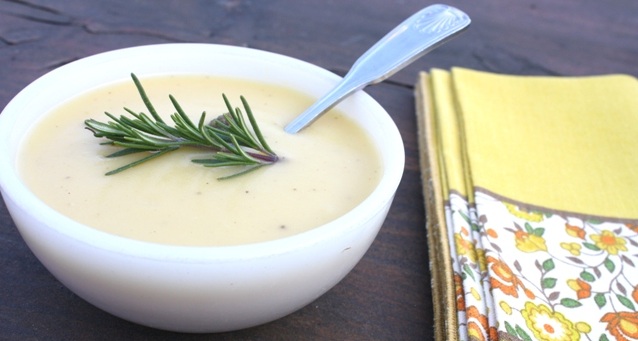
Potato and Garlic Soup
A French potato-garlic soup: floury potatoes simmered with a whole head of slow-cooked garlic.
Overview
A rustic, comforting soup highlighting the sweet, nutty flavor of roasted garlic combined with creamy potatoes. Pureed for smoothness, it's a simple yet flavorful dish perfect for garlic lovers.
Ingredients
Base
- 2 tablespoons olive oil
Aromatics
- 1 onion (finely chopped)
- 2 onions (halved)
- 2 garlic bulbs (cloves separated and peeled)
Vegetables
- 500 grams potatoes (peeled and cubed)
Liquid/Broth
- 2 litres stock (vegetable or chicken)
Garnishes
- chopped chives to serve (or a sprig of rosemary)
Method
Stage 1 - Prepare ingredients
- Separate the garlic bulbs into cloves and gently crush with the flat side of a knife to split the skin.
- Peel the cloves and cut in half.
- Chop the potatoes into small cubes.
Stage 2 - Cook soup
- Heat the olive oil in a large frying pan, add the onion and garlic and cook over a medium-low heat for 5 - 10 minutes, or until the garlic is very lightly golden.
- Add the potato and cook over a low heat for 5 minutes.
- Add the stock and simmer for 40 - 45 minutes, or until the garlic is very soft and the stock has reduced. Set aside to cool slightly.
Stage 3 - Puree and serve
- Process the soup in batches in a food processor until smooth.
- Return to the pan and taste for seasoning.
- Reheat gently before serving, and serve with a sprinkle of chopped chives.
Notes
- Garlic: Roast gently to avoid bitterness; it should be soft and sweet.
- Potatoes: Use starchy potatoes like Russet for creaminess.
- Pureeing: Blend in batches for safety; hot liquid expands.
- Stock: Vegetable stock keeps it vegetarian; chicken adds richness.
Serving
Serve hot with crusty bread and a sprinkle of chives or rosemary.
Storage
- Refrigerate up to 3 days; reheat gently.
- Freezes well for up to 2 months.
- Best eaten fresh; flavors deepen overnight.
More like this
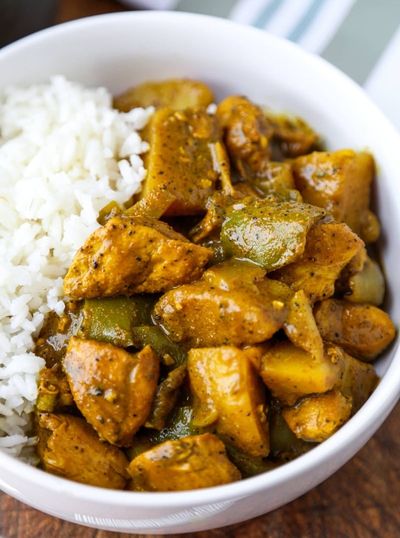
Authentic Jamaican Curry Chicken
Jamaican curry sits in its own corner of the global curry map: heavier on turmeric and allspice than Indian Madras, lighter on cumin, and built on a technique called "burning the curry" that gives the dish its character. The technique is exactly what it sounds like, dry curry powder hits hot oil and is stirred for 30 seconds until it darkens from yellow to deep gold and smells like toasted spice. That move concentrates the flavours and removes any raw edge. The finished stew is bright yellow stained slightly orange, savoury and aromatic rather than searingly hot, with thyme and a whole pierced Scotch bonnet scenting the gravy without flooring it. Smell: bloomed curry powder, allspice, browned chicken fat. Not difficult, but requires confidence in the 30-second bloom (under-do it and the dish is flat; over-do it and you have to start over). A Sunday-dinner staple across Jamaica and the diaspora, served over white rice with the gravy spooned generously over.
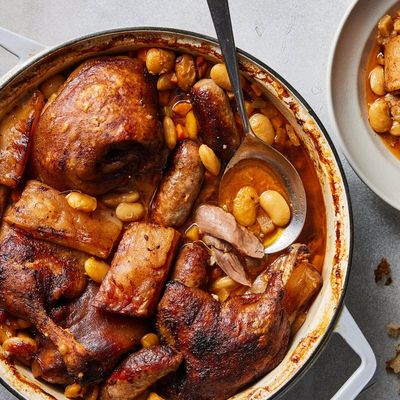
Cassoulet
Dried haricot beans soak overnight, then simmer with bacon and aromatics. Pork shoulder and sausages brown separately. The lot layers in a casserole with confit duck legs, more stock, and a breadcrumb top that cooks into the surface as it bakes long and slow.
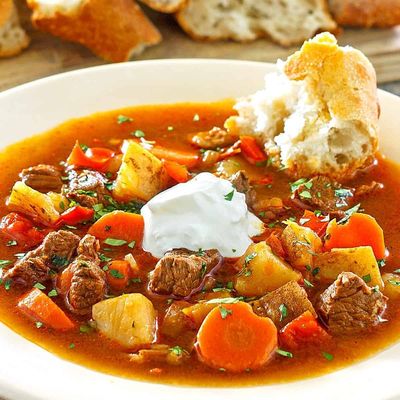
Hungarian Goulash
Beef chuck cubes brown briefly, then simmer slow in a generous onion base with paprika as the dominant spice. Tomato, garlic and caraway add depth; potatoes go in late. The defining flavour is the paprika, Hungarian sweet paprika, not generic Spanish; the colour and flavour are different.
Jamaican Goat Curry
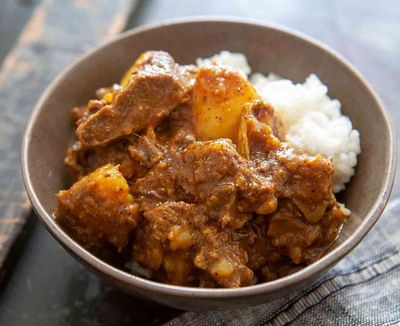
A deep, brick-yellow gravy stained with turmeric and allspice (called pimento in Jamaica, confusingly, nothing to do with the pepper of the same English name). The taste is layered: the curry powder hits first, then the slow heat of Scotch bonnet, then a sweet-piney back-note from allspice and thyme that's unmistakably Caribbean rather than Indian. The goat is the point; bone-in shoulder or leg, braised until the bones loosen and the connective tissue melts into the gravy and gives it body without any flour or roux. Patient cooking but not difficult: brown the meat, bloom the curry powder until it darkens to brown, then leave it alone for two hours. The whole pierced Scotch bonnet sits in the pot scenting the gravy and is fished out before it ruptures, so the heat stays controllable. Came to Jamaica via Indian indentured labourers in the 1840s, then got reshaped by what the island already had: thyme, pimento, scotch bonnet, and the Saturday-evening habit of putting a pot on to braise for Sunday lunch. Day-2 goat curry is better than day-1, which is why every Jamaican grandmother starts it on a Saturday.