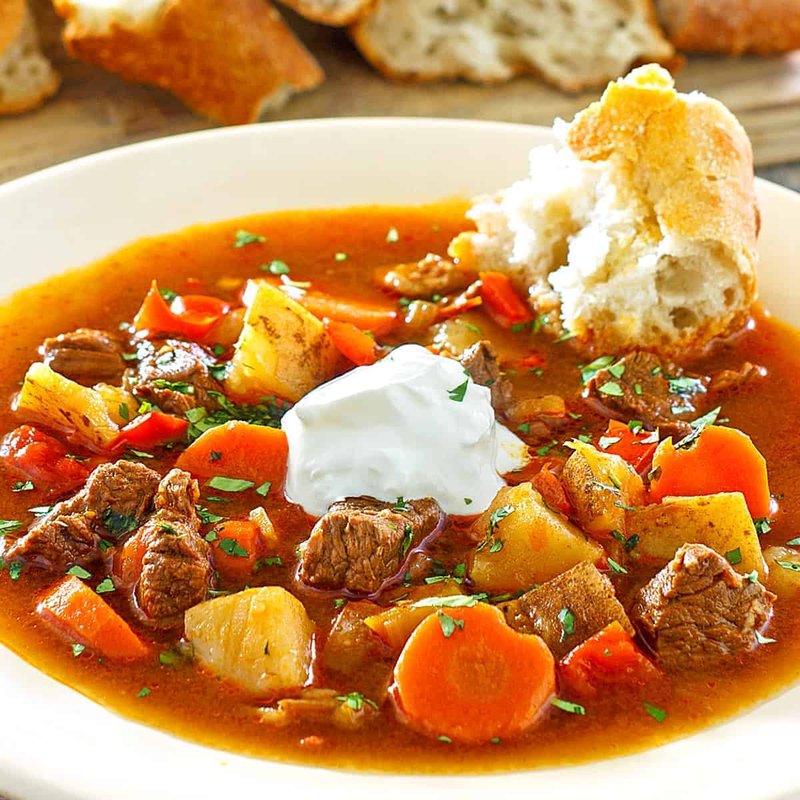
Hungarian Goulash
Hungary's national dish: chunks of beef simmered slow with onions, sweet paprika and tomato into a rust-coloured stew. Originally a herder's dish cooked over open fires; modern versions are richer and thicker. Not the German "goulash" with sour cream - that's pörkölt-adjacent and a different thing.
Overview
Beef chuck cubes brown briefly, then simmer slow in a generous onion base with paprika as the dominant spice. Tomato, garlic and caraway add depth; potatoes go in late. The defining flavour is the paprika, Hungarian sweet paprika, not generic Spanish; the colour and flavour are different.
Ingredients
- 1 kg beef chuck (cut into 3 cm cubes)
- 3 tablespoons lard (or vegetable oil)
- 4 onions (chopped; equal weight to the meat is traditional)
- 4 garlic cloves (crushed)
- 4 tablespoons Hungarian sweet paprika
- 1 teaspoon Hungarian hot paprika (or to taste)
- 1 teaspoon caraway seeds (lightly crushed)
- 2 tablespoons tomato purée
- 400 g tinned chopped tomatoes
- 1 red pepper (chopped)
- 2 bay leaves
- 1 litre beef stock
- 600 g potatoes (peeled, cubed)
- salt
- pepper
- A small bunch of flat-leaf parsley (chopped)
Method
Stage 1 - Brown
- Heat the lard in a heavy casserole over medium-high heat.
- Season the beef; brown in batches deeply. Set aside.
Stage 2 - Onions
- Reduce heat to medium. Add the onions to the pan with a pinch of salt.
- Cook 15-20 minutes, stirring often, until very soft and golden. (This is the structural step; rushing the onions gives flat goulash.)
- Add the garlic; cook 1 minute.
Stage 3 - Paprika
- Take the pan OFF the heat. Add both paprikas and the caraway; stir for 30 seconds (paprika burns at high heat and turns bitter).
- Return to medium heat.
Stage 4 - Build the stew
- Stir in the tomato purée; cook 1 minute.
- Return the beef. Add the chopped tomatoes, red pepper, bay leaves and stock.
- Bring to a simmer. Season with salt and pepper.
- Cover and braise on low heat for 1 ½ hours (or in a 160°C oven), stirring occasionally.
Stage 5 - Potatoes
- Add the cubed potatoes; cook another 30-40 minutes until both meat and potatoes are tender and the sauce has thickened.
Stage 6 - Serve
- Discard the bay leaves.
- Taste; season again.
- Ladle into bowls; scatter parsley.
- Serve with crusty bread or buttered noodles.
Notes
- Hungarian paprika is non-negotiable: Spanish paprika tastes different. Hungarian sweet paprika (édes paprika) has a brighter red colour and slightly sweet character.
- Don't burn the paprika: Off-the-heat addition is critical. Even 30 seconds at high heat turns paprika acrid; the dish never recovers.
- Lots of onions: Equal weight to the meat. They cook down to a sweet base; less and the stew is thin.
Storage
- Improves overnight. Keeps 4 days refrigerated.
- Freezes 3 months.
More like this
Lomo Saltado
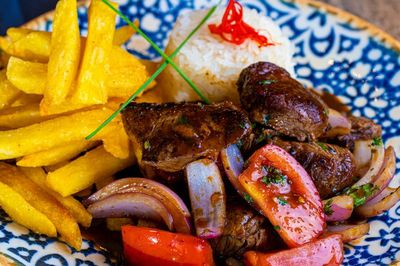
Beef strips are marinated briefly in soy and aji amarillo paste. Fries are cooked separately, pre-fried, set aside. The wok hits high heat; beef is seared in batches; red onion and tomato are added briefly so they keep their bite; soy, vinegar, lime and stock are poured in to sauce. The fries go in last, just before serving, a 30-second toss so they pick up flavour without going soggy.
Trinidadian Curry Goat
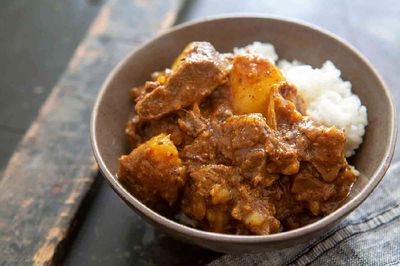
Trinidadian curry goat sits in a quiet rivalry with Jamaican curry goat, but the two are different dishes. Jamaican curry goat is built on Madras-style curry powder, scotch bonnet and allspice with little coconut and a wetter finish. Trinidadian curry goat is built on a fresh blend of green seasoning (a herb-and-aromatic puree of culantro, thyme, garlic, chives and onion), Caribbean curry powder (which leans heavily on amchar masala and roasted geera), and the bunjay technique of frying the curry paste in oil until it splits before the meat goes in. The result is a darker, herbier, drier curry that hugs the bone rather than pooling around it. Kid goat is the preferred meat; older mutton-goat works but takes longer. UK home cooks can usually find kid goat at Caribbean butchers, Halal butchers and many Asian supermarkets in the chilled or frozen section. Bone-in pieces are essential for flavour and gelatin. Lamb shoulder on the bone makes an honest substitute. Difficulty is low to moderate; the cook is mostly long and passive once the curry is bunjayed. Serve with paratha-style "buss-up-shut" roti, dhalpuri roti, white rice, or coconut rice.
Mafé
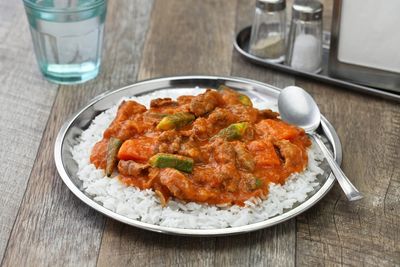
Bone-in beef or lamb is browned, then simmered with onions, garlic, tomato and stock. Smooth peanut butter is whisked in halfway and the stew thickens to a velvety coating. Chunks of cassava, sweet potato and cabbage cook in the sauce towards the end. Serve over plain steamed white rice.
Mangshor Jhol
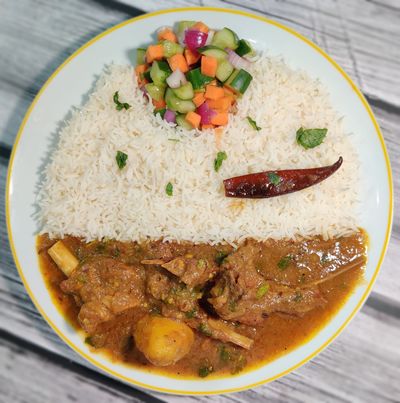
The wet-style mutton counterpart to the drier, slow-bhuna kosha mangsho - and the more everyday of the two. "Jhol" means a thin, soupy gravy and mangshor jhol is exactly that: bone-in goat or mutton cooked low and slow with potatoes in a light, aromatic broth that you ladle generously over rice. You heat mustard oil to smoking to take the raw edge off, temper whole bay and cinnamon in the hot fat, then brown the onions deeply and add a measured hand of turmeric to give the gravy its colour and weight. The bones contribute marrow to the broth as the meat tenderises over an hour or so, and the potatoes go in late enough that they soften without disintegrating. Eaten with a mound of plain steamed rice, a wedge of lime, and a thin slick of mustard oil scattered with raw onion on the side. A Sunday lunch dish for a Bengali household, served from the same pot it was cooked in.