Cassoulet
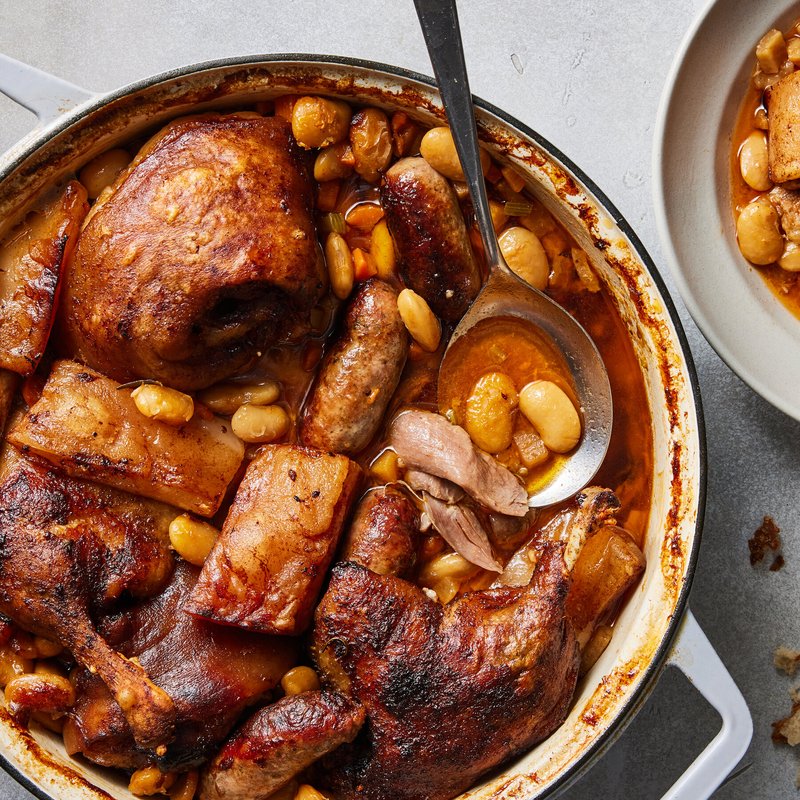
Languedoc bean and meat casserole: white beans cooked with sausage, confit duck, pork shoulder and bacon, baked under a breadcrumb crust that's broken back into the beans repeatedly to build layers. The slow-food showpiece of southwest France; needs a weekend, rewards it.
Overview
Dried haricot beans soak overnight, then simmer with bacon and aromatics. Pork shoulder and sausages brown separately. The lot layers in a casserole with confit duck legs, more stock, and a breadcrumb top that cooks into the surface as it bakes long and slow.
Ingredients
Beans
- 500 g dried haricot (or cannellini beans, soaked overnight)
- 200 g pork belly (or pancetta in one piece)
- 1 onion (whole, studded with 4 cloves)
- 4 garlic cloves
- 1 Bouquet Garni
- 1 tablespoon tomato purée
- 1 ½ litres chicken (or duck stock)
Meats
- 4 confit duck legs (jarred or homemade)
- 4 Toulouse sausages (or coarse pork sausages)
- 600 g boneless pork shoulder (cut into 4 cm cubes)
- 2 tablespoons duck fat (or olive oil)
Topping
- 100 g coarse breadcrumbs
- 2 tablespoons chopped flat-leaf parsley
Method
Stage 1 - Cook the beans
- Drain the soaked beans. Place in a large pan with the pork belly, clove-studded onion, garlic, bouquet garni and tomato purée.
- Cover with stock; bring to a simmer.
- Cook gently for 1 ½ hours until the beans are tender but still holding their shape.
- Remove the pork belly, cut into thick cubes; reserve. Discard the onion and bouquet garni.
Stage 2 - Brown the meats
- Heat the duck fat in a heavy frying pan.
- Brown the pork shoulder cubes deeply on all sides; set aside.
- Brown the sausages until coloured but not cooked through; cut into thirds.
- Briefly sear the confit duck legs (skin side down) to crisp.
Stage 3 - Assemble
- Heat the oven to 160°C (140°C fan).
- In a wide deep casserole, layer half the beans, then the browned pork, sausage chunks and pork belly cubes, then the remaining beans.
- Tuck the duck legs in, partially submerged.
- Pour in enough of the bean liquid to come three-quarters up.
- Scatter the breadcrumbs evenly over the top.
Stage 4 - Bake
- Bake uncovered for 2-2 ½ hours.
- Every 30 minutes, break the crust gently with the back of a spoon and push it under, letting a new crust form. Add more bean liquid if drying out.
- The cassoulet is done when the top has been broken into the beans 3-4 times, the meat is meltingly tender, and the surface is deep golden.
Stage 5 - Serve
- Rest for 10 minutes.
- Sprinkle with parsley. Serve in deep bowls with crusty bread and a sharp green salad.
Notes
- The crust ritual: Breaking the top crust back into the beans three or four times builds the layered, gelatinous texture that defines a real cassoulet. Skip it and you've made bean and sausage casserole.
- Confit duck makes the dish: If you can't get jarred confit, slow-roast 4 duck legs covered in salt then in fat for 3 hours at 100°C beforehand.
- Toulouse sausage: Coarse, garlicky, traditional. Coarse pork sausages are an acceptable substitute.
Storage
- Improves overnight. Keeps 3-4 days refrigerated.
- Reheat at 150°C for 40 minutes covered, then 10 uncovered to re-crust.
- Freezes 3 months.
More like this
Coq au Vin
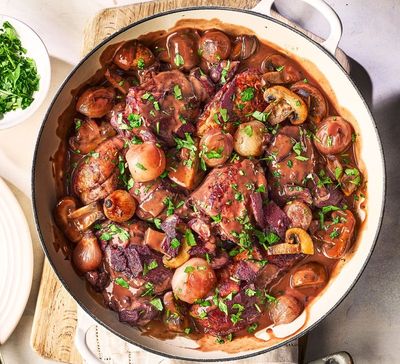
Lardons rendered, chicken pieces browned in the fat, then simmered in red wine with brandy, stock, garlic, herbs and tomato purée. Mushrooms and pearl onions are sautéed separately and added at the end so they keep their shape and texture.
Duck Confit
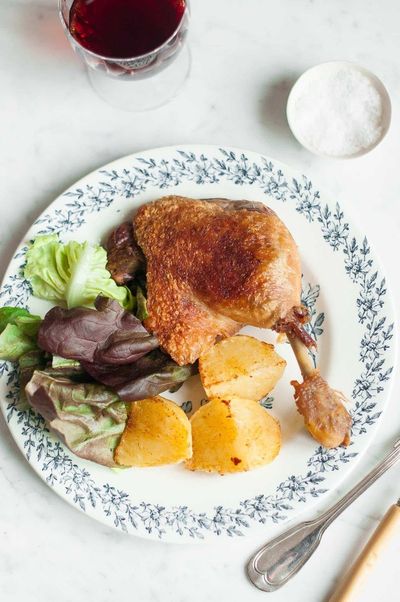
Duck legs sit overnight under salt, garlic and herbs to season and draw out moisture. They then cook completely submerged in duck fat at 90°C for 3 hours. The cooked legs and the fat keep for weeks. To serve, lift legs from the fat and crisp the skin in a dry hot pan.
Arroz de Pato
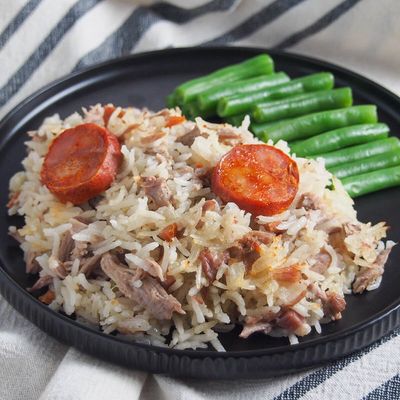
Arroz de pato is Portugal's answer to paella, except baked rather than simmered, and the rice picks up a top crust of crisped chouriço at the end. You poach a whole duck for two hours with onion, bay, cloves and lemon peel until the meat falls apart, then strip the meat off the bones and put the bones back to extract another half hour of flavour from the stock. The strained duck stock cooks the rice, the shredded meat folds back in, and the whole thing goes into a baking dish under a layer of paper-thin chouriço slices. Twenty minutes in a hot oven and the top emerges deeply burnished, the chouriço slices crisp at their edges and slick at their centres. Sunday lunch, ideally with a heavy red from the Douro.
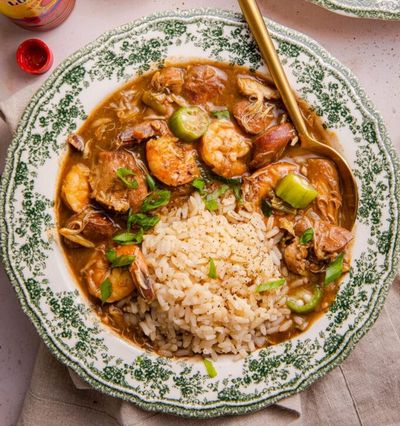
Authentic Cajun Gumbo
The "everything" Louisiana gumbo, chicken thighs, andouille, lump crab and shrimp all in one pot, and the dish where the technique matters more than the recipe. The roux is the single defining step and the line between Cajun gumbo and every other stew on earth: a full cup of oil and a full cup of flour cooked at medium-low for around 30 minutes, stirred without stopping, until the colour goes from blond to peanut butter to milk chocolate to dark chocolate. That's not flavour theatre; the long-cooked roux produces a deeply nutty, slightly bitter, profoundly savoury base that thickens the gumbo and gives it the distinctive almost-charred note no shortcut can replicate. Around the roux: the Cajun "holy trinity" of onion, bell pepper and celery; filé powder (ground sassafras leaves) added off heat as a second thickener; okra adding a third (and contributing its own slight slip); plus the four proteins, each adding a different layer. Flavour is dark, smoky, herbaceous, and slightly briny from the seafood. Smell is the roux toasting. Not difficult on technique but tremendously demanding on patience and attention; 30 minutes of unbroken stirring is the gateway, and if you walk away or rush it the roux burns and you start over. A dish that runs deep through Cajun and Creole Louisiana, with origins in the French settlers, the Choctaw (who contributed filé), West Africans (who contributed okra), and Spanish colonial traditions of Louisiana from the 1700s onwards.