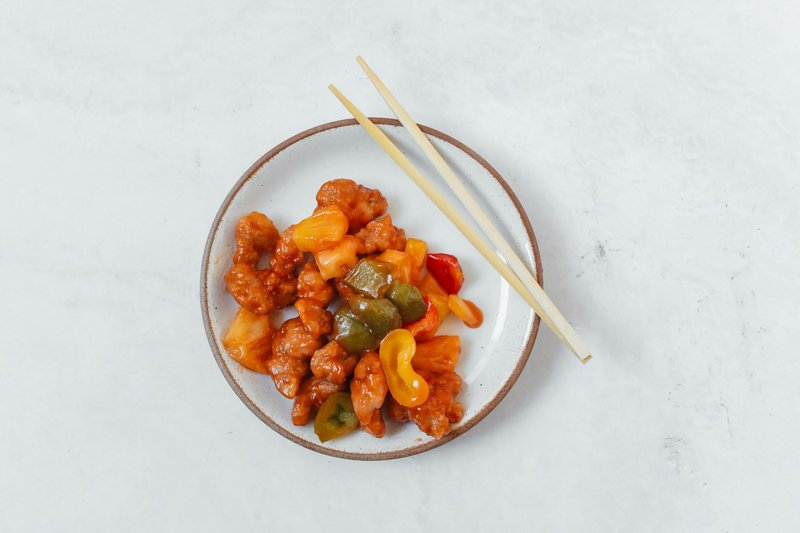
Sweet and Sour Pork
The Cantonese sweet and sour pork: battered pork cubes deep-fried crisp and tossed in a glossy pineapple-vinegar-sugar sauce with peppers.
Overview
Often mis-made in the West as doughy balls drowned in cloying sauce, properly prepared sweet and sour pork is a delicate balance of flavours, neither strictly sweet nor sour, but harmoniously combined. The key is quality ingredients, proper deep-frying technique, and a refined sauce that complements rather than masks the tender pork. Tinned lychees add authentic sweetness and texture.
Serves: 4 Prep Time: 20 minutes Cook Time: 4 minutes
Ingredients
Pork & Marinade
- 350 grams lean pork (cut into 2 cm cubes)
- 1 tablespoon dry sherry
- 1 tablespoon light soy sauce
- ½ teaspoon salt
Batter & Frying
- 1 egg (beaten)
- 2 tablespoons cornflour
- 400 ml groundnut oil (for frying)
Vegetables
- 50 grams green pepper (cut into 2 cm squares)
- 50 grams red pepper (cut into 2 cm squares)
- 50 grams carrots (cut into 2 cm cubes)
- 50 grams spring onions (cut into 2 cm cubes)
Sauce
- 150 ml Chinese chicken stock
- 1 tablespoon light soy sauce
- ½ teaspoon salt
- 1 ½ teaspoons cider vinegar (or white rice vinegar)
- 1 tablespoon sugar
- 1 tablespoon tomato purée
- 1 teaspoon cornflour (blended with 1 teaspoon water)
- 75 grams tinned lychees
Method
Stage 1 - Prepare & Marinate
- Cut the pork into 2 cm cubes.
- Put the cubes into a bowl together with the sherry, soy sauce and salt.
- Leave to marinate for 20 minutes.
Stage 2 - Prepare Vegetables
- Cut the green and red peppers into 2 cm squares.
- Peel and cut the carrots and spring onions into 2 cm cubes.
- Bring a pot of water to the boil and blanch the carrots for 4 minutes.
- Remove the carrots and plunge into ice cold water, then drain and set aside.
Stage 3 - Deep-Fry Pork
- Mix the egg and cornflour in a bowl to a uniform batter.
- Lift the pork cubes out of the marinade and place them in the batter to coat each piece well.
- Heat the oil in a deep-fryer or large wok until it is almost smoking.
- Remove the pork pieces from the batter with a slotted spoon and deep-fry them.
- Drain the deep-fried pork cubes on kitchen paper.
Stage 4 - Make Sauce & Combine
- Combine the chicken stock, soy sauce, salt, vinegar, sugar and tomato purée in a large saucepan.
- Add all the vegetables and stir well.
- In a small bowl, blend together the cornflour and water.
- Stir this mixture into the sauce and bring it back to the boil.
- Turn the heat down to a simmer.
- Add the lychees and pork cubes.
- Mix well and turn onto a deep platter. Serve at once.
Notes
- Deep-frying temperature: Oil should be almost smoking (around 180°C) to create a crisp exterior while keeping pork tender inside.
- Batter consistency: Should be thick enough to coat firmly but thin enough to fry quickly, avoid heavy, doughy results.
- Balance of flavours: The interplay of sweet (sugar, lychees), sour (vinegar), salty (soy), and umami (tomato) should be subtle. Taste and adjust the vinegar/sugar ratio to preference.
- Lychees: Essential to authentic flavour and texture, do not substitute with pineapple or other fruits.
Serving
Serve with: Plain steamed rice and a simple blanched vegetable such as Bok Choi in soy sauce
Storage
- Best served immediately for optimal crispness
- Keeps 1-2 days refrigerated (pork softens and may lose crispness)
- Not recommended for freezing (batter texture deteriorates significantly upon thawing)
More like this
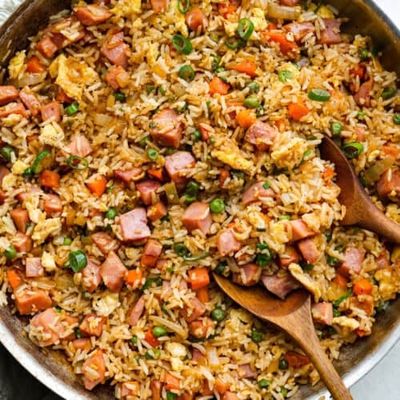
Fried Rice
Fried rice is fundamentally about texture contrast: individual grains coated entirely with hot oil, remaining crispy and separate, never clumped or greasy. Success requires three critical elements: Cold rice (overnight-refrigerated best), sufficiently hot oil (nearly smoking), and a light hand with seasonings. The beaten egg is never pre-cooked; instead, it's added raw to the hot rice and oil where residual heat cooks it silkily, coating the grains. Bean sprouts provide fresh textural contrast. This is not comfort food; it's refined technique applied to simple ingredients.
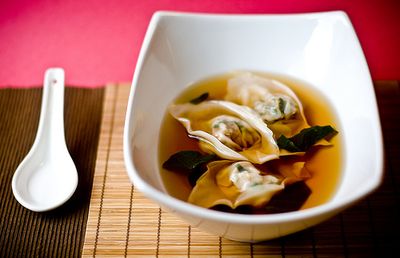
Wuntun Soup
A comforting Chinese soup featuring delicate pork-filled wontons poached and served in a clear chicken broth, garnished with soy sauce and sesame oil for authentic flavor.
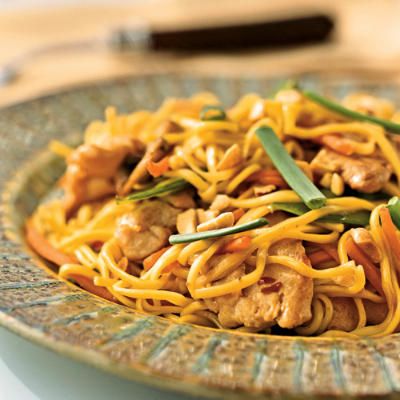
Chow Mein
Chow mein literally means 'stir-fried noodles' and this contemporary dish is equally popular throughout southern China as it is worldwide. Fresh egg noodles are quickly stir-fried with protein and vegetables, creating a harmonious balance of textures and flavours. The keys to success are properly cooked noodles, high-heat wok cooking, and precise timing.
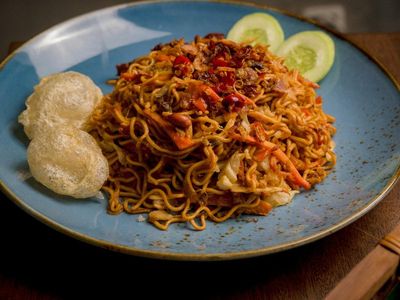
Indonesian Mee Goreng
Fresh egg noodles tossed in a glossy, sweet-savoury sauce of kecap manis, soy, ketchup, sesame oil and shrimp paste, with pork, prawns, cabbage and bean sprouts. The dish is finished with thin egg ribbons and a scatter of spring onion. Quick to cook once the components are prepped, but rewards a properly hot wok and a sauce mixed in advance.