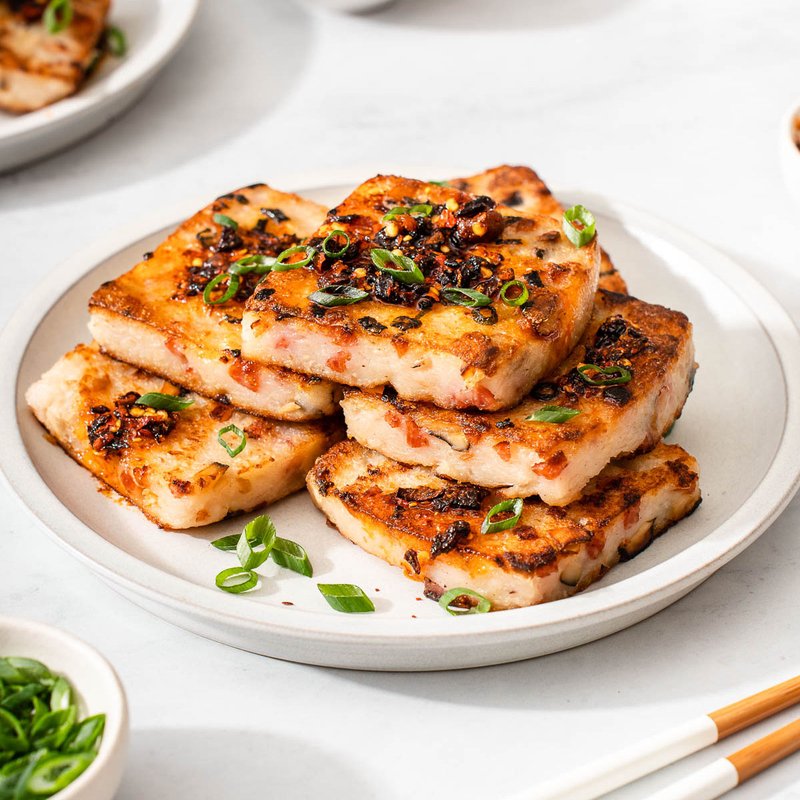
Lo Bak Go
The Cantonese dim-sum cake: grated daikon braised with dried shrimp, Chinese sausage and rice flour, steamed firm, then pan-fried crusty.
Overview
Dried shrimp and dried shiitake soak in warm water until plump; the soaking water is reserved. Chinese sausage dices fine; shallots, soaked shrimp and shiitake chop separately. All these flavourings fry together in oil until aromatic. Grated daikon is added with the shiitake-shrimp soaking liquid; cooked for 10 minutes covered until softened. Rice flour whisks with cold water into a smooth slurry; pours into the daikon mixture; cooks for 2 minutes, stirring, until thickened into a batter. Tipped into a greased loaf tin; smoothed; steamed for 60 minutes in a wide pot. Cooled fully, refrigerated, then sliced 1 cm thick and pan-fried in oil until crusted gold on both sides. Served with chilli oil and a dipping sauce of light soy and rice vinegar.
Ingredients
Flavour base
- 20 g dried shrimp (sold at Asian shops)
- 4 dried shiitake mushrooms
- 200 ml water (just-boiled, for soaking the shiitake and shrimp)
- 2 Chinese sausages (lap cheong, sold vacuum-packed at Asian shops)
- 2 shallots (small, finely diced)
- 2 tablespoons vegetable oil
- 1 teaspoon white pepper
- 1 teaspoon salt
- 1 tablespoon light soy sauce
Main body
- 1 kg daikon radish (peeled and grated - should yield about 700 g grated)
- 300 g rice flour (NOT glutinous rice flour)
- 500 ml cold water (for the slurry)
For frying (final stage)
- 4 tablespoons vegetable oil
Dipping
- 4 tablespoons light soy sauce
- 1 tablespoon rice vinegar
- 1 teaspoon sesame oil
- 1 red chilli (small, sliced) or chilli oil
Method
Stage 1 - Soak
- Place dried shrimp and shiitake in a small bowl; cover with the just-boiled water.
- Soak 20 minutes until soft.
- Drain through a sieve - RESERVE the soaking water.
- Squeeze the shiitake; trim off the stems; finely chop the caps.
- Roughly chop the shrimp.
Stage 2 - Prep the sausage
- Steam or microwave the Chinese sausages 2-3 minutes to soften.
- Slice each one in half lengthwise, then dice into 3 mm cubes.
Stage 3 - Fry the aromatics
- Heat 2 tablespoons oil in a wide deep pan over medium-high heat.
- Add the diced sausage; fry 2 minutes until the fat begins to render and the sausage colours slightly.
- Add the chopped shallots; cook 3 minutes until soft.
- Add the chopped shrimp and shiitake; cook 2 minutes.
- Season with salt, white pepper and soy sauce.
Stage 4 - Cook the daikon
- Add the grated daikon to the pan.
- Pour in the reserved shiitake-shrimp soaking water.
- Bring to a simmer; cover; reduce heat.
- Cook 10 minutes - the daikon softens and releases its own water; the mass becomes wet and translucent.
Stage 5 - Rice flour slurry
- In a separate bowl, whisk rice flour with 500 ml cold water until lump-free.
- With the daikon pan still over low heat, slowly pour in the slurry, stirring constantly.
- The mixture thickens rapidly into a heavy batter. Cook 2-3 minutes, stirring, until it has the consistency of thick porridge.
- Off heat.
Stage 6 - Steam
- Grease a 20 cm square or round tin with oil.
- Tip the batter into the tin; smooth the top.
- Set up a wide pot with a steamer rack or a few balled-up bits of foil.
- Bring water to a boil; place the tin on the rack (water must not touch the tin).
- Cover; steam 50-60 minutes over medium heat. A toothpick inserted should come out clean.
- Top up the boiling water as needed.
Stage 7 - Cool and chill
- Lift the tin out; cool to room temperature.
- Cover; refrigerate at least 4 hours, ideally overnight. The cake firms up considerably and slices cleanly.
Stage 8 - Slice and fry
- Run a knife around the edge of the tin; turn out the cake onto a board.
- Slice into 1 cm thick pieces (about 16 slices).
- Heat oil in a wide non-stick frying pan over medium heat.
- Fry the slices 3-4 minutes per side until deep golden brown and crusted.
- Lift onto a plate.
Stage 9 - Serve
- Plate 2-3 slices per person.
- Whisk the dipping sauce ingredients; offer in small bowls.
- Drizzle a little chilli oil for those who want heat.
Notes
- Plain rice flour, NOT glutinous: Lo bak go uses regular rice flour for its slight crumb-like structure. Glutinous rice flour (sticky / sweet rice flour) is wrong and gives a gummy mochi-like cake.
- Soak the shrimp and shiitake liquid is umami: The reserved soaking water is liquid gold - it's loaded with the flavour of both ingredients. Use it instead of plain water for cooking the daikon.
- Fully chill before slicing: Hot lo bak go falls apart. The chill (and the 4-hour rest) sets the starch and lets you slice clean firm pieces that hold together in the frying pan.
Storage
- The steamed un-fried cake refrigerates 5 days; fry slices fresh.
- The cake freezes well: wrap whole in cling film; freeze 2 months; defrost overnight; slice and fry.
- Fried slices keep 1 day in the fridge; re-fry briefly to crisp.
More like this
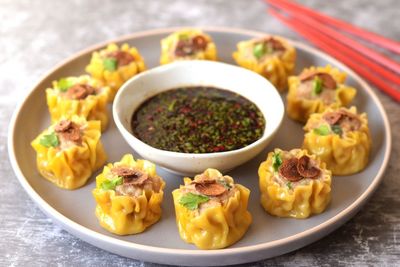
Kanom Jeeb
A filling of minced pork and chopped prawn binds with coriander root (pounded with garlic and white pepper into the traditional Thai "rak pak chee" paste), oyster sauce, soy sauce, sugar, sesame oil, and a beaten egg. The mixture chills for 20 minutes to firm. Square wonton wrappers go around the filling cupcake-style: filling in the centre, edges pulled up and pleated open around the meat, top brushed with a tiny smear of beaten egg and topped with a thin slice of carrot. Steamed in a bamboo basket over boiling water for 8 minutes. Dip is black soy sauce with sliced chilli and rice vinegar.
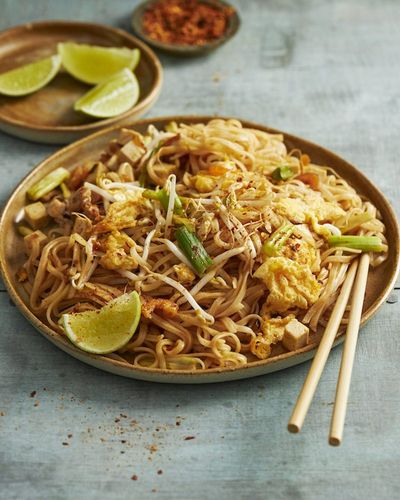
Prawn and Pork Pad Thai
This classic Thai dish of noodles is both aromatic and lightly spicy, serving well as either a main course or a starter. Pad Thai combines stir-fried rice noodles with tender chicken, pork, and prawns in a balanced sauce of curry paste, oyster sauce, and fish sauce. Fresh herbs, crushed peanuts, and a squeeze of lime complete this iconic Thai street food favourite.
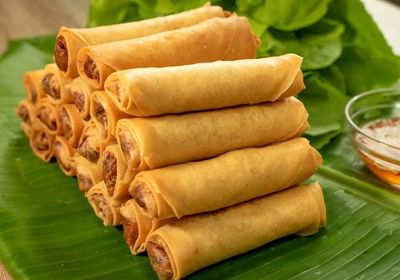
Chả Giò
A pork and prawn filling is bound with shredded carrot, glass noodles and reconstituted wood-ear mushrooms, then rolled tightly in moistened rice paper and fried twice for maximum crunch. The double-fry technique gives chả giò their characteristic bubbled, blistered crust. Served with cool lettuce leaves, herbs and a punchy nước chấm dipping sauce.
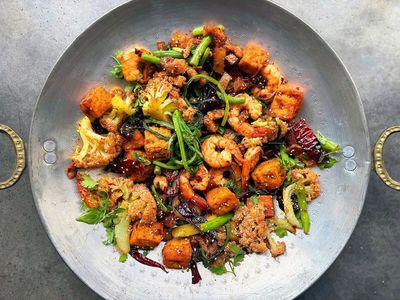
Mala Dry-Pot (Ganguo)
Ganguo, literally "dry pot", is the dry sister of hotpot. Where hotpot is a communal soup simmered at the table, dry pot is a wok composition: each ingredient pre-cooked separately, then everything tossed together at the last moment in a fragrant mala sauce based on Pixian doubanjiang, fermented black beans and chilli oil. The result lands somewhere between a stir-fry, a casserole and a giant heap of bar snacks. The dish is usually credited to Chongqing in the 1990s and exploded into nationwide popularity in the 2000s; it now anchors the menu of countless ganguo restaurants where you point at ingredients on a fridge and they appear minutes later in a single-handled wok at your table. Difficulty for a home cook is low if you accept the rhythm: blanch the vegetables, sear the proteins, then build the final dish from already-cooked components. The trick is restraint with the sauce, generous heat under the wok, and the willingness to commit to a long ingredient list. The recipe is endlessly flexible: lotus root, potato, cauliflower, mushrooms, squid, chicken wings, beef, fish balls, tofu skin, whatever you have, in any combination, totalling 1-1 ½ kg.