Mont Let Saung
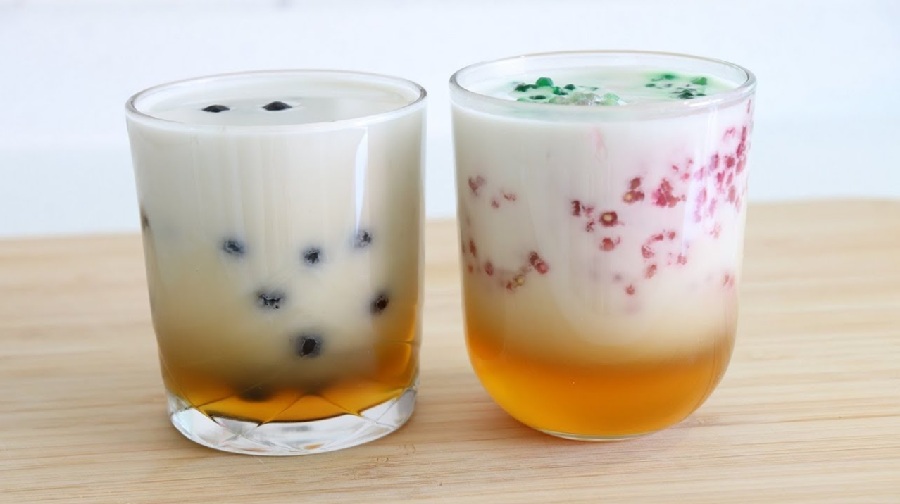
A cooling Burmese dessert: pandan-scented sago pearls floating in sweet coconut milk over crushed ice, with a pour of dark palm sugar syrup.
Overview
A Burmese cold dessert built in a bowl from three components made separately and combined at the table. You boil sago pearls to glassy translucence and chill them. Coconut milk warms gently with pandan and a pinch of salt to thicken slightly. Palm sugar melts with water into a thin dark syrup. The assembly happens in the bowl: a heap of sago first, cold coconut milk poured over, palm syrup drizzled last in a dark ribbon, crushed ice piled on top. The drama is in the contrast of colour and texture: pale ivory coconut, jet-dark syrup, glassy pearls, ice. Eaten on a hot Yangon afternoon with a long spoon, the syrup pooling at the bottom for the last sweet sip.
Ingredients
Sago
- 100 g small sago pearls (or tapioca pearls 3-4 mm)
- 1 ½ litres water (for boiling)
- 1 pandan leaf (knotted; optional)
Coconut milk base
- 400 ml full-fat coconut milk
- 100 ml whole milk
- 2 tablespoons caster sugar
- ¼ teaspoon salt
- 1 pandan leaf (knotted) or ¼ teaspoon pandan essence
Palm sugar syrup
- 120 g palm sugar (jaggery; chopped) or dark muscovado
- 80 ml water
- 1 pandan leaf (optional)
To serve
- Crushed ice (about 400 g)
- 2 tablespoons toasted sesame seeds (optional)
- 2 tablespoons grated fresh coconut (optional)
Method
Stage 1 - Sago
- Bring the 1 ½ litres of water to a rolling boil with the pandan leaf if using.
- Sprinkle in the sago a little at a time, stirring so it doesn't clump.
- Boil 10-12 minutes until the pearls are mostly translucent with a tiny white dot at the centre.
- Cover the pan, turn off the heat, and rest 8-10 minutes. The pearls finish on residual heat and turn fully glassy.
- Drain into a sieve; rinse under cold running water until completely cool. Drop the sago into a bowl of cold water; refrigerate.
Stage 2 - Coconut milk
- Warm the coconut milk, whole milk, sugar, salt and pandan in a small saucepan over low heat until the sugar dissolves and the milk just begins to steam. Don't boil; you only want to infuse the pandan and bring the flavours together.
- Off the heat, cool to room temperature, then chill in the fridge at least 1 hour. Fish out the pandan before serving.
Stage 3 - Palm sugar syrup
- Combine the palm sugar, water and optional pandan leaf in a small pan.
- Heat gently, stirring, until the sugar has fully dissolved. Simmer 3-4 minutes until you have a thin, pourable syrup the colour of strong tea.
- Cool. The syrup thickens slightly as it cools.
Stage 4 - Assemble
- Drain the chilled sago.
- Divide between 4 tall glasses or wide bowls: about 3 tablespoons per glass.
- Pour cold coconut milk to fill the glass two-thirds.
- Spoon a generous tablespoon of palm syrup over the top, letting it bleed down through the milk in dark streaks.
- Top with a heap of crushed ice.
- Finish with a pinch of toasted sesame seeds and grated coconut if using.
Stage 5 - Serve
- Hand round straws or long spoons. Eat by digging down through the layers so each spoonful collects sago, coconut milk, syrup and ice.
Notes
- Sago vs tapioca: Both work. Small sago (1-2 mm) cooks faster and stays softer. Tapioca pearls (3-4 mm) give more chew. Avoid the giant black "boba" pearls; the dessert is meant to be slippery, not bouncy.
- Pandan is the signature aroma: Fresh pandan leaves are sold frozen at SE Asian grocers; a 100 g pack lasts months. If you genuinely can't find any, ¼ teaspoon of bottled pandan essence in the coconut milk works as a stand-in.
- Palm sugar matters: The dark, treacly note of palm sugar is what makes this Burmese rather than generic coconut pudding. Disc palm sugar (sold at Thai grocers as "gula jawa" or "jaggery") melts cleanly. Dark muscovado is the best supermarket substitute.
- Authentic version: The teashop original uses green rice-flour noodles (mont let saung proper) extruded through a brass press into iced water. The sago version is what most home cooks make and what is widely sold from street carts.
Variations
Green noodle version (traditional): Make a thick pandan-scented batter from rice flour, mung-bean flour and water; press through a coarse colander or potato ricer directly into iced water. The strands set on contact. Substitute for the sago. Black sticky rice: Replace the sago with cooked black sticky rice for a richer, nuttier bowl popular in Shan State.
Serving
Serve with: a glass of strong unsweetened black tea on the side to cut the richness. Garnish with: grated fresh coconut, toasted sesame seeds, or a slice of ripe banana laid across the top.
Storage
- Components keep separately in the fridge: sago 2 days (in water, change daily), coconut milk 3 days, palm syrup 2 weeks.
- Don't pre-assemble. Crushed ice melts and dilutes within minutes.
More like this
Shwe Yin Aye
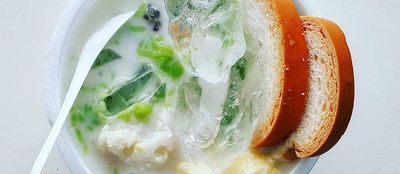
The shaved-ice dessert of Burmese teashops, the cold sweet you order on a hot afternoon when the temperature touches 35°C. You make four textures separately and chill them: a firm green agar jelly cut into small cubes, cooked sago pearls, lightly toasted white bread cut into one-centimetre dice, and a cool sweetened coconut milk. A dark palm sugar syrup ties everything together at the bowl. The bread is the unexpected element: toasted just enough to hold its shape, it soaks up the coconut milk like a sponge and turns the bowl into something halfway between dessert and breakfast. Crushed ice piled on top is non-negotiable. Eat fast before the ice melts and floods everything.
Bánh Flan
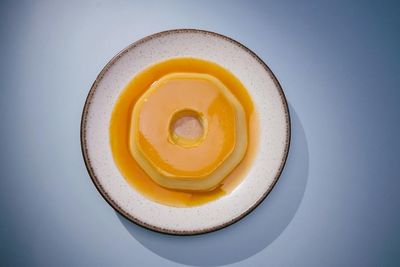
A simple custard of whole eggs, condensed milk and evaporated milk is poured over a hard caramel base and baked in a bain-marie at low temperature for a silken set. The caramel melts into a sauce as the flan chills overnight in the fridge. Tipped out onto a plate, the dark caramel runs down the sides and pools at the base.

Chè Ba Màu
Three sweet components are prepared separately: red beans simmered until tender then mixed with sugar, split mung beans cooked until just holding shape and lightly sweetened, and pandan-flavoured agar jelly cut into small cubes. Each layer goes into a glass with crushed ice between them and a generous drizzle of sweetened coconut cream over the top.
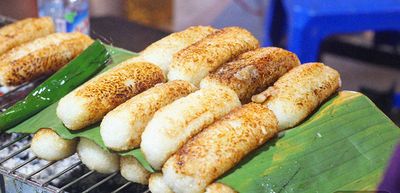
Chuối Nướng
Sticky rice is soaked, steamed and pressed around small Asian bananas (Chuối sứ), wrapped in banana leaves and grilled until the rice forms a chewy crust. A coconut cream sauce thickened with a little cornflour and salt is spooned over the split-open bundles, and toasted peanuts and sesame finish the top. The contrast of crisp-burnt outside, soft hot banana, and cool coconut sauce is the whole point.