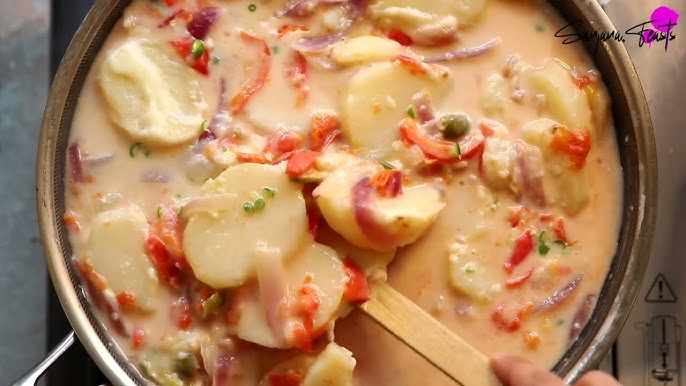
Kewa Datshi
A Bhutanese family supper: sliced potatoes simmered with green chillies and melted cheese into a rich, lively sauce.
Overview
The gentler, more domestic cousin of ema datshi: a Bhutanese family supper of potatoes simmered with chilli and cheese into a creamy, lively sauce. You slice waxy potatoes into thin rounds and drop them into a single pot with green chillies, onion, garlic, butter and the cheese mixture, then cover with water and simmer for about twenty-five minutes until the potatoes are tender and the cheese has melted into a thick, pale-yellow chilli-flecked sauce. The technique is the simplest in Bhutanese cooking: everything goes in together and cooks down without ceremony. The art is in the chilli-to-cheese ratio. More chilli and the dish reads as fiery; more cheese and it reads as rich. Either way it's eaten with red Bhutanese rice, the potatoes half-melting into the rice as you spoon.
Ingredients
Main
- 700 g waxy potatoes (Charlotte, new potatoes or Yukon Gold; peeled and sliced 5 mm thick)
- 6 green chillies (slit lengthways, stems removed; reduce to 3-4 for less heat)
- 1 onion (medium, sliced into half-moons)
- 4 garlic cloves (smashed)
- 2 tomatoes (small, cut into wedges)
- 30 g butter
- 300 ml water
- 1 teaspoon salt
Cheese mix (yak churpi substitute)
- 100 g Edam cheese (grated; or mild gouda)
- 80 g processed cheese slices (chopped; e.g. supermarket American slices or Dairylea singles)
- 40 g crumbled feta (or a small handful of mild blue cheese, for the funky note - optional but recommended)
- 50 ml whole milk
To finish
- 3 spring onions (sliced)
- Pinch of ground Sichuan pepper (optional)
To serve
- Bhutanese red rice (or plain steamed rice)
Method
Stage 1 - Prep
- Peel and slice the potatoes 5 mm thick. Keep them in water until ready to cook so they do not brown.
- Slit the chillies lengthways; for less heat, scrape out the seeds.
- Slice the onion, smash the garlic, wedge the tomatoes.
- Grate or chop the cheeses; mix together in a bowl with the milk.
Stage 2 - Start the pot
- Combine in a wide heavy pot: drained potatoes, chillies, onion, garlic, tomatoes, butter, salt and water.
- Bring to a vigorous boil over high heat, lid on.
- Once boiling, reduce to medium and cook 12-15 minutes, stirring once or twice, until the potatoes are just tender (a knife slides in with light resistance).
Stage 3 - Add the cheese
- Reduce heat to low.
- Scatter the cheese mix over the surface of the pot; do not stir immediately - let it begin melting from above.
- After 2 minutes, stir gently to fold the melting cheese into the broth.
- Continue on low heat 4-5 minutes more, stirring occasionally, until the cheese has fully melted and clings to the potatoes in a thick sauce. If the sauce tightens too much, splash in a tablespoon or two of milk.
Stage 4 - Finish
- Stir in the spring onions and Sichuan pepper.
- Taste; adjust salt. The cheese is salty, so taste before adding more.
- Turn off the heat and let it sit covered for 3 minutes; the sauce settles and thickens.
Stage 5 - Serve
- Spoon over red rice in deep bowls. The dish is intentionally saucy - the rice soaks up the chilli-cheese broth.
Notes
- Yak cheese is unavailable abroad: churpi made from yak milk is the authentic cheese and is fresh, salty, slightly funky and melts into ropy strands. The Edam-and-processed-cheese mix is the standard expat substitute: Edam gives the meltability and mildness, the processed slices give the salty plastic-y elasticity that approximates churpi. A small amount of feta or blue cheese adds the funky note. Stilton or Gorgonzola can replace the feta if you want a more pronounced flavour.
- Waxy potatoes hold their shape: floury potatoes (Maris Piper, King Edward) break down into mash and ruin the texture. Charlotte, Anya, Yukon Gold or any small waxy variety is what you want.
- Chillies are the spice: as with ema datshi, the chillies are integral, not garnish. In Bhutan the dish is often fierce; 6 green chillies is moderate by Bhutanese standards but probably plenty for a Western palate first time. Slitting (not chopping) the chillies lets diners pick out or eat them as they choose.
- Sichuan pepper is optional but traditional: a small pinch added at the end gives the floral tingle that anchors the dish in the Himalayas.
- Salt last: processed cheese and feta are both salty. Always taste before adding more salt.
Variations
Shamu Datshi: the mushroom version - same method, with 400 g sliced mushrooms (button, chestnut or oyster) replacing the potatoes. Cooks faster, around 12 minutes total. Kewa Phagsha Datshi: a hybrid with sliced pork added to the pot at the start - heartier, richer, less of a side dish and more a one-pot meal. Sosem datshi: sliced asparagus replacing the potatoes in season.
Serving
Serve with: Bhutanese red rice or plain rice as the staple, ema datshi (if you can handle two chilli-cheese dishes), a simple green vegetable stir-fry, and a small dish of ezay for those who want more heat. Salt butter tea (suja) traditionally accompanies the meal.
Storage
- Keeps 2 days refrigerated but the texture is best on day one - the potatoes absorb the sauce and the dish loses its loose, cheesy character. Reheat very gently with a splash of milk to loosen.
- Do not freeze - both the cheese and the potatoes go grainy on thawing.
More like this
Ema Datshi
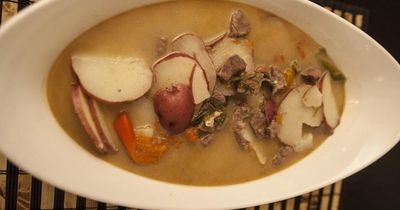
Bhutan's national dish, built on an honest two-ingredient premise: chillies and cheese, in roughly equal volume. The flavour is two things held in tension. The fierce burn of green chillies (jalapeños standing in for the hotter, more floral local Bhutanese varieties) on one side, the funky salty richness of blue cheese (Stilton or Gorgonzola standing in for the traditional yak cheese) on the other. The dairy fat tempers the burn just enough that you can actually eat it, but only just. The burn is the point. You build the dish out with beef, potato and tomato into a proper stew, and everything goes into the pot together to simmer until the cheese melts down into a fierce, creamy, chilli-flecked sauce. Eaten with red Bhutanese rice at most meals in Bhutan. Halve the chilli count the first time you cook it; the locals will laugh, but you'll be able to taste your next meal.

Jasha Maru
The Bhutanese weeknight chicken stew, the dish a Thimphu cook turns to after a long day. You joint a whole bone-in chicken and stew it with onion, tomato, plenty of fresh garlic and ginger, three or four green chillies, and butter or vegetable oil with a splash of water. The cook is fast: a brief sear to colour the meat, a simmer with the tomato until the chicken is cooked through and falling off the bone, and a finish with chopped coriander and spring onion just before serving. What you get back is a brothy, fresh, gently spicy chicken dish that sits somewhere between Indian and East Asian cookery, which is exactly where Bhutan sits geographically. Eaten with red rice, perhaps a small bowl of ema datshi on the side for whoever wants to push the heat further.
Domoda
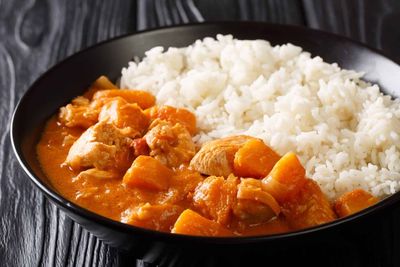
Chicken thighs (or lamb) are browned, onions and tomato cooked down with garlic and a single whole chilli, then the meat simmers in stock until tender. A loose peanut paste is stirred in for the final 20 minutes, kept thin enough to ladle. Sweet potato or pumpkin softens in the sauce. A spoon of lime juice at the end balances the richness.
Mafé
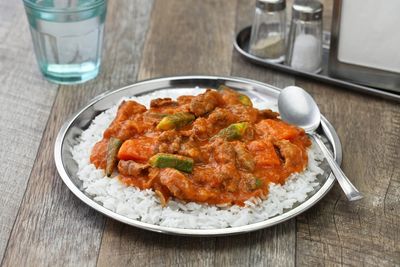
Bone-in beef or lamb is browned, then simmered with onions, garlic, tomato and stock. Smooth peanut butter is whisked in halfway and the stew thickens to a velvety coating. Chunks of cassava, sweet potato and cabbage cook in the sauce towards the end. Serve over plain steamed white rice.