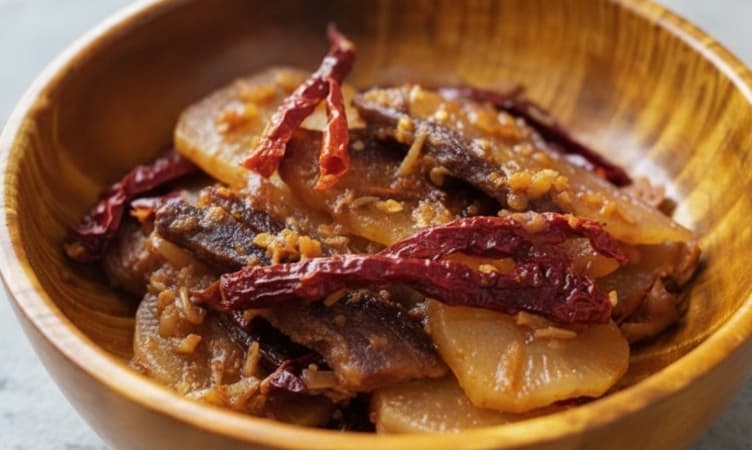
Phaksha Paa
Bhutanese pork belly stewed slow with whole dried chillies and daikon, the radish softening into the fierce red broth.
Overview
A Bhutanese pork belly braise that leans Sichuanese on the spice rack, the Himalayan border showing in the dish. You cut pork belly into thumb-length strips and start it on its own in a heavy pot to render the fat and brown the meat properly, the rendered juices becoming the cooking fat for everything that follows. Then in go whole dried red chillies, daikon cut into chunks, ginger, garlic, a measure of soy and a generous spoon of Sichuan pepper, and the lot braises gently in the pork's own rendered juices until the radish has gone soft and the sauce has thickened into a glossy red-brown lacquer that coats the pork. The whole chillies sit in the pot still intact, and the cook at the table can choose to eat them or push them to one side. Eaten with red Bhutanese rice, the broth ladled over.
Ingredients
Pork
- 600 g pork belly (skin on, cut into strips 5 cm long, 1 cm thick)
- 1 teaspoon salt
Chilli braise
- 15 whole dried red chillies (Kashmiri or arbol; reduce to 8 for less heat)
- 1 daikon (or mooli, large, ~500 g, peeled and cut into 4 cm batons)
- 4 garlic cloves (sliced)
- 4 cm fresh ginger (peeled, julienned)
- 2 teaspoons Sichuan pepper (lightly crushed)
- 1 tablespoon dark soy sauce
- 1 teaspoon caster sugar
- 4 spring onions (cut into 4 cm lengths)
- 400 ml water
- 1 tablespoon vegetable oil (only if the pork is very lean)
To serve
- Bhutanese red rice (or plain steamed long-grain rice)
- A small bowl of ezay (chilli sauce) on the side, optional
Method
Stage 1 - Prep
- Cut the pork belly into 5 cm by 1 cm strips, leaving the skin on.
- Peel and cut the daikon into 4 cm batons.
- Snap or cut the dried chillies open at one end; shake out some of the seeds for less heat if you like.
- Crush the Sichuan pepper lightly in a mortar.
Stage 2 - Render the pork
- Heat a heavy wok or shallow pan over medium heat. Add the pork strips dry (no oil needed unless very lean).
- Cook 10-12 minutes, stirring occasionally, until the fat has rendered and the pork edges are golden. The pan will fill with melted pork fat - this is the cooking medium.
- Sprinkle in the salt.
Stage 3 - Build the braise
- Push the pork to one side of the pan. Add the garlic, ginger and Sichuan pepper to the rendered fat.
- Stir 30 seconds until fragrant.
- Add the dried chillies; stir 30 seconds (do not burn them).
- Add the daikon, soy sauce and sugar; stir to coat.
- Pour in the water; bring to a simmer.
Stage 4 - Slow braise
- Cover loosely and simmer on medium-low for 35-40 minutes, stirring once or twice.
- The daikon should turn translucent and absorb the colour of the broth; the pork should be soft enough to bite easily.
- If the sauce is too watery, uncover for the last 5-10 minutes; the finished dish should be glossy, not soupy.
Stage 5 - Finish
- Stir in the spring onions; cook 1 minute more.
- Taste; adjust salt or soy.
Stage 6 - Serve
- Spoon over red rice. Warn diners about the whole chillies - they are eaters' choice.
Notes
- Dried chillies, not fresh: the dish is built on dried red chilli, which gives a smoky, earthy heat. Fresh chillies belong in ema datshi, not paa. Kashmiri chillies are mild and a good entry point; chillies de árbol are hotter and closer to Bhutanese intensity.
- Pork belly with skin: the skin softens during braising and contributes body to the sauce. Boneless skin-on belly is ideal. Skinless belly works but the dish is leaner.
- Sichuan pepper is the secret aromatic: called "yer ma" in Dzongkha, Sichuan pepper is widely used in Bhutanese cooking and gives the floral, lemony, tongue-buzzing note that distinguishes the dish from a generic spicy pork.
- Daikon is the canonical vegetable: white radish is the traditional partner; potato or turnip can substitute but radish gives the right slightly bitter, slightly sweet counterpoint to the pork fat.
- Bhutanese red rice: the short-grain red rice from Paro and Bumthang is the proper accompaniment. Brown basmati or even ordinary white rice work fine if you cannot find it.
Variations
Sikam Phaksha Paa: the eastern Bhutanese version made with sikam, dried pork that is rehydrated and braised. Smokier and more intense; needs an extra 20 minutes of cooking. Phaksha Phing: a related dish made with mungbean glass noodles in the same chilli sauce, finished with cabbage instead of radish.
Serving
Serve with: red rice (or any plain rice), a side of plain steamed greens or ema datshi for the full Bhutanese plate, and a small dish of ezay (raw chilli relish with tomato and onion) for those who want even more heat.
Storage
- Keeps 3 days refrigerated; the flavour deepens and the radish becomes even softer overnight.
- Freezes 2 months but the radish texture suffers. Better to eat fresh or refrigerated.
More like this
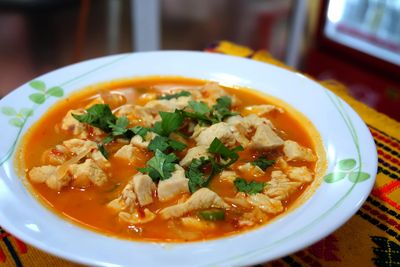
Jasha Maru
The Bhutanese weeknight chicken stew, the dish a Thimphu cook turns to after a long day. You joint a whole bone-in chicken and stew it with onion, tomato, plenty of fresh garlic and ginger, three or four green chillies, and butter or vegetable oil with a splash of water. The cook is fast: a brief sear to colour the meat, a simmer with the tomato until the chicken is cooked through and falling off the bone, and a finish with chopped coriander and spring onion just before serving. What you get back is a brothy, fresh, gently spicy chicken dish that sits somewhere between Indian and East Asian cookery, which is exactly where Bhutan sits geographically. Eaten with red rice, perhaps a small bowl of ema datshi on the side for whoever wants to push the heat further.
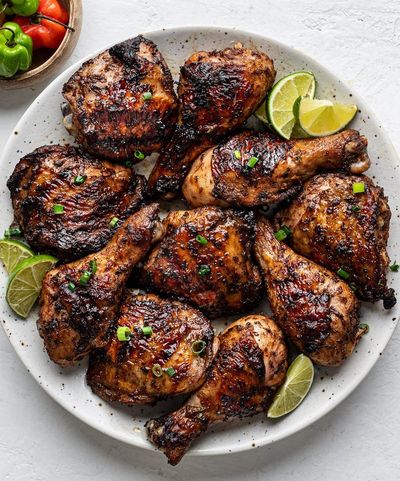
Jerk Chicken
A wet jerk paste: scotch bonnet chillies, garlic, ginger, spring onions, thyme, allspice (whole or ground), brown sugar, soy sauce, lime, oil, salt and pepper, pureed in a blender. The chicken (bone-in skin-on thighs and drumsticks, or spatchcocked whole bird) marinates for 12 hours minimum. Slow-grilled over indirect heat with a pile of pimento wood chips or allspice berries on the coals for the signature smoke; alternatively, an oven-bake at 180°C with a final blast under the grill, supplemented with allspice in the marinade.
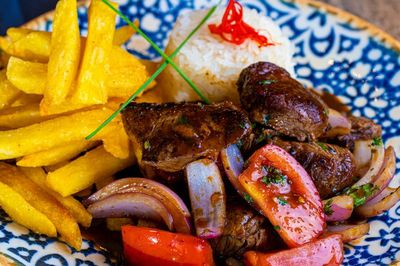
Lomo Saltado
Beef strips are marinated briefly in soy and aji amarillo paste. Fries are cooked separately, pre-fried, set aside. The wok hits high heat; beef is seared in batches; red onion and tomato are added briefly so they keep their bite; soy, vinegar, lime and stock are poured in to sauce. The fries go in last, just before serving, a 30-second toss so they pick up flavour without going soggy.
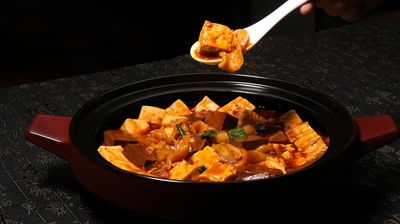
Mapo Tofu
Silken tofu cubes are blanched briefly in salted water (firms slightly and seasons). Pork mince is fried hard in oil; doubanjiang and douchi join, cooking to release oil; garlic, ginger, chilli flakes and ground Sichuan peppercorn are toasted briefly. Stock is poured in; tofu is slipped in; gentle simmer for 5 minutes; cornflour slurry thickens. Spring onions and a final dusting of ground Sichuan peppercorn finish.